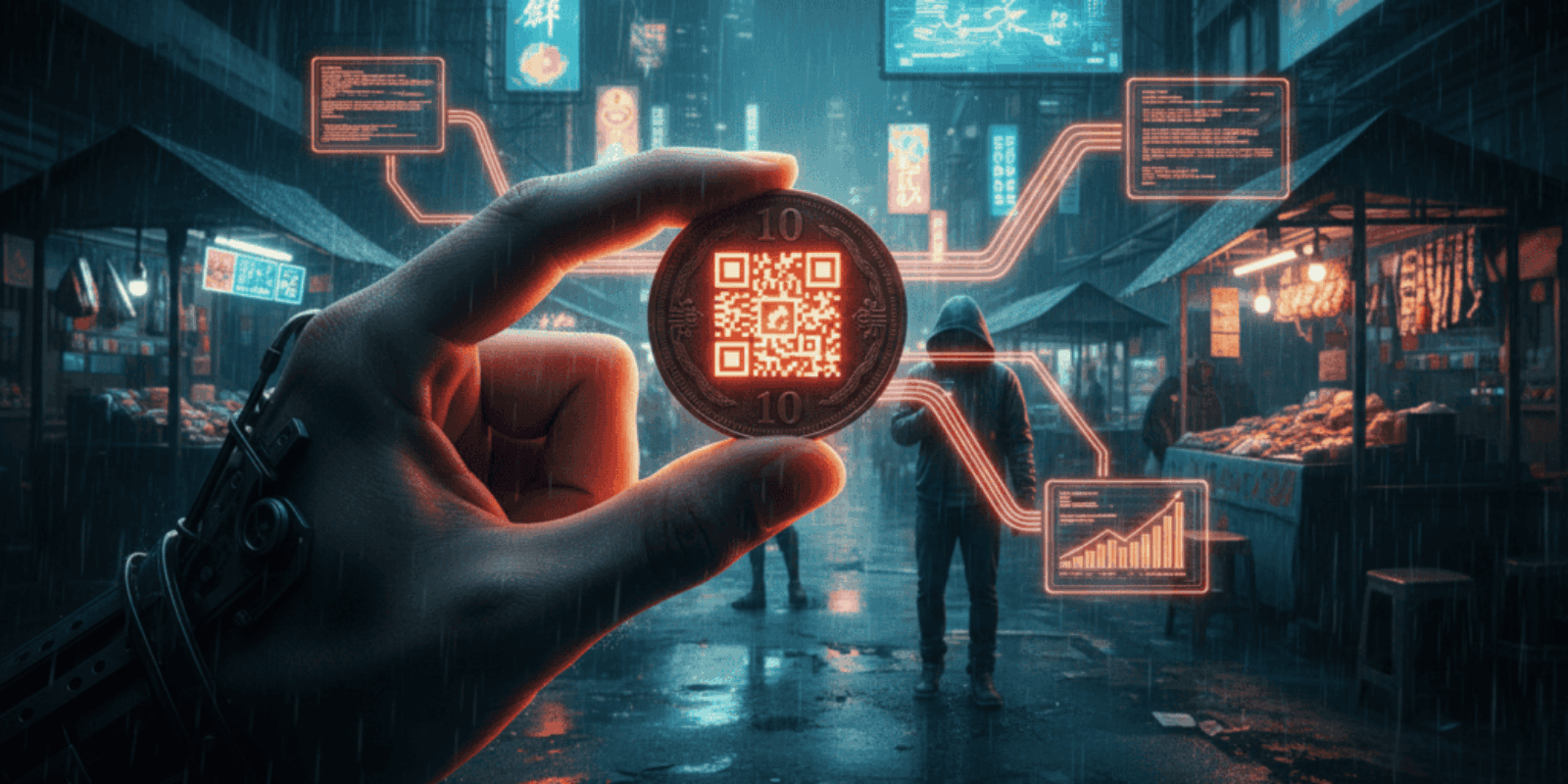
Point a phone camera at the back of the commemorative 10-peso coin and the QR code on it sends you to the website of the Bangko Sentral ng Pilipinas (BSP), the Philippine central bank. That is the whole trick. The BSP says the code links to its own site so the public can follow updates on ASEAN events, because the coin marks the Philippines’ turn as chair of the Association of Southeast Asian Nations (ASEAN) in 2026 (BSP: The 10-Piso ASEAN Coin). The code is not a payment code, and the coin itself is ordinary legal tender: the BSP told the public on April 29, 2026 that the coin “can be used as payment,” keeps its face value of 10 pesos and circulates alongside the other 10-piso coins (Bangko Sentral on X).
The central bank calls it the “10-Piso ASEAN Coin.” Piso is the Filipino word for peso, so the 10-peso coin and the 10-piso coin are the same thing.
Why does the 10-peso coin have a QR code?
The short answer is promotion of the ASEAN chairmanship. The BSP’s coin page says the coin “commemorates the role of the Philippines as chair of the Association of Southeast Asian Nations (ASEAN) in 2026” and that the QR code lets the public access updates about ASEAN events (BSP). When it announced the January 2026 launch, the BSP said the code “bridges tradition and technology” and gives the public “easy digital access to ASEAN 2026 updates,” according to GMA News (GMA News, December 23, 2025).
The Philippines has chaired ASEAN before, in 1987, 2007 and 2017, according to the same BSP page. The 2017 chairmanship also got a commemorative coin, a 1-piso piece listed on the BSP’s commemorative currency page (BSP: Commemorative Currency). What is new in 2026 is the scannable code, which turns a coin that would otherwise just carry a logo into a pointer to live information.
What the QR code on the 10-peso coin means, and where it goes
The BSP and two national news outlets describe the same destination. The BSP’s page says the reverse carries “the ASEAN 2026 official logo and a QR code linking to the BSP website.” GMA News and The Philippine Star, both reporting the BSP’s December 23, 2025 announcement, add the second step: the BSP site then links to the Philippines’ official ASEAN 2026 hosting website (GMA News; The Philippine Star).
So the code means “go here for official ASEAN 2026 information.” Nothing in the BSP’s description suggests the code carries anything beyond that link: the information lives on the website, and the coin carries the address.
Can you scan the 10-peso coin QR code?
Yes, that is what it was made for. The BSP describes it as a QR code linking to its website, which means a phone camera or QR reader app is the intended tool. Two practical points follow from how it works:
- Check where you land. A genuine scan should open a page on bsp.gov.ph, the central bank’s own domain. If a scan opens any other address, close it.
- Nothing is paid or transferred. Scanning the coin is not a transaction. The Philippines’ payment QR standard is a different thing called QR Ph, which the BSP describes as a common QR code that participating banks and e-money issuers read “for facilitating customers’ requests for fund transfers and payments” (BSP: QR Ph). The coin’s code is an information link, not a QR Ph code.
What the coin looks like
The front keeps the design of the current 10-piso coin from the New Generation Currency series: Apolinario Mabini and the face value (BSP). The back carries the ASEAN 2026 logo, the BSP logo and the QR code (The Philippine Star). The ASEAN 2026 logo itself features a woven pattern, rice stalks, waves and a balangay boat, The Philippine Star reported when BSP Governor Eli Remolona Jr. and Deputy Governor Mamerto Tangonan presented the coin to President Ferdinand Marcos Jr. at Malacañang in late November 2025 (The Philippine Star, November 27, 2025).
What it means for shops and small businesses
For a store, market stall or jeepney operator in the Philippines, the practical point is acceptance. The BSP’s April 29, 2026 notice is explicit that the ASEAN coin “can be used as payment” at its 10-peso face value, alongside 10-piso coins from the BSP Coin Series and the New Generation Currency series (Bangko Sentral on X). A cashier who sets it aside as a souvenir or turns it away as unfamiliar is turning away legal money.
The second point is scam awareness, and it applies to any business that puts a QR code in front of customers. A circulating coin that invites the public to scan an official code is a good moment to train staff on the habit the US Federal Trade Commission recommends for QR codes generally: if you see one in an unexpected place, inspect the URL before you open it, and watch for misspellings or swapped letters in the address (FTC consumer alert, December 6, 2023). The same verify-the-official-channel discipline is what protects customers when Google’s AI Overviews show scammers’ phone numbers as support lines, and it covers the gap that bank-side AI fraud detection leaves on the small business side.
The aieranews view: an earlier version of this article promised that the coin’s QR code “helps SMEs” and sketched coupon schemes and logistics savings built on scans. None of that came from the BSP or from any business that tried it, so we have removed it. The honest benefit for a small business is narrower and still real: one more legal coin to accept without hesitation, and a free, widely shared reminder to check where a QR code leads before trusting it. We like the design for the same reason we like AI tools that keep a person in the loop: the code points you to the official source, and you still decide whether what you see there is real.
Questions about the 10-peso coin QR code
Why does the 10-peso coin have a QR code?
It commemorates the Philippines’ 2026 chairmanship of ASEAN, and the QR code links to the Bangko Sentral ng Pilipinas website so the public can follow updates on ASEAN events. (Source: BSP: The 10-Piso ASEAN Coin)
What does the QR code on the 10-peso coin link to?
It opens the BSP website, which links on to the Philippines’ official ASEAN 2026 hosting website. It is an information link, not a payment code. (Source: GMA News)
Is the 10-peso ASEAN coin legal tender?
Yes. The BSP says the coin can be used as payment, keeps its face value of 10 pesos and circulates alongside the other 10-piso coins. (Source: Bangko Sentral on X, April 29, 2026)
A pocket rule to keep: spend the coin like any other 10 pesos, scan it if you are curious, and trust the page it opens only if the address says bsp.gov.ph.