Major Teachers Union Pleads With Elementary Schools to Stop Giving Young Kids AI for cyberpunk enthusiasts and professionals
A surprising public-education intervention now reads like a policy brief written in neon: the union wants AI kept out of the hands of the very children who will inherit tomorrow’s augmented streets and corporate skylines.
A second grader in a fluorescent classroom taps a tablet and asks a chatbot for a bedtime story about a robot dragon. The mainstream reading is familiar and straightforward: adults are trying to protect kids from screens and unvetted technology. That framing matters, but it misses the bigger cultural and industry consequence that will matter most to cyberpunk creators, fans, and the companies that build the worlds they populate.
Why this union move registers inside the cyberpunk imagination
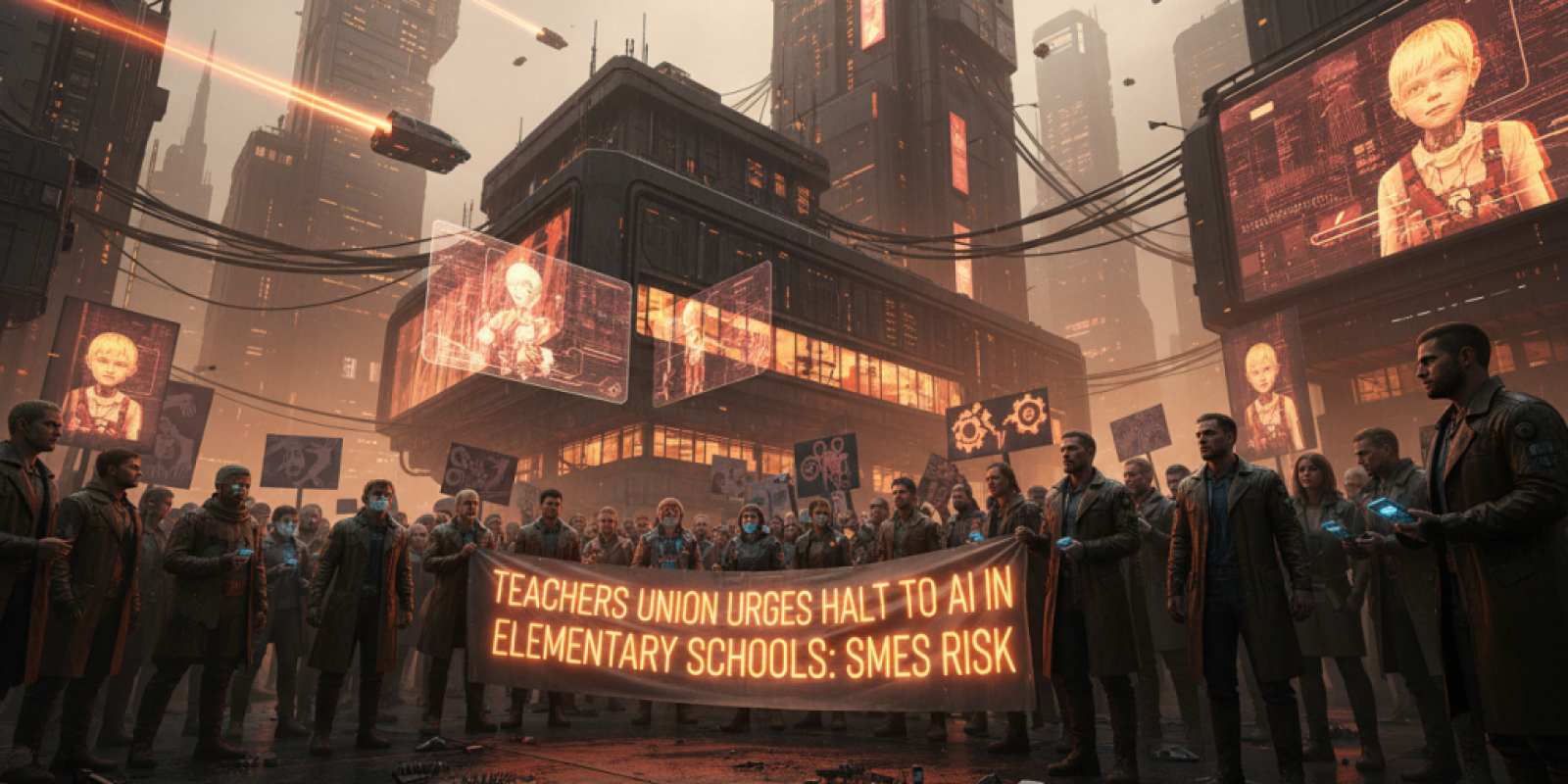
The American Federation of Teachers made the call explicit on May 27, 2026, asking schools to restrict screens in early grades and to bar student-facing artificial intelligence in elementary classrooms. (aft.org) This is not a local schoolboard skirmish. It is a national labor federation with 1.8 million members pushing a policy that reshapes how a generation first learns to treat machines and data.
How Big Tech’s classroom playbook looks exactly like a plot point
The union’s plan also recommends financial accountability for the tech sector, including a levy designed to offset corporate influence in schools. Education Week summarized those fiscal asks and the broader regulatory push that trades corporate pilots for teacher-led oversight. (edweek.org) The detail reads like corporate power bargaining with public institutions, which, in cyberpunk novels, is the part where the megacorps buy the playground and then rename recess.
What this means for the creators who build dystopias and playgrounds
If a formal barrier appears between children and AI tools, the cultural fluency that feeds cyberpunk fiction and game design could shift. Early hands-on familiarity with tools like chatbots, generative art engines and personalized tutors is an informal training ground for future designers, modders and voice actors. K-12 coverage of the union speech highlights the specific ask to keep student-facing AI away from elementary grades, a move that could delay that pipeline. (k12dive.com)
Numbers, names and dates the industry needs to know
On May 27, 2026, AFT President Randi Weingarten presented a 10-point framework at the National Press Club that included a ban on student-facing AI in elementary schools and a proposal to redirect tech revenue toward educator development. (aft.org) The plan places teacher consent and district-union signoffs at the center of procurement decisions, which could slow or halt deployments from companies eager to test classroom pilots in the next school year.
If corporations teach children to trust algorithms before they learn to read, that is not education, it is brand management.
Why cyberpunk studios should pay attention right now
Small and mid-sized studios recruit from a pool that includes students who grew up tinkering with AI tools and interactive fiction. Removing elementary access changes what those students know by age 12, and that shift compounds over a decade. A dry aside for the pessimists: a future where kids only know corporate-branded bots is the sort of vertical integration marketers dream of and cyberpunk writers complain about at dinner parties.
Practical implications for businesses with 5 to 50 employees
A five person indie studio that depends on entry level hires with basic prompt engineering skills may need to invest more in training. Budgeting for a half day bootcamp per new hire at $400 a session for 10 hires a year totals $4,000 annually and buys skills the classroom might no longer provide. A small merch maker who once relied on student mod communities for beta feedback should plan to pay for moderated user research panels, which can cost $1,000 to $3,000 per study, because organic feedback from classroom clubs could dwindle.
The cost nobody is calculating: cultural shaping at age 6 to 12
Exposure to AI in childhood does more than teach syntax and interface behavior. It normalizes a relationship with synthetic interlocutors and shapes narrative instincts, humor recognition and what feels plausible in a near future. For cyberpunk aesthetics that trade on the uneasy intimacy between flesh and code, that socialization is creative fuel or cultural debt, depending on who writes the check.
Risks and hard questions that stress-test the union’s claim
Advocacy groups and academics have urged caution or moratoria on generative AI in schools, arguing more research is needed into developmental impacts and safety. Fairplay and allied organizations have recommended a measured pause on generative AI in preK to 12 settings to allow communities to build governance. (fairplayforkids.org) Journalists and education experts have highlighted real cases where well intentioned tools produced harmful results or distorted learning priorities, which undercuts the claim that classroom AI is benign without strong oversight. (fortune.com)
Legal, ethical and product-design nightmares for cyberpunk firms
Any company selling educational AI must now factor in union consent language, privacy audits, and potential taxes or fees targeted at Big Tech money flows. Contracts will need explicit data deletion clauses, human-in-the-loop guarantees and age gating with parental consent. Designers who once relied on raw access to children for playtest data will face higher compliance costs and slower iteration cycles.
How this reshapes storytelling and the fandom economy
Creators who trade in near future paranoia will find new motifs and new authenticity if classrooms become contested zones. The aesthetic of surveillance commodified as pedagogy is already a readable trope, and this development gives writers and artists a fresh, concrete policy to riff on. Studios that make interactive city simulators, role playing games or narrative ARGs should expect shifting audience familiarity with AI tropes over the next 10 to 15 years.
A practical close with a clear insight
The AFT’s move is part policy, part cultural signal; for cyberpunk professionals it is an inflection point that reorders talent sourcing, product risk and world building. Companies and creators who incorporate this reality into hiring, design and narrative choices today will have an easier time adapting when the policy and market settle into a new normal.
Key Takeaways
- The American Federation of Teachers called for a ban on student-facing AI in elementary schools on May 27, 2026, signaling a national shift in K through 5 tech policy. (aft.org)
- The plan ties AI limits to broader fiscal asks for tech accountability, a move that could change procurement and vendor negotiations. (edweek.org)
- Cyberpunk creators should expect a slower flow of early AI-fluent talent and higher costs for user research and education-focused deployments. (k12dive.com)
- Advocates calling for pauses and studies add momentum to regulatory risk for any company that designs child-facing AI, increasing compliance and reputational stakes. (fairplayforkids.org)
Frequently Asked Questions
Will banning AI in elementary schools make cyberpunk stories less relevant to kids?
A ban will change the texture of day to day familiarity with AI for younger readers but not erase interest in cyberpunk themes. Older students and media exposure will continue to feed the genre, though the primary, hands-on technical literacy curve may flatten.
How soon will this union proposal affect hiring for small studios?
Procurement and classroom policy shifts take time, but hiring pipelines respond within 2 to 5 years as high school and college cohorts reflect altered early experiences. Small studios should start training hires now rather than assume school curricula will provide those skills.
Does this move mean educational AI vendors are finished?
Not necessarily. Vendors can pivot to teacher-facing tools, consent-driven platforms and tightly audited classroom solutions to remain relevant. Expect longer sales cycles and greater demand for transparency and human oversight.
Should indie game developers push for access to classrooms for user testing?
Any outreach must respect local policies, parental consent and union concerns; community partnerships and paid research panels are safer and more stable alternatives. Grassroots clubs can continue but will likely need stricter supervision and formal agreements.
Could this spark wider regulation that changes the entertainment industry?
Yes, educational precedent often ripples outward to consumer privacy and data rules that affect entertainment platforms, streaming personalization and interactive media. Companies in the entertainment stack should map educational governance changes onto product roadmaps.
Related Coverage
Readers interested in how policy shapes speculative fiction should follow reporting on AI governance, child safety online and tech labor movements. Coverage of educational procurement and the emerging National Academy for AI instruction will illuminate the marketplaces where cyberpunk aesthetics and corporate strategy collide.
SOURCES: https://www.aft.org/press-release/devices-down-eyes-hands-weingarten-calls-screen-bans-ai-limits-active, https://www.edweek.org/technology/teachers-unions-ai-plan-calls-for-big-tech-tax-screen-bans-in-elementary-schools/2026/05, https://www.k12dive.com/news/aft-president-urges-bans-on-screens-student-facing-ai-for-youngest-learner/821263/, https://fairplayforkids.org/pause-genai-in-prek-12-schools-for-5-years-orgs-and-experts-say/, https://fortune.com/2026/04/16/doctors-experts-ai-moratorium-schools/