Hideo Kojima Says He’s No Longer Interested In AI
Why a single line from a game auteur is already reshaping how AI teams should think about creative tooling and product strategy
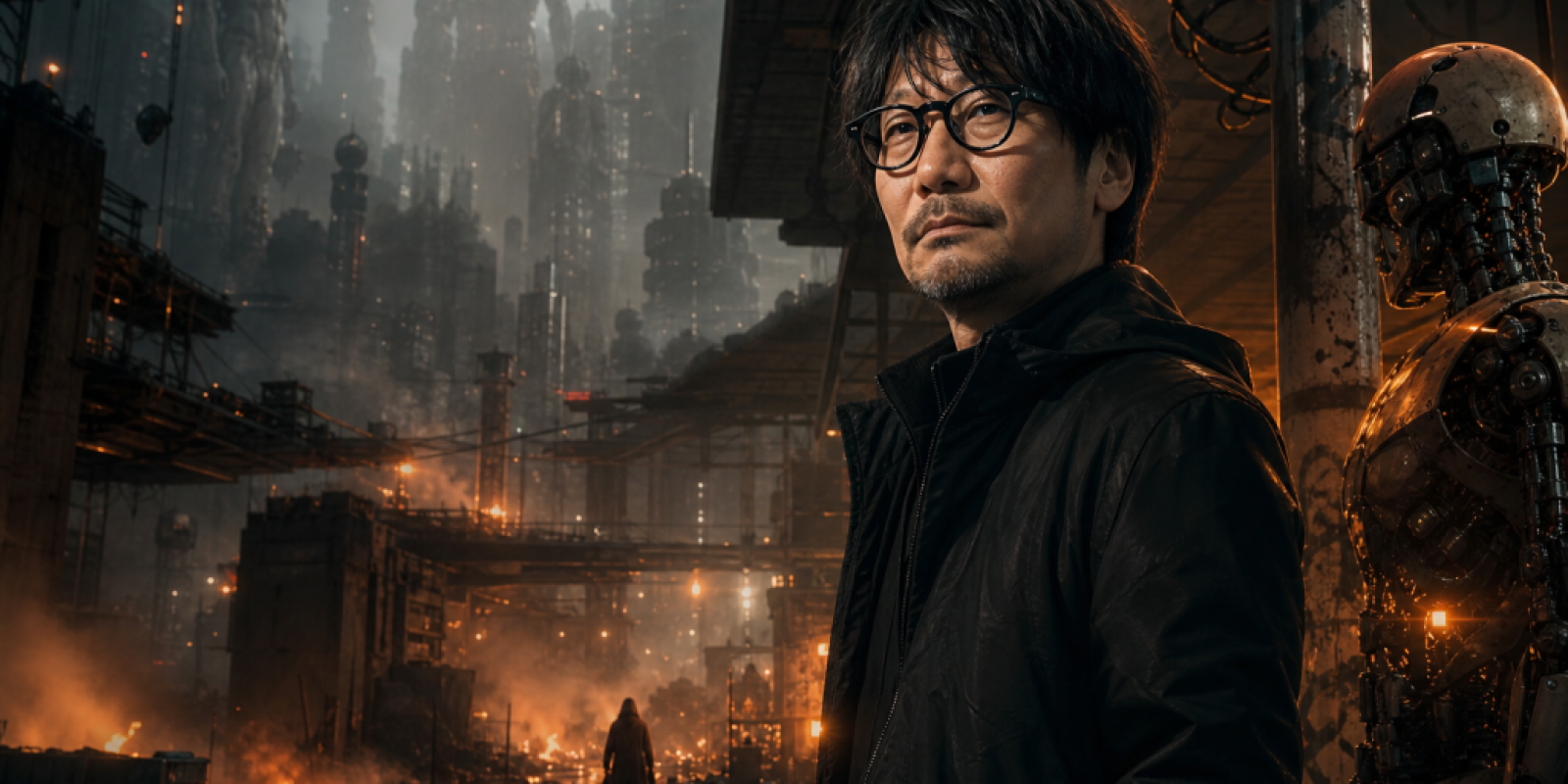
A gallery in New York showed a short, glossy sequence of Hideo Kojima arriving by spaceship and a lot of people recoiled. The clip was generated with AI and featured Kojima himself in a way that made onlookers ask what, exactly, was being sold: nostalgia or a clever forgery of it. That small public embarrassment set up a striking pronouncement from Kojima that is now reverberating beyond games and into the broader AI industry.
Most outlets read the line as a celebrity rejecting generative art, an understandable soundbite. What matters more for AI builders and product leaders is the narrower, practical impulse behind the comment: a call to keep intelligent systems confined to functional support rather than auteur-level authorship. That pivot matters because it forces engineering and policy teams to choose between optimizing for scale or for the cultural scarcity that still makes art economically valuable.
A nuanced rejection, not a Luddite manifesto
Kojima’s literal words were blunt: “Maybe AI could create art, but while I live, I don’t think I’ll see it. I’m not interested in it,” as reported in a profile of an art installation. According to Kotaku, that line followed Kojima describing AI as useful for chores but not for replacing human presence in the creative room. This is not a blanket ban on AI; it is a boundary around authorship. (Kotaku)
The Washington Post expanded the point by reporting Kojima’s preferred role for AI: “a janitor for creative chores,” with humans remaining in the room where art gets made. That phrasing reframes the debate away from replacement and toward complementary tooling design. (The Washington Post)
Why competitors and platforms should pay attention
Major platforms are racing to commodify creative output because attention metrics scale cheaply when novelty can be mass-produced. Kojima’s view is a direct challenge to that model: if creators and audiences begin to treat AI-made art as intrinsically less meaningful, platforms that monetize volume will collide with a cultural counterpressure toward authenticity. GamesRadar chronicled Kojima’s longer-term ambivalence, noting he used AI tooling on a project yet remained dissatisfied with its results. That mix of experimentation and skepticism is the posture others in entertainment are adopting. (GamesRadar+)
For AI companies selling content-generation APIs, the implication is clear. Product road maps focused solely on reducing cost per image or per minute of generated audio will eventually hit a demand ceiling if cultural gatekeepers declare the output valueless. Conversely, teams that build controls for provenance, human-in-the-loop affirmation, and value-preserving tooling will find buyers among studios that must protect IP and artist goodwill.
The technical corollary Kojima quietly endorsed
Kojima has said he sees merit in using AI for gameplay systems rather than creative synthesis. In an interview summarized by Dexerto, he imagines AI improving enemy behavior and control systems, compensating for different player styles to make encounters feel less scripted. That is a precise, engineering-friendly use case for AI that preserves authored narrative while enhancing runtime systems. (Dexerto)
This split use case suggests a product taxonomy: AI as interactive system augmentation versus AI as autonomous content author. The first requires infrastructure to run fast inference, behavioral models, and continuous evaluation in live environments. The second demands massive training data, provenance tracking, and legal plumbing that is still deeply contested.
Treat AI like an overenthusiastic assistant: great for tidying files, hazardous if handed the script.
The numbers that matter to product and legal teams
If a midtier studio adopts AI for enemy behavior, compute costs rise but so do potential retention metrics. A rough scenario: adding per-session inference to 1 million monthly active users at a cost of 0.01 dollars per session translates to 10,000 dollars a month in cloud spend. If smarter enemies increase average session length by 3 to 5 minutes and lift retention by 1 to 2 percent, lifetime value can cover that cost with room to spare. Those are small numbers to justify prototypes, and they map to concrete engineering sprints rather than headline-grabbing generative projects.
On the flip side, studios that pivot their entire art pipeline to cheap generative assets risk alienating high-value players who pay for curated, handcrafted experiences. That audience segment still drives premium revenue and brand equity in ways that unit-cost calculations miss.
Legal and labor risks that product teams cannot outsource
Kojima’s rejection sits atop a thicket of rights issues, performer consent, and creative labor disruption. Recent reporting in industry outlets highlights performers discovering their likenesses used or their voices synthesized without clear licensing terms. That legal ambiguity is a material operational risk for anyone deploying generative assets at scale. (GamesSpot)
Designing human-in-the-loop approval flows and signing explicit licensing agreements are not optional compliance exercises. They are the core features that will determine whether an AI product is adoptable by studios that care about reputation and future collaborations.
Where this leaves infrastructure and research investments
Investors and R and D leaders should not interpret Kojima’s stance as a demand to abandon creativity research. Instead, the signal is to rebalance investment toward systems research that improves interactivity, personalization, and safety. Tools that help creators keep control and assert provenance will be commercially valuable in the near term. Research into controllable models, watermarking, and lightweight on-device personalization will see clearer adoption paths than open-ended generative stacks.
Adding a bit of humility to the lab pitch helps: a model that improvises perfectly still needs an editor, and editors pay the rent. Also, machines are terrible at beating boss patterns that only humans find deeply annoying but somehow still entertaining.
Risks and open questions that stress-test Kojima’s view
If audiences rapidly accept synthetic authorship, cultural scarcity evaporates and Kojima’s argument loses force. Alternatively, regulation could mandate provenance tagging that enshrines a creator premium, which would validate his caution. There is also the reputational risk for creators who privately use AI for efficiency while publicly condemning it, a credibility gap that studios will want to avoid. These scenarios are testable and should inform product experiments rather than ideological stances.
A practical close for builders and executives
Kojima’s comment is a strategic nudge: center human authority in creative workflows and invest in AI that enhances interaction and preserves cultural value. That is a narrow course, but it is also where the quickest, least risky commercial wins live.
Key Takeaways
- Kojima’s headline rejection is a precise demand: use AI to assist, not to supplant human authorship.
- Studios should prioritize AI for interactive systems and human-in-the-loop tooling rather than wholesale generative substitution.
- Legal and provenance controls are now product features, not back office chores.
- Small pilots with clear metrics on retention and lifetime value make more sense than large generative gambles.
Frequently Asked Questions
What did Kojima actually say about AI and art?
He said he is not interested in AI replacing artistic authorship and doubted AI would create art in his lifetime, while accepting AI as a utility for routine creative tasks. Reporting shows he framed AI as useful for chores and system support rather than authorship.
Should game studios stop using generative art tools immediately?
No. The practical approach is selective adoption: use AI where it improves systems or reduces noncreative toil, and keep guarded workflows and licensing for any asset that touches public-facing or monetized content.
Does Kojima’s view change how AI startups should pitch to entertainment customers?
Yes. Startups should emphasize control, provenance, and human oversight features instead of raw generative throughput when selling to high-profile creators and studios.
Is there commercial evidence that players care about authentic human-created content?
Anecdotally and commercially, premium experiences tied to human authorship retain higher engagement and monetization. The precise market segmentation varies by genre, but the premium cohort is large enough to be a meaningful revenue channel.
How quickly should legal teams act on the risks mentioned?
Immediately. Contracts, consent processes, and provenance tooling need to be in place before large scale deployments to avoid costly takedowns, reputation damage, and litigation.
Related Coverage
Explore reporting on provenance and watermarking standards for synthetic media and case studies of games that use AI purely for gameplay enhancement. Also read analysis on platform policy responses to generative content and interviews with other creators who have publicly wrestled with adoption decisions.
SOURCES: https://kotaku.com/hideo-kojima-says-hes-not-interested-in-ai-maybe-ai-could-create-art-but-while-i-live-i-dont-think-ill-see-it-2000703473, https://www.washingtonpost.com/style/2026/06/06/hotel-chelsea-kojima-refn-dredge-up-glamour-old-ghosts/, https://www.gamesradar.com/games/hideo-kojima-says-ai-could-play-a-role-in-helping-ourselves-truly-thrive-in-the-21st-century-though-he-admits-the-technology-devalues-art-games-and-art-are-no-longer-considered-special/, https://www.gamespot.com/articles/kojima-on-ai-we-cant-go-back/1100-6537112/, https://www.dexerto.com/gaming/hideo-kojima-says-theres-only-one-way-hed-use-ai-in-games-3296573/