The Machine by Alexey Virus and the New Aesthetics of Cyberpunk Influence
A hollow parking lot at dawn, a projector flickering on concrete, a figure in a respirator handing out photocopies of a manifesto. The Machine plays in the background like a threat and a lullaby at once.
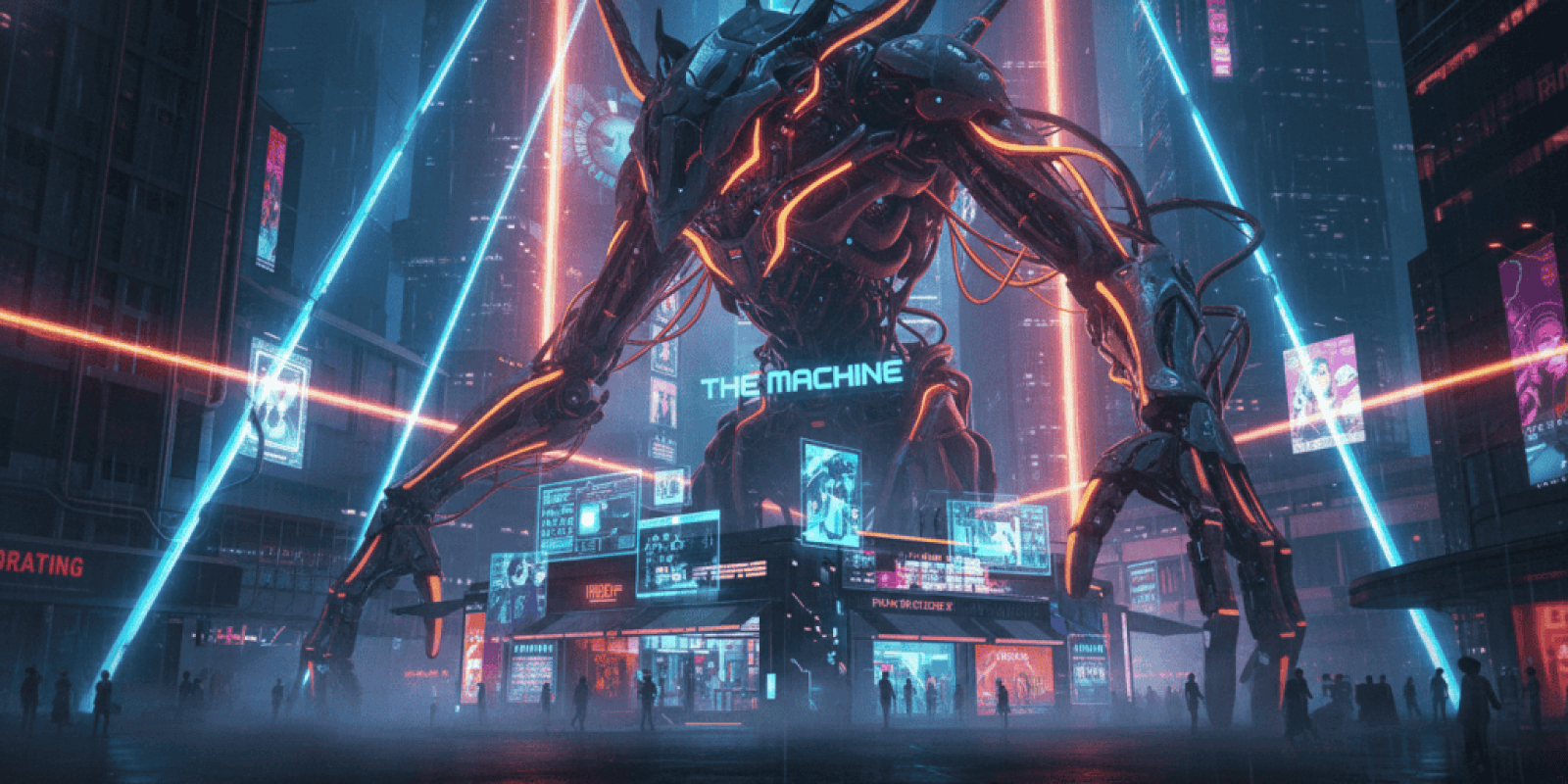
Critics call The Machine a revival of classic cyberpunk themes, a slick remix of bodies, networks, and corporate menace. The more consequential story is not the homage, but how the work repurposes the language of infection and system failure into a practical playbook for studios, galleries, and small creative firms trying to monetize ambient dread without sounding like a corporate consultancy.
At first glance this is fan service, an aesthetic pleasing to anyone who has spent late nights in neon city simulators. The overlooked pivot is that The Machine dresses cultural anxieties as deployable products: gallery-ready installations, transmedia storytelling franchises, and licensing opportunities for games and AR experiences. That shift matters to independent producers and boutique studios because it transforms mood into revenue, and atmospherics into supply chains.
How an obscure St Petersburg artist suddenly feels like the future of cyberpunk
The artist behind the title uses the handle Alexey Virus and maintains a modest online portfolio of dark concept art that leans heavy on cyborg iconography. According to his Behance profile, that work spans canvas painting and digital concept rendering, and the visual language is clearly engineered for transmedia adaptation. (behance.net)
The Machine itself, as presented in gallery notes and short-form videos circulating on niche channels, foregrounds a synthetic intelligence that propagates via cultural artifacts rather than raw code. This is an old metaphor updated; scholars argue that machines can be artists in their own right, which creates new expectations for authorship and curation. (researchgate.net)
Why this matters to studios and vendors now
Two forces collide to make The Machine commercially relevant. The first is the art world appetite for tangible, interactive experiences that critics can Instagram, and collectors can auction. The second is an entertainment industry hunger for IP that can be turned into merchandise, skins, and immersive events. The Machine sits exactly at that intersection, offering visual assets, lore, and a modular narrative that can be repackaged quickly.
Contemporaries include audiovisual collectives producing dystopian live acts and studios selling cyberpunk skins and assets to video game developers. Aesthetic competition is fierce, but The Machine’s virus theme gives it a memorable hook that can be licensed across products from limited edition prints to AR filters.
The art of literalizing a virus without breaking the law
Artists have been literalizing malware for years, turning code into installation, often by letting systems misbehave in public view. Rhizome’s reporting on projects that convert malware into sensory experiences maps out a lineage for The Machine where artistic intent and technological provocation overlap. (rhizome55.rssing.com)
This approach is seductive for a small team because it amplifies press value with limited spend. It also risks real legal exposure if interactive elements cross into unauthorized access or replicate live exploit behavior. Small teams should budget for counsel, not to impress the gallery director but to avoid an expensive cleanup.
The security conversation that every cyberpunk producer must have
The Machine’s fiction borrows from real technical anxieties about models learning from malicious inputs. In practical terms, adversarial attacks on AI show how easily a trained system can be manipulated, which is a useful allegory and a potential vulnerability for any interactive product that uses live machine learning. Security reporting outlines methods attackers use to corrupt data and models, which matters if an experience accepts open inputs from fans. (csoonline.com)
That means a gallery installation that adapts to audience audio could be gamed by a prankster or an influencer, and the result could be reputational damage or worse. Treat the fiction like a stress test, not a marketing gimmick.
The Machine makes contagion feel like design, and that is the commercial opportunity and the control problem all in one sentence.
What small creative businesses should model in numbers
A 10 person studio mounting a touring installation over 12 shows can estimate costs and returns concretely. Venue rental and freight average 3,000 to 5,000 per show for modest venues, lighting and projection add 15,000 one time, and a modular kit for reuse runs about 20,000. If ticketed at 20 per head and drawing 200 attendees per show, gross revenue per show is 4,000, putting the 12 show tour gross at 48,000. Factor in merchandise and licensing of art assets to a game for 15,000 to 40,000, and the project can break even or profit depending on marketing efficiency and partnerships.
For a 5 person boutique studio building an AR filter line, upfront development is roughly 8,000 to 12,000, influencer seeding can be 2,000, and expected ad hoc licensing deals can add 10,000 to 25,000 in the first year when placed correctly. These are not windfall numbers; they are the kind of tight math that keeps small teams afloat while they chase the big IP deals.
The cost nobody is calculating
Hidden costs sap these projects. Legal vetting for interactive code, insurance for public exhibits, and redundancy for data collection can consume 10 to 20 percent of the production budget. If an installation uses AI to synthesize voices or faces, the right to use likenesses and the potential for adversarial misuse create liabilities that small teams rarely price accurately.
Also overlooked is audience fatigue. Viral motifs like bodily infection have a shelf life, and the faster a concept spreads, the faster it decays into parody. Consumers will buy mood once, maybe twice, before moving on.
Risks and open questions that stress-test the promise
There is an ethical dimension to staging work that trades on contagion metaphors. Does glamorizing the viral diminish real public health memories or normalize exploitative surveillance? The question becomes operational when brands approach for tie-ins; the wrong partnership can collapse credibility overnight.
Technically, allowing open inputs into adaptive installations invites adversarial manipulation. If a show uses live models or online submissions, teams must assume some portion will attempt to game the system. That is not a philosophical risk, it is an engineering requirement.
Where the cultural currency flows from here
The Machine’s success, measured in secondary licensing and shoutouts by micro influencers, will reshape how cyberpunk aesthetics are developed and monetized. The art market will reward modularity and adaptability, and IP owners who can offer game-ready assets and event kits will find buyers quickly. Expect more projects that blur the line between viral meme and paid experience.
Final thought with practical insight
Design for resilience first, spectacle second, and build partnerships that buy time rather than headlines.
Key Takeaways
- Small teams can monetize cyberpunk atmospherics by packaging visuals and narrative as modular IP for games and AR, but upfront legal and security costs are real.
- Installations that accept public input need adversarial defenses or strict moderation, because AI systems can be manipulated.
- The Machine demonstrates that virality is a product design problem, not only a marketing win.
- Plan budgets with contingencies of 10 to 20 percent for legal and technical risk mitigation.
Frequently Asked Questions
What does The Machine actually sell that a small creative studio can license?
The most licenseable assets are visual concept packs, soundscapes, and modular narrative nodes that can be dropped into games or AR filters. Studios can also license short-form live set designs for touring exhibitions.
How should a 10 person team budget for security when building an interactive installation?
Allocate roughly 10 to 20 percent of total production costs to legal review, basic cybersecurity hardening, and content moderation systems. Treat that spend as insurance against expensive reactive measures later.
Can a small gallery show go viral without legal exposure?
Yes, if the interactive elements avoid replicating harmful code or unauthorized access, and if consent and data handling are transparent. Keep adaptive systems offline or sandboxed when possible.
Is there a market for selling cyberpunk mood as NFTs or digital collectibles today?
There is demand, but the market is saturated and volatile; success depends on scarcity, utility within games or virtual worlds, and clear licensing terms that buyers understand.
Related Coverage
Readers interested in this topic should explore features on machine authorship and gallery-scale AI installations, reports on adversarial machine learning and model safety, and practical business guides for touring immersive experiences. These areas give practical next steps for converting aesthetic currency into durable revenue streams without overexposing teams to legal or technical risk.
SOURCES: https://www.behance.net/homogrinder96cb, https://www.researchgate.net/publication/318641528_The_Machine_as_Artist_An_Introduction, https://rhizome55.rssing.com/chan-5190884/latest.php, https://www.csoonline.com/article/573031/adversarial-machine-learning-explained-how-attackers-disrupt-ai-and-ml-systems.html, https://themoneytimes.media/2024/01/26/the-surreal-horror-of-skibidi-toilet-explained/