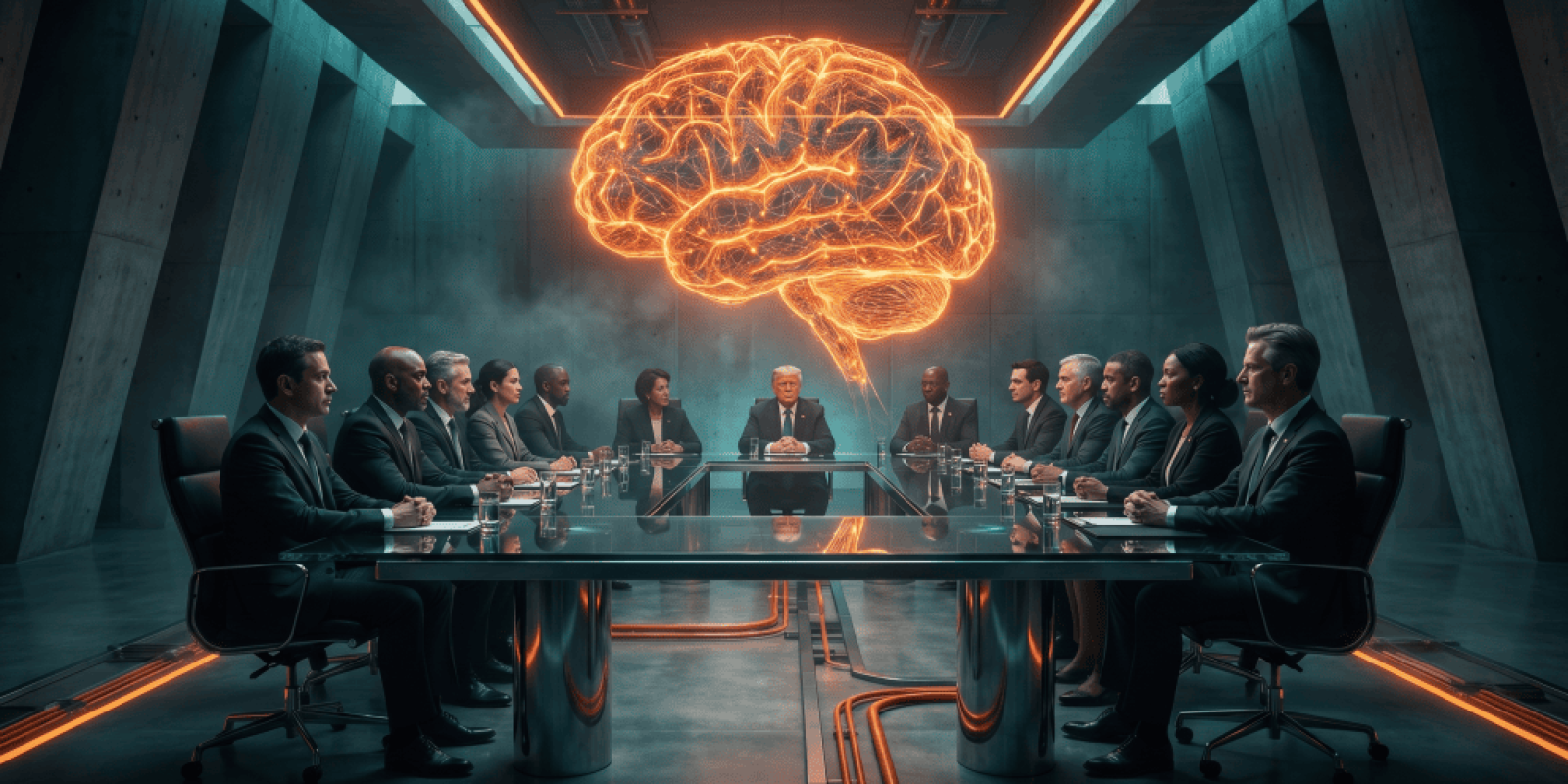
The short version: The 52nd G7 Summit closed today in Evian-les-Bains, France, with AI and tech sovereignty dominating the final session. The CEOs of OpenAI, Anthropic, and Google DeepMind joined heads of state at the table. The seven nations agreed on a joint statement on geopolitical issues but could not align on AI governance. That stalemate, counterintuitively, preserves meaningful space for small businesses to continue using AI tools before heavy regulation arrives.
What happened at the G7 AI summit on June 17?
The 52nd G7 Summit ran June 15 to 17 in Evian-les-Bains, the French Alpine resort that carries weight in European diplomatic history. On the final day, the agenda centered on two things: the future of AI and U.S. dominance of the industry, and protection of minors on social media.
Three of the most powerful names in AI were present directly: Sam Altman, CEO of OpenAI; Dario Amodei, CEO of Anthropic; and Demis Hassabis, CEO of Google DeepMind. Bloomberg’s live coverage described it as a rare moment where frontier AI companies took seats at the geopolitical table, not as witnesses but as participants. Their presence was no accident; French President Macron framed AI as a sovereignty question, not merely a technology one.
On the social media question, consensus came quickly: all seven G7 members supported banning social media for teenagers. On AI, it did not. The nations diverged on governance frameworks, infrastructure investment, and how to handle U.S. dominance of the frontier model market. France 24 reported that “disagreements persist” as the summit wrapped.
Why couldn’t the G7 agree on AI governance?
The fault lines run deeper than they appear. The United States has positioned itself as the advocate for minimal AI regulation, prioritizing American competitive advantage over harmonized international standards. European members, particularly France and Germany, have pushed for binding governance structures and data sovereignty provisions. Japan and the UK occupy the middle ground.
The presence of Altman, Amodei, and Hassabis also complicated the dynamic. When the companies building the most powerful AI systems attend a summit to discuss how those systems should be governed, the negotiating environment shifts. Governments were writing policy in the presence of the people who would be regulated, people who possess far more technical depth than most of the delegations in the room. That creates friction, but it also creates better-informed friction.
A senior French diplomatic official described the Evian gathering as “the best G7 in years,” citing the quality of informal exchanges. The headline result, though, is the same one that has emerged from every major multilateral AI discussion: broad agreement on values, no agreement on rules.
Why does G7 AI disagreement actually help small businesses?
Regulatory fragmentation sounds like a problem. For large multinationals with full-time compliance teams, it is. For small and mid-sized businesses operating primarily in one country, it mostly means continued freedom to experiment with AI tools without compliance overhead.
When the G7 cannot agree, national regulators fill the gap at their own pace. That is already happening: Canada published its six-pillar AI strategy earlier this year, the EU AI Act continues to phase in, and sector-specific rules are advancing in healthcare and finance. But none of these frameworks yet restrict the day-to-day use of AI productivity tools by small businesses in ways that require significant compliance investment. The G7 stalemate extends that window.
There is also a more optimistic read. The presence of tech CEOs at the G7 signals that frontier AI companies now operate at the geopolitical level. That cuts both ways: more scrutiny, but also a seat at the table when rules are written. Regulation drafted with technical input from the companies building these systems tends to be more workable than rules written by governments alone. For businesses that use these tools, that matters. The failure rate of AI implementations is already high enough without adding poorly designed compliance requirements on top.
What should SMBs watch for after Evian?
The G7 stalemate does not mean inaction. Three things are worth monitoring closely.
The social media precedent. Governments that agreed on restricting one platform-driven technology in a single afternoon will eventually find similar consensus on AI. The pattern is consistent: consumer protection first (social media, minor safety), then sector rules (healthcare, finance), then general AI governance. SMBs have a window, but it is visible and shrinking.
The October IPO filings. Anthropic is targeting an October 2026 NASDAQ listing. OpenAI is preparing its own IPO. Both will file public S-1 documents containing risk disclosures about pending regulation that no analyst report matches for honesty. Those filings will be the most detailed public assessment of the regulatory environment that the AI companies themselves expect.
The EU AI Act implementation calendar. The EU is the most advanced jurisdiction for binding AI rules. If your business has any European customers or processes European data, the Act’s obligations are not hypothetical. The tools you use today will need to demonstrate compliance with EU standards that are already rolling out for high-risk categories.
The G7 ended without an AI treaty, and that was probably the right outcome for June 2026. The technology is moving faster than diplomatic machinery can responsibly track. The useful question for business owners is not when regulation arrives but whether your systems, documentation, and vendor choices will let you adapt quickly when it does.
FAQ: G7 AI summit and small business implications
Did the G7 agree on any AI rules?
No binding AI governance framework emerged from Evian. The seven nations agreed on a joint geopolitical statement but could not align on AI regulation. Disagreements centered on U.S. dominance of the frontier model market and different national approaches to data sovereignty.
Why were OpenAI, Anthropic, and Google DeepMind CEOs at the G7?
French President Macron’s agenda framed AI as a sovereignty issue, and the G7 host invited frontier AI company leaders to participate directly. Their presence reflected the growing view that AI companies now operate at a geopolitical scale, not just a commercial one.
Does the G7 stalemate mean there will be no AI regulation?
No. National and regional frameworks are already advancing: the EU AI Act, Canada’s AI strategy, and sector-specific rules in healthcare and finance are all active. The G7 stalemate simply means there is no unified international standard yet, leaving national regulators to set their own pace.
Should small businesses prepare for AI compliance now?
Yes, but proportionally. Documenting your AI tools, the data they touch, and the decisions they inform costs little today and pays off significantly when compliance requirements arrive. Companies that scramble to retrofit governance after rules land will spend far more than those who built simple record-keeping habits early.
Of the three AI CEOs in the room at Evian today, Altman, Amodei, and Hassabis, whose position on AI governance do you think most aligns with what your business actually needs?