When AI Became a Pick and a Translator: How a Musician with Parkinson’s Used Generative Tools to Finish an Album and What That Means for the AI Industry
A short tremor, a hummed melody into a phone, and a studio session that became proof of concept for AI in creative accessibility.
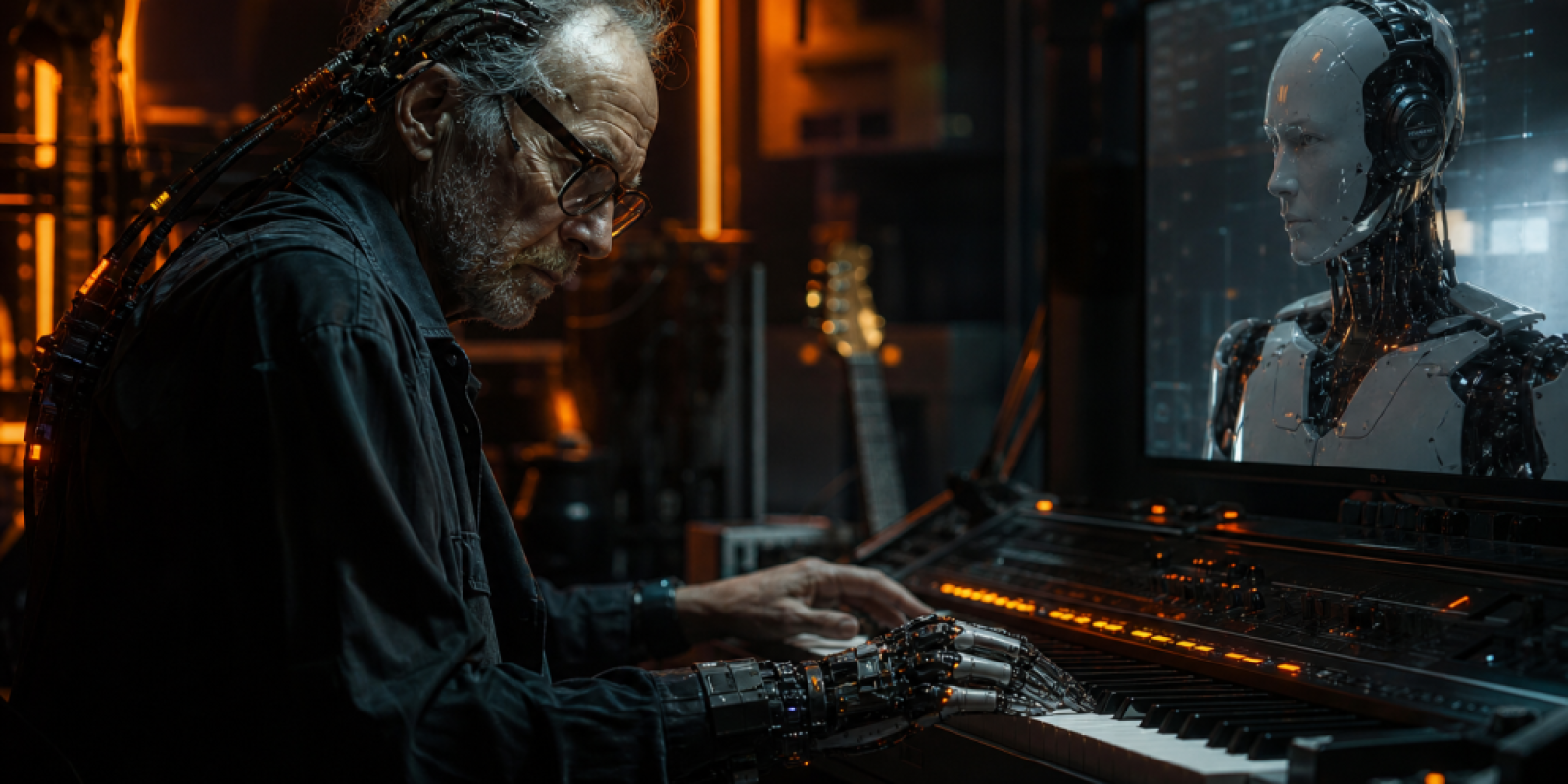
Samuel Smith leaned into the microphone and hummed a rough melody he could no longer play on guitar. The demo that followed was not recorded by a session player or a synth but by an AI tool that turned his voice and short prompts into a playable arrangement, which producers and session musicians then turned into a full album. This human moment is quietly radical because it rewrites how instrumental limitations can be bridged without replacing the artist. According to The Associated Press, Smith used platforms including Suno and Udio to translate humming into demo arrangements while Parkinson’s disease degraded his ability to play guitar. (apnews.com)
Most headlines framed the story as another cultural flashpoint in the debate over generative music. The obvious framing pits creators against machines and labels against startups. The deeper and less reported issue is not whether AI can mimic a style, but how assistive AI tools become infrastructure for inclusion, health care, and creative continuity, and how that demand will reshape business models for both startups and incumbents.
Why product and rights teams should treat this as a strategic signal
When a serious songwriter uses AI to keep making music despite a degenerative illness, product teams must reassess use cases beyond novelty and virality. Assistive workflows create sticky, mission-driven users who need reliability, transparency, and integration with professional production pipelines. Investors who only benchmark engagement metrics will miss recurring revenue opportunities in therapeutic and pro workflows, which behave very differently from consumer churn metrics.
The legal firestorm that created a market for “licensed” AI tools
The music industry’s legal pushback against generative audio has been intense. Major labels filed lawsuits in June 2024 against startups including Suno and Udio alleging the models were trained on copyrighted recordings without permission, a fight that forced startups and labels into rapid accommodation and new licensing plays. Bloomberg reported on those lawsuits and framed them as a turning point for what training data and fair use mean for audio models. (bloomberg.com)
Record companies later moved from litigation to negotiation in some cases, creating partnerships and settlement frameworks that attempt to give labels control and revenue while allowing AI firms to operate. Reuters covered those settlements and partnership deals, which rewired incentives and created pathways for startups to offer licensed, industry-friendly versions of their tools. (investing.com)
How the core story unfolded in the studio
Smith uploaded short voice memos and lyric drafts, then iterated with many prompts until a demo captured the mood he heard in his head. The AI-generated demos were never the final recordings, they were communication devices that enabled top session players to understand Smith’s intent quickly. A producer assembled musicians including Grammy winners and recorded over the AI-arranged demos in Nashville, turning digital sketches into human performances that honored both craft and intention. The Associated Press documented the album release and the specific use of AI to create a track called “Horizon.” (apnews.com)
This workflow resembles a modern producer’s toolchain where a DAW, a mood board, and a 30 second clip can replace hours of trial. It is efficient and, for artists with disabilities, it can be the difference between finishing a record and shelving it forever.
How the tools were actually used in practice
Session players received AI demos as reference tracks and recorded live takes from them. The final mixes were dominated by acoustic instruments and human performance, not synthetic artifacts. The AI acted like an arranger and shorthand translator, not a ghost musician taking credit. This distinction matters to professionals, because mixing human nuance with machine-generated scaffolding requires different licensing and workflow support than fully synthetic releases.
AI did not take the guitar from him, it only returned his songs to a place where other humans could still hear and play them back.
The cost and the math product teams must model now
If a studio charges 1,500 dollars per day and AI-assisted demos reduce preproduction by two to three days, a label or producer can save 3,000 to 4,500 dollars per project. For catalog artists who need rapid ideation, that adds up quickly across tens to hundreds of tracks. Companies selling AI tools should model customer lifetime value not around one-off consumer churn but around repeat usage by professional users who will pay for privacy, accuracy, and export-ready stems. Expect enterprise tiers priced 10 to 20 times higher than consumer plans for those capabilities. That is the margin that will attract enterprise sales teams and legal specialists to companies previously run by small research teams.
The legal and ethical stress-tests that remain
Artists and rights holders remain wary, and many practical concerns are unresolved. Litigation and public letters from musicians have shown the industry will litigate when outputs resemble copyrighted works too closely, as reported by the Los Angeles Times. (latimes.com) Contracts, provenance metadata, and user-facing consent flows will need to be standard features or companies will face repeated legal disruption. The question of attribution and revenue share for derivative outputs is not solved by better tech alone, it requires clear commercial frameworks and sometimes collective bargaining.
The Guardian has documented how these disputes have pushed some labels to partner with AI startups while others continue to litigate, which means market fragmentation will persist and policy risk is real for startups that scale without rights clearance. (theguardian.com)
What product, legal, and business teams should build next
Focus on three concrete features. First, provenance metadata that travels with every exported file and is immutable enough to satisfy rights audits. Second, private or on-premise models for high-value creators and health programs that cannot expose raw voice or lyric data. Third, enterprise agreements for therapy, academic, and accessibility partnerships that include clinician endorsements and measurable outcomes. These are not glamorous, but they are where sustainable revenue hides, and where regulators will look first.
A practical, forward-looking close
Assistive AI in music is not a novelty trend. When the technology proves its value in very human, high-stakes contexts like disability and healthcare, it forces an industry to adapt commercially and legally. Companies that treat rights, transparency, and professional workflows as core product features will find defensible business models and less courtroom time.
Key Takeaways
- AI-assisted music tools can enable artists with disabilities to finish creative work and create durable customer segments for startups.
- Legal battles over training data created a market incentive for licensed, enterprise-grade music AI offerings.
- Product teams must prioritize provenance metadata, privacy modes, and enterprise licensing to capture professional value.
- The most valuable users may be therapists and legacy artists, not viral TikTok consumers.
Frequently Asked Questions
How can a small studio adopt AI safely without risking lawsuits? Use commercially licensed models or enterprise offerings that include rights clearance. Require provenance metadata on all exports and consult legal counsel for contract templates that specify ownership and revenue splits.
Will AI replace session musicians in professional recordings? Not in high-quality productions where human nuance matters. AI can accelerate preproduction but professionals remain essential for performance and interpretation. Expect substitution only in low-cost stock music scenarios.
What does this mean for royalties and copyright? Rights frameworks are evolving; models that train on unlicensed catalogs face legal risk. Licensing agreements and clear attribution systems are the immediate fixes businesses should budget for.
Can AI be used therapeutically for people with Parkinson’s? Yes, as an assistive communication and creative tool, AI can help patients express musical ideas, but medical outcomes require clinical validation and partnerships with health institutions.
How should investors evaluate music AI startups now? Look for traction in enterprise, healthcare, or rights-cleared markets and for teams that have legal and music-industry expertise. Consumer virality is nice, but enterprise contracts scale revenue predictably.
Related Coverage
Explore reporting on the broader economics of generative media rights, including litigation timelines and settlement models for audio models. Also read analysis of AI in therapeutic and creative accessibility to understand how health systems and insurers might underwrite creative tools.
SOURCES: https://apnews.com/article/ac2a6ed263256c12f68eb827f7e8238a, https://www.bloomberg.com/news/articles/2024-06-24/sony-warner-universal-sue-suno-udio-for-training-ai-on-copyrighted-music, https://www.latimes.com/entertainment-arts/business/story/2024-06-24/riaa-suno-udio-lawsuit-ai-copyright-songs-music, https://www.reuters.com/technology/music-labels-sue-ai-companies-suno-udio-us-copyright-infringement-2024-06-24/, https://www.theguardian.com/music/article/2024/jun/25/record-labels-sue-ai-song-generator-apps-copyright-infringement/