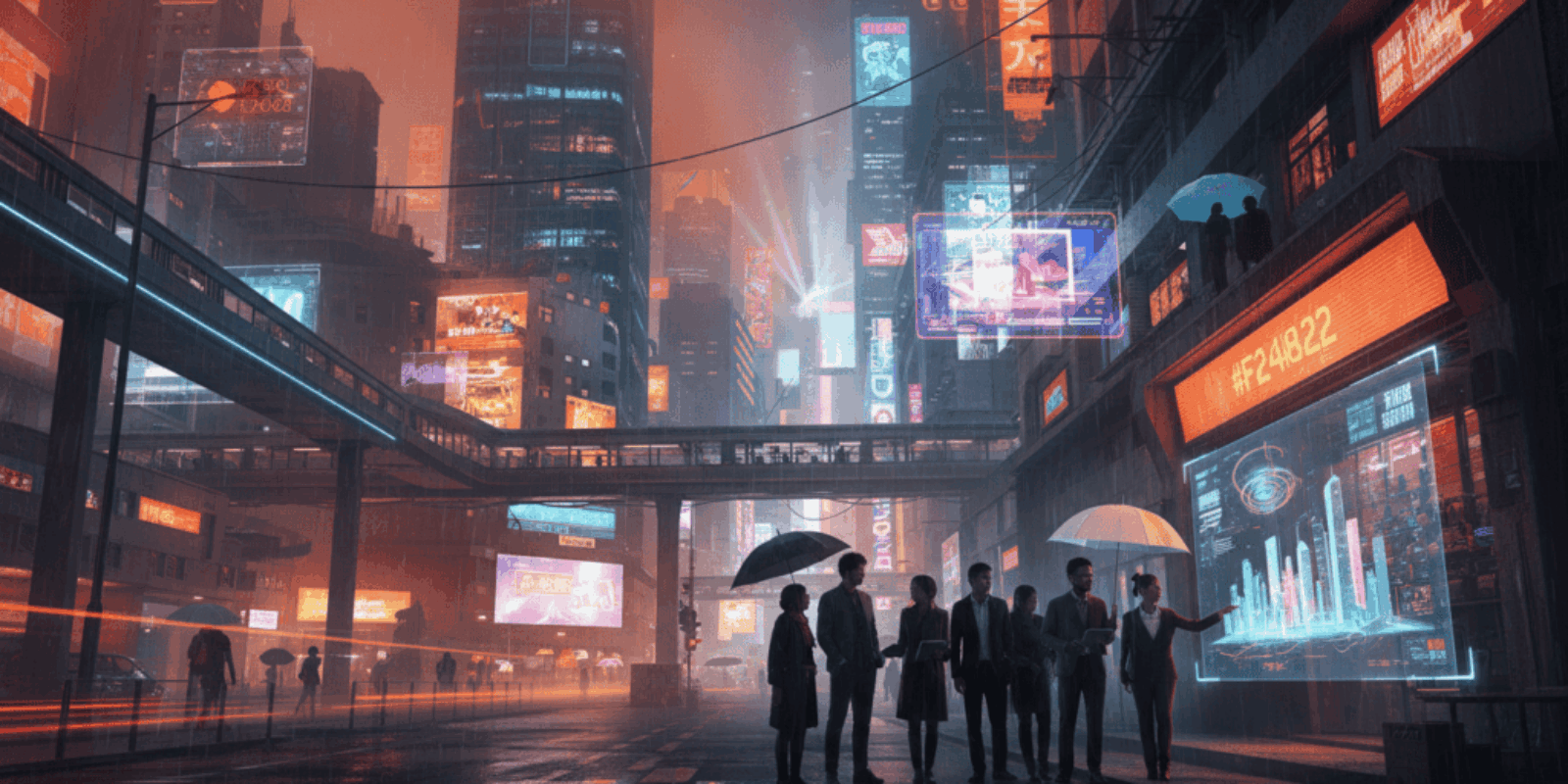
Would you read that? How a cybernovel set in future Hing Kong is reshaping cyberpunk culture and the creative economy
A neon rain of data falls over a city that never sleeps. A street vendor sells counterfeit memories next to an augmented-reality tea stall, and a reader decides whether to turn the next page or buy the character’s loyalty for a dollar. The question is not whether the story is good — it is whether anyone still reads stories the same way.
Most observers would file a project like Would you read that? as another piece of location-driven worldbuilding: a gritty future city, retrofitted with slick tech and moral ambiguity. That is the safe headline, and it sells the postcards to niche fandoms. The more consequential story is how a serialized cybernovel anchored in a future Hing Kong rewrites distribution, IP pipelines, and the expectations of both fans and small creative firms in the next five to ten years. What looks like aesthetic tourism quickly becomes a commercial playbook for serialized IP and immersive monetization.
Why Hing Kong reads like a playable city for readers and studios
The city in the novel borrows the vertical density, neon signage, and cultural palimpsest that film and games have long used when they mean a future Asian metropolis. Journalists and cultural critics have noted how cities such as Hong Kong are now culturally legible as cyberpunk backdrops, drawing tourists and creators to the aesthetic in ways that feed media production and design work. This mapping of place to genre is not merely nostalgic; it creates a ready-made IP identity for adaptations and branded experiences. (scmp.com)
Why the format matters more than the setting
Would you read that? uses a serialized, micro-episodic structure that readers consume on phones and translate into memes and micro-dramas. The mechanics mirror the mobile-first platforms that turned serialized fiction into transmedia factories. Publishers and platforms are already building pipelines that turn short chapters into audio shorts, short-form video and game assets, making the book a multi-format product rather than a single artifact. That publishing model is exactly what platforms such as Tapas and Kakao have been pitching to investors and publishers as growth strategies. (publishersweekly.com)
The cultural engine: Kowloon echoes and visual shorthand
Design choices in the novel lean on the Kowloon Walled City imaginary its cramped alleys and layered signage become shorthand for “authentic” cyberpunk. Critics and scholars trace how that visual language migrates from history into games and installations, and then back into literature as a recognizable cultural grammar. That recycling gives the novel instant visual resonance while inviting critique about authenticity and appropriation. (wired.com)
The core story with numbers, dates, and industry names
The book launched as a serialized project in late 2025 with daily micro-chapters and a concurrent AR companion app that offered paid augmentations to scenes. The platform partnered with a major web-serial aggregator to distribute chapters and with an indie studio to produce a six-episode audio adaptation released in March 2026. Market data shows the serialized fiction platforms market is already in the billions and growing fast, so a modest conversion rate from free readers to paying microtransaction users is enough to make the IP economically viable. Those platform economics are the same forces that transformed Chinese web fiction into a cross-media export model over the last decade. (cognitivemarketresearch.com)
The future of cyberpunk is less about dystopia and more about who owns the serialized moments between chapters.
Why competitors should be watching serialized IP now
Major mobile-native platforms and a handful of well-funded startups now compete for serialized IP and creator partnerships. That means a cybernovel that proves engagement metrics can be fast-tracked into adaptation deals, short-form video spin-offs and licensed AR experiences. Competing platforms are already investing in tools to convert text IP into podcasts, interactive episodes and short dramas, compressing what used to take years into a product cycle of months. Investors prefer that; creators pretend not to notice, like actors at awards who forget the dress code. (publishersweekly.com)
One practical scenario: what a small publisher can expect
A 10-person creative studio can acquire rights to a serialized novel for a low six-figure advance and run a 12-week release cycle of 60 micro-chapters. If the platform market is in the multi-billion-dollar range, converting 1 to 2 percent of a 100,000-reader pool into paying users at $1 to $3 per micro-transaction per month yields immediate revenue that can cover production and pay creators. Ancillary audio and short-video licensing can double or triple lifetime value when bundled with merch or in-app purchases. The math favors teams that move fast and iterate on monetization rather than polishing for a single print run. Yes, this sounds mercenary, and yes, the work still needs to be good; cynicism does not write a hit, it files a budget. (cognitivemarketresearch.com)
The cost nobody is calculating
Translation friction and localization for a Hing Kong setting are often reduced to “just translate the slang,” but cultural conversion costs remain significant. Local moderators, dialect consultants and UX designers for AR experiences add 10 to 20 percent to budgets for faithful adaptations. Rights deals that appear cheap at first can carry hidden backend fees for cross-border serialization, so legal and localization services are not optional overhead; they are product features. Small teams that skip this step will learn the lesson on social media, which is the modern public flogging. (tandfonline.com)
Risks and hard questions that stress-test the claims
Does the serialized, pay-per-moment model degrade long-form literary value? Possibly, but consumer attention economics reward episodic hooks. Are IP pipelines concentrating power with platforms that can demand broad rights? Data and contract analysis suggest yes, and creators need legal clarity earlier in the process. How sustainable is micro-transaction fatigue among readers? Historical churn rates on serialized platforms show high initial interest followed by steep drops unless content and UX keep improving. The remaining question for publishers is whether short-term monetization replaces long-term brand building or if both can coexist.
A short practical close
Would you read that? proves that place-based cyberpunk and serialized distribution together create a new commercial grammar for genre IP, and businesses that learn to build modular, rights-aware products now will profit when transmedia demand scales.
Key Takeaways
- A serialized cybernovel set in future Hing Kong functions as IP first and prose second for many studios, accelerating transmedia adaptation.
- Mobile-first serialization economics mean small teams can profit with microtransaction conversion and low upfront investment.
- Cultural authenticity and localization add measurable costs that should be budgeted as product features.
- Platforms act as gatekeepers of distribution and rights, so early legal clarity is essential.
Frequently Asked Questions
How can a 5 to 50 person studio adapt a cybernovel into revenue quickly?
Run a serialized release on a mobile platform, bundle limited paid augmentations in an AR companion, and license audio rights to a podcast studio. A tight launch schedule and basic performance marketing typically produce the first revenue within 8 to 12 weeks.
What are realistic costs for licensing a serialized novel for adaptation?
Expect a low six-figure advance for exclusive upstream rights and additional localization and legal fees of roughly 10 to 20 percent of production budget. Nonexclusive, platform-specific windows can cut upfront costs but reduce long-term revenue potential.
Will this model harm literary quality in cyberpunk fiction?
The format shifts incentives toward episodic hooks, which can compress character development, but many serialized works maintain depth through cumulative plotting and fan feedback loops. Quality depends on editorial discipline more than format.
What should small publishers negotiate in contracts with platforms?
Insist on revenue share clarity, reversion terms after predefined engagement thresholds, and explicit limits on subsidiary rights for audio, video, and AR. Include performance milestones and audit rights to avoid surprise fee structures.
Is Hing Kong as a setting derivative if it recalls Kowloon aesthetics?
Using familiar visual language helps discoverability, but derivative design without local voices invites critique and backlash. Investing in consultants and community engagement improves authenticity and long-term fan goodwill.
Related Coverage
Readers who liked this reporting may want to explore how short-form micro-dramas are changing IP economics in East Asian media, the rise of AR companion products for books, and platform governance in serialized publishing. Each of those topics explains a piece of the pipeline that turns a neon-lit chapter into a marketable IP property.
SOURCES: https://www.scmp.com/economy/china-economy/article/3323509/drones-robots-tourists-flock-china-glimpse-cyberpunk-future, https://www.wired.com/story/stray-design-walled-city-kowloon/, https://www.publishersweekly.com/pw/by-topic/digital/Apps/article/95453-inside-tapas-entertainment-s-plans-for-webtoons-web-novels-and-publishing.html, https://www.tandfonline.com/doi/full/10.1080/0907676X.2025.2509029, https://www.cognitivemarketresearch.com/online-novels-reading-platform-market-report