Australia Turns Into Bright-Red Vision of Hell for cyberpunk enthusiasts and professionals
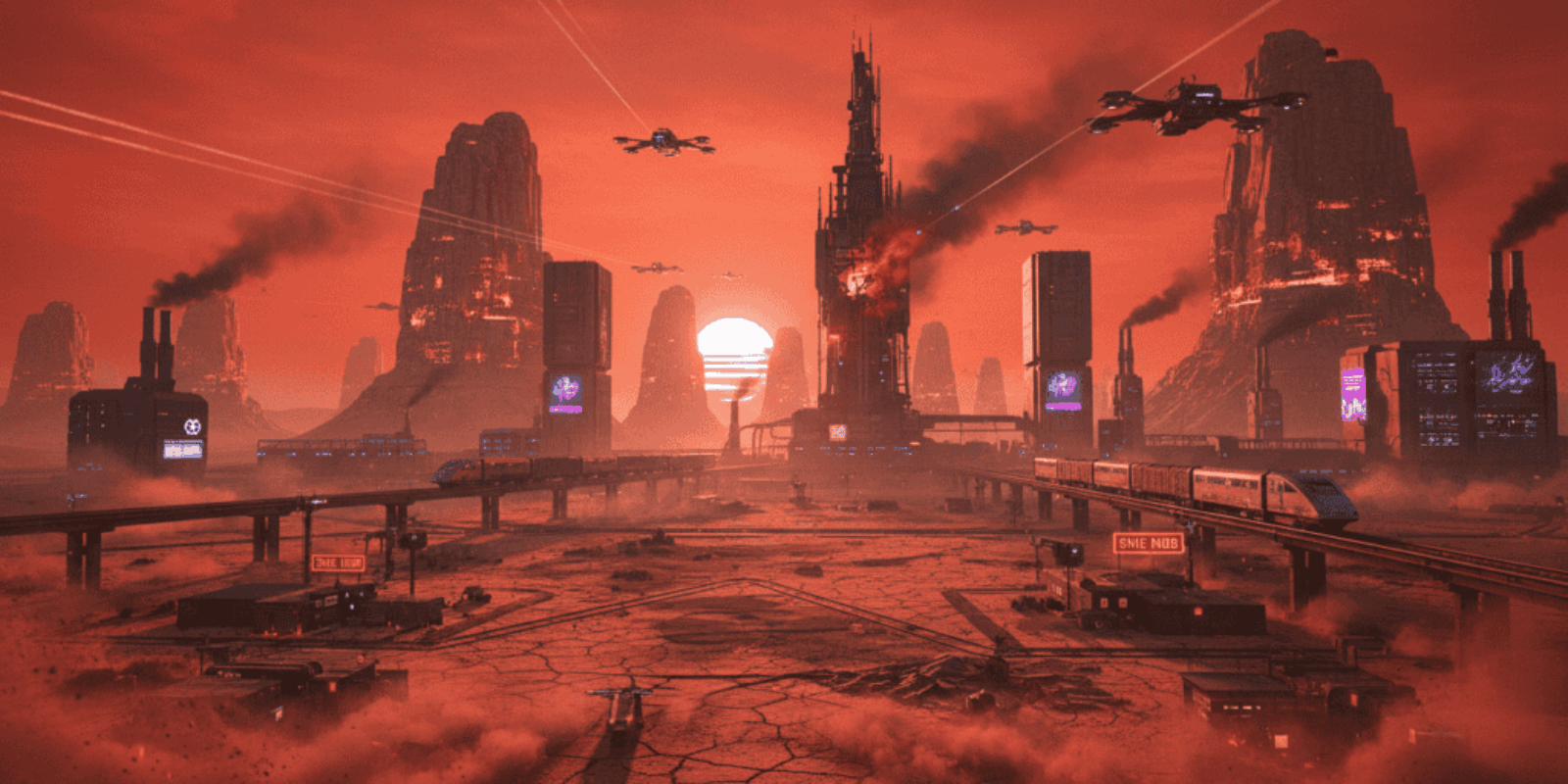
When the sun is a coin of living ember and a coastal town goes from holiday postcard to framed concept art in an hour, the world briefly looks like someone set a film filter on maximum.
A woman stands knee deep on a beach as ash falls like confetti and the horizon burns in a palette no colorist would trust. Photos and videos from the worst days of the 2019 to 2020 bushfire season made entire cities look staged for a genre film, but these were raw, lived moments where real people found themselves inside a commercial-grade dystopia. This article relies mainly on press and satellite reporting from that period and recent regional imagery to trace what those visuals meant for cyberpunk culture and the creative industries that feed it. (theguardian.com)
The obvious reading is fast and grim: climate change amplified fire seasons and turned skies scarlet, creating humanitarian and ecological disaster. The less obvious business story is quieter and more specific. For creators, brands, and small studios that sell the look and mood of near-future decay, those days rewired demand, tooling, and risk assessment in ways that matter to anyone making visual media, games, fashion, or immersive experiences.
How the red sky moment actually happened on camera
Photographs from coastal towns such as Mallacoota captured skies bleeding red as embers and smoke merged into a thick atmospheric filter, a scene shared globally on social platforms as proof that the cinematic can be immediate. Journalists on the ground described temperatures of terror, flights of evacuations, and a sky so saturated it read like a production design brief. (independent.co.uk)
Satellites tell the rest of the story. Imagery assigned to show heat and burn scars visibly marks active fire fronts in bright red, making the planet itself look photoshopped. Those satellite passes helped editors, agencies, and VFX houses extract palettes and particle references with unprecedented fidelity. (earthdata.nasa.gov)
Why cyberpunk creators suddenly care more than they did last season
Cyberpunk has always trafficked in neon, smoke, and urban weather. The Australian red sky was not a stylistic wink but a public demonstration of how quickly literal atmospheric design cues can arrive. Studios that once purchased generic “apocalypse” packs now need authentic ember storms, particulate light scattering, and ash choreography that matches recent real-world footage. That drives demand for new particle libraries and physics simulations that capture how light filters through dense smoke.
This matters because the genre sells believability. When a player or viewer can tell the smoke is procedural versus photographed, suspension of disbelief fractures. Smaller teams used to patchwork fixes are now buying higher fidelity tools or licensing real footage, which shifts budgets toward postproduction and away from other creative line items. A dry compliment to accountants: nothing kills a mood board like a sprawling render bill.
What visual effects houses and game engines are adjusting
Major engines and tool vendors are updating volumetric lighting, haze models, and particle systems to reflect real-world data. The market competition centers on realistic performance at scale, with engine makers optimizing for consoles and cloud rendering farms and VFX houses chasing believable microgravity of ash. Creators compare the cost of bespoke simulations to buying editorial footage and compositing it into scenes where authenticity matters more than ever.
Publishers are also conscious that real disasters carry PR risk. Shooting practical effects or staging fire-adjacent scenes in the same regions that recently burned draws complaints, and insurers update clauses accordingly. A producer who treats this as a mood board exercise might find location permits and public opinion are suddenly part of the shot list.
The cost nobody is calculating for small studios
For a 12-person indie studio making a short cyberpunk game, redoing environmental art to match authentic ember storms could mean moving 10 to 20 percent of the art budget into cloud rendering and new particle assets. If a pack of high-quality volumetric assets costs about 300 to 700 US dollars and the studio needs five distinct sets for city, coastline, interior, industrial, and sky replacements, that is a 1,500 to 3,500 US dollar one-time cost before artist hours. Staff time to integrate those assets often adds another 1,000 to 5,000 US dollars depending on complexity. Those are round but useful figures for planning and grant applications.
Smaller fashion houses and experiential designers face different math. Licensing authentic footage for projection mapping can run 500 to 2,000 US dollars per clip for exclusive short-term use, and the technical overhead to output at exhibition scale can double that. The choice becomes paying for realism or leaning into stylized abstraction; both are valid, but the former now carries higher entry costs and reputational scrutiny.
Practical implications for teams of 5 to 50 employees
A 10-person studio should model two scenarios: a lean option where one environment artist licenses two premium footage clips for 1,200 US dollars and integrates them into level backgrounds, and an upgrade option where the team purchases volumetric assets for 2,500 US dollars and budgets 120 render hours in the cloud at market rates. The first keeps cashflow tight and visual fidelity decent; the second grants control for marketing and feature shots. These scenarios convert visual ambition into comptroller-friendly line items, which helps when pitching to publishers.
For live events and installations, the checklist changes to safety planning, air quality monitoring for staff, and alternative content ready to deploy if local conditions worsen. That is not glamorous, but it keeps a show on the floor and clients from texting angry relatives during the performance.
The red sky was not a filter, it was a design brief that arrived by emergency broadcast.
Risks and open questions that should keep creative directors awake
There is reputational risk in aestheticizing real trauma. Using real footage without context invites accusations of exploitation and can harm relationships with affected communities. Copyright and licensing complexity also rises when user-generated material becomes source material for commercial projects. Ethical curation will become a competitive advantage for brands that want authenticity without looking opportunistic.
Technically, simulating dense smoke with correct light absorption and Mie scattering remains expensive and sometimes impossible in real-time on midrange hardware. That forces tradeoffs between fidelity and accessibility, potentially fracturing audiences across device classes. Finally, regulators may tighten shoot permits in fire-prone zones, changing location economics for practical shoots.
Why now is the market moment for new tools and studios
Two factors converge: better satellite and editorial references that feed machine learning models, and a surge in audience appetite for near-future realism. Those combined create openings for niche vendors offering subscription access to verified environmental datasets, and for boutique studios that can translate that data into reusable creative assets. Competitors range from major engine vendors to specialized VFX houses and footage libraries, and each will try to own some portion of the supply chain.
Forward-looking close
Cyberpunk aesthetics have always been a metaphor made visible; the Australian red sky turned a metaphor into a data set and a cost center, forcing creators to choose between stylized homage and accountable realism.
Key Takeaways
- The 2019 to 2020 Australian red skies became a reference standard for authentic ash and ember visuals, driving demand for higher fidelity assets.
- Small teams should budget 1,500 to 6,000 US dollars for realistic environmental upgrades depending on scope and licensing needs.
- Ethical sourcing of footage and sensitivity to affected communities is now part of production risk management.
- New vendors that convert satellite and press imagery into usable creative libraries will find a hungry market.
Frequently Asked Questions
How should a small game studio prioritize spending to get a believable red-sky look?
Start by buying one high-quality footage clip or volumetric asset to use across multiple scenes, then allocate artist hours to color match and composite. This reduces risk and provides a test case before investing in full bespoke simulations.
Is it okay to use real disaster footage in a commercial teaser?
It can be legally permissible but ethically fraught. Obtain proper licensing, credit sources, and add context that acknowledges the human cost to avoid appearing exploitative.
Can real-time engines handle authentic ember storms on consoles?
Some modern engines can approximate convincing effects, but true high-fidelity volumetric smoke often requires precomputed elements or cloud rendering to keep framerates acceptable on midrange hardware.
Will insurers and permits make location shoots harder in Australia?
Permit authorities and insurers are paying closer attention to recent fire history, so expect stricter requirements in fire-prone regions and potentially higher premiums for practical effects.
Where should a small studio buy authentic ash and smoke assets?
Marketplace options exist alongside footage libraries and specialized vendors; choose sources that supply technical metadata and usage rights suitable for commercial projects.
Related Coverage
Readers who want to dig deeper should look at stories about how satellite data is changing creative workflows, investigations into ethical use of disaster imagery in advertising, and technical breakdowns of volumetric lighting in the latest engines. These threads explain where the supply of assets meets the demand from audiences and brands.
SOURCES: https://www.theguardian.com/world/gallery/2013/oct/17/australia-bushfires-smoke-sydney-in-pictures, https://www.abc.net.au/news/2020-09-10/apocalyptic-red-and-orange-skies-result-from-wildfires/, https://www.earthdata.nasa.gov/news/worldview-image-archive/bushfires-grampian-national-park-australia, https://www.independent.co.uk/news/world/australasia/australia-wildfires-nsw-victoria-mallacoota-evacuation-shelter-a9270161.html, https://www.copernicus.eu/en/media/image-day-gallery/bushfires-state-victoria-australia