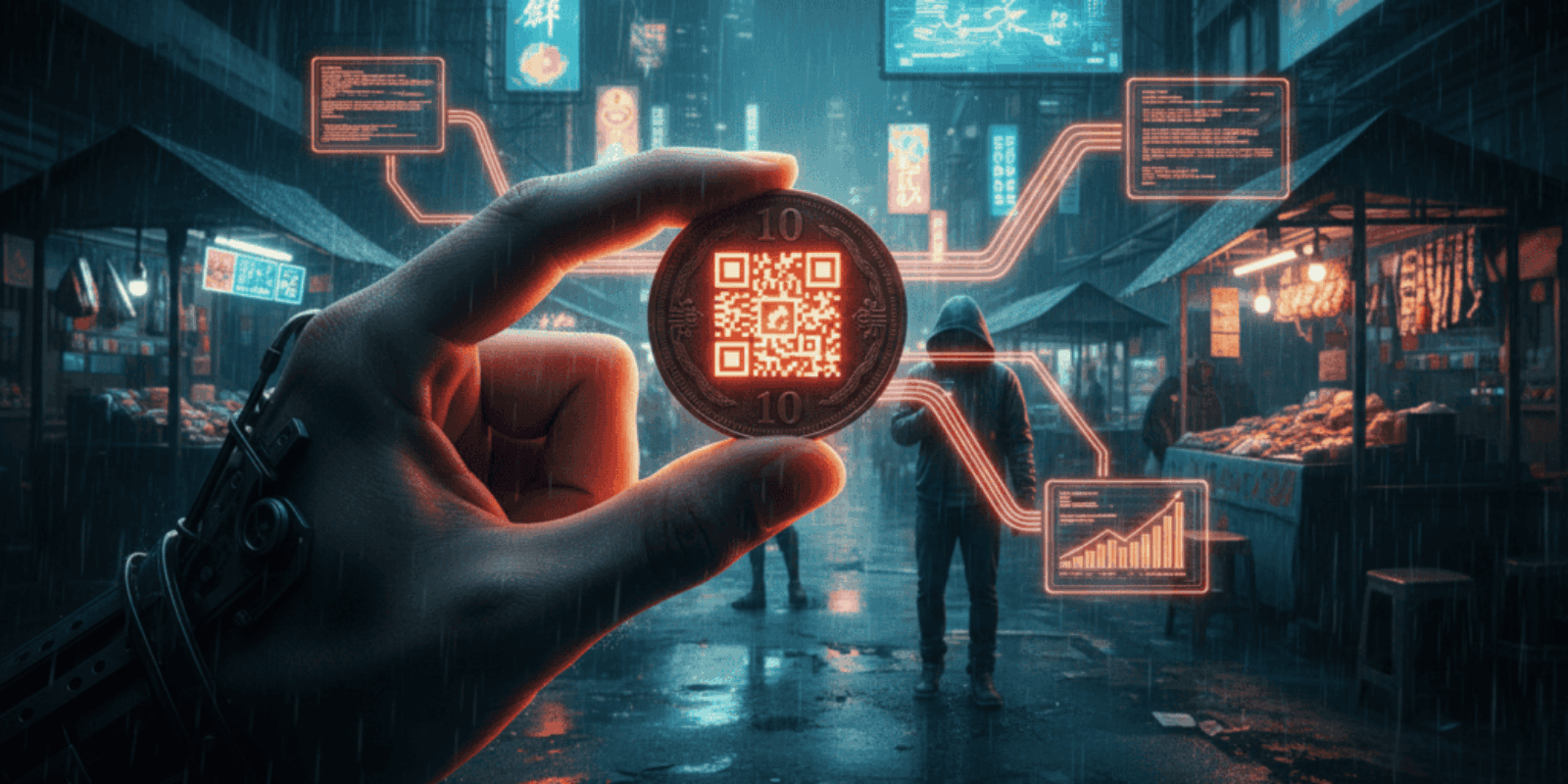
A QR on Metal: What the Philippines’ New 10 Peso Coin Means for Cyberpunk Culture and the Security Industry
A small round object lands in a palm and suddenly the past and future argue with one another; the argument now includes a scannable square.
A commuter drops a 10 peso coin on a Manila train and a teenager cameras it with a cracked phone, looking to see what the tiny matrix will do. The mainstream read is tidy: a commemorative coin for the Philippines’ ASEAN chairmanship that links to official pages, a novelty photo op and a limited circulation item people will Instagram for a week. This account is true, but it misses how embedding a digital access point into legal tender rewires the interface between citizens, governments and commerce in ways that matter to designers of urban tech, privacy pros and cyberpunk storytellers alike.
This report relies mainly on central bank materials and local press reporting for the factual baseline. According to the Bangko Sentral ng Pilipinas, the 10 peso ASEAN commemorative coin issued for 2026 carries the ASEAN 2026 logo and a QR code on the reverse that directs scanners to BSP and related ASEAN web resources. (bsp.gov.ph)
A metallic street scene that doubles as a data portal
Coins have always been public infrastructure. Placing a scannable QR code on a circulation coin morphs that infrastructure into a digital gateway available to anyone with a camera. Local outlets reported that the coin will enter circulation in January 2026 and be legal tender, not a collectible-only item, which changes the expected usage patterns. (pna.gov.ph)
This is not an augmented reality wand for the elite. Because the coin circulates, the technology reaches informal economies and transit hubs where use is highest. That creates a low-cost path to push multimedia content, event schedules or official messaging directly into hands that rarely use government portals. It is public signage turned pocketable and portable.
Why most observers call this government PR and why they are only half right
On the surface the coin behaves like ceremonial advertising for the Philippines’ ASEAN chairmanship. News outlets framed the release as soft power and national branding tied to 2026. (gmanetwork.com)
The overlooked consequence is infrastructural: the coin standardizes a physical object that points to verified digital content. That matters for trust engineering in environments where forgery and misinformation thrive, because a government stamped code can act as a reference anchor even when networks are sparse.
How cyberpunks should read the QR as social hardware
Cyberpunk culture is less about neon and more about alternative interfaces to authority. A legal tender coin with a machine-readable link creates an unexpected affordance for decentralized verification rituals. Street vendors can show a coin and say this is the official source, or activists can examine which pages are served when the code is scanned. That flips a classic control vector into a surface for interrogation.
For fiction writers and designers this is a practical prop: a coin that contains a pointer instead of secrets is a stage for plotlines about corrupted redirects, archival snapshots and neighborhood-driven audits. Yes, it is slightly quaint to worry about a government QR code; nostalgia for analog tangibility is an honest impulse in a world full of vapourware.
Technical anatomy of the coin and the QR interaction
The obverse retains the standard Apolinario Mabini portrait while the reverse displays the ASEAN 2026 emblem, the BSP logo and a QR code. When scanned the QR directs users to the central bank web ecosystem and linked ASEAN pages rather than embedding payloads on the coin itself. Several news reports and the BSP announcement confirmed this behavior. (philstar.com)
Physically encoding the QR as raised and recessed metal requires high-precision minting and tolerances that make scavenged fakes easier to spot. That does not eliminate attack surfaces; a spoofed landing page or lookalike code on a counterfeit could still mislead casual scanners.
Why now: geopolitics, tourism and the economics of attention
The timing aligns with the Philippines chairing ASEAN in 2026 and a broader push to turn state events into mobile-first experiences. Press coverage ties the release to both national pride and promotional campaigns aimed at visitors for the ASEAN year. (pia.gov.ph)
Embedding QR codes into currency is cheap attention engineering. A single scan converts a physical encounter into a measurable web event, which is priceless in an era where most civic engagement is monetized by metrics. Or, as someone in a meeting might deadpan, it is free data harvesting with a national stamp.
A small coin becoming a verified portal rewrites the rules for how citizens check facts on the ground.
Practical playbook for businesses with 5 to 50 employees
Small venues and market stalls can monetize verified coin scans by tying promotions to the official landing page. If a stall runs a weeklong promo and asks customers to scan the coin for a coupon, a five person shop selling 200 items a day could expect 400 to 800 additional web visits per week if even 10 to 20 percent of transactions engage. Use a short URL redirect on the landing page to track conversions without altering the official BSP pages.
A micro logistics firm with a fleet of 4 vehicles can use coin scans to surface official event schedules during peak ASEAN meetings, reducing missed pickups. Estimating five missed pickups per day with an average lost revenue of 200 pesos per missed pickup, the firm could recover 1000 pesos per day by coordinating better information delivered through the BSP-linked page.
A boutique software shop should treat the coin as a testbed for secure linking practices. Implement server side checks that verify the referer token and supply content that degrades gracefully for low bandwidth. If the studio charges 50,000 pesos to build a microsite, designing it to handle 1000 concurrent scans per minute is prudent and affordable.
The cost nobody is calculating
Scalability and security are not free. Government hosting that must absorb surges from novelty traffic requires capacity planning and DDoS protection. If the landing site experiences a thousand fold spike and the hosting cost jumps from 5000 pesos per month to 50,000 pesos per month during peak events, taxpayers absorb the bill unless a private sponsor is declared.
There is also the reputational price of a compromised pointer. A single phishing redirect or malicious ad on a landing page could erode trust in physical tokens and provide fodder for conspiracy-minded communities. That risk is subtle and persistent in ways that collectors and press images do not capture.
Open technical and civic questions that matter to the industry
Will the QR be link immutable and archived or can content owners alter it without trace? What logging and privacy policies protect scanners and how long are access logs kept? Can third parties legally replicate the coin design and embed alternate pointers in customs grey areas? These are operational questions that shape whether a coin is a durable public good or a one year event.
Regulatory clarity about acceptable uses and penalties for creating lookalike coins will determine how the market treats physical QR affordances. Without clear rules small businesses and app developers face legal ambiguity when integrating the coin into promotions.
Forward look: a small object with outsized downstream effects
A 10 peso coin is an unlikely node of urban interaction but its significance is practical. If governments treat coins as verifiable portals, expect more physical first points of digital contact in public life and new product opportunities for verification and archival services.
Key Takeaways
- The BSP issued a 10 peso ASEAN commemorative coin in January 2026 that includes a scannable QR code linking to official pages, turning currency into a public gateway.
- Because it circulates as legal tender the coin reaches informal economies and creates low cost public touchpoints for verified content.
- Small businesses can exploit the coin for measurable promotions but must plan for tracking, bandwidth and security costs.
- The biggest risks are phishing redirects, hosting load and unclear regulation around lookalike tokens.
Frequently Asked Questions
What exactly does the QR on the new coin do when scanned?
The QR directs scanners to central bank pages and linked ASEAN 2026 resources rather than delivering content from the coin itself. It acts as a pointer to online information maintained by the Bangko Sentral ng Pilipinas.
Can a business legally use the coin in promotions or discounts?
Yes, using the coin as a prompt to visit a page is legal, but businesses should avoid implying government endorsement. Ensure any promotion links to privately controlled pages and disclose the terms clearly.
Is there a privacy risk for people who scan the coin?
Privacy risk depends on the hosting and analytics practices of the landing site. Organizations should disclose tracking and minimize personally identifiable data collection to reduce exposure.
Could bad actors spoof the QR code on counterfeit coins?
Yes, counterfeiters could mint lookalikes with different pointers. Authentication and public education on how to verify the landing domain are necessary mitigations.
Will other countries try this and should companies prepare?
Other mints have experimented with machine readable features and more may follow. Companies that build verification, archiving or analytics services for such portals will find new demand.
Related Coverage
Explore how low tech meets high tech in payment rails, and why physical tokens are becoming a canvas for trust and verification in civic life. Also consider reading about the role of design in public infrastructure and how small tech firms monetize verified government touchpoints.
SOURCES: https://www.bsp.gov.ph/SitePages/CoinsAndNotes/ASEAN-Coin.aspx, https://www.gmanetwork.com/news/money/economy/970531/bsp-to-launch-10-piso-asean-coin-with-qr-code-in-january-2026/story/, https://www.philstar.com/headlines/2025/12/23/2496313/bsp-launch-new-p10-coin-asean-2026, https://www.pna.gov.ph/articles/1264042, https://www.wheninmanila.com/bsp-10-peso-asean-commemorative-coin/