AI-powered robots offer new hope to German factories
What looks like an automation arms race is quietly reshaping how European manufacturing actually gets its work done
A foreman in a mid-sized Bavarian plant watches as a compact robot lifts a tray of metal parts and delivers it to a line that used to stop for lack of skilled hands. The shift is not cinematic; it is pragmatic and painfully local. Workers sweep the floor, engineers tune software, and a new kind of machine that sees and learns takes over the late shift nobody wanted to hire for.
On the surface the story reads like the usual automation narrative: aging workforce, rising labor costs, and a handful of headline pilots. The less obvious consequence is that these AI-powered systems are creating modular, software-first shopfloors that change how AI companies sell, integrate, and scale products for factories rather than how factory owners squeeze costs. Reporting for this article draws heavily on company press materials and vendor announcements, supplemented by Reuters reporting. (investing.com)
Why German factories are finally acting now
Germany faces a demographic cliff that has been pushing plant managers toward automation for years, not because of ideology but simple arithmetic. Reuters reported that retirements and a shrinking labor pool prompted family-run firms and Mittelstand suppliers to buy robots for tasks ranging from grinding to night shifts, with roughly 26,000 units installed in Germany in the referenced year. (investing.com)
Policy and procurement cycles accelerated during the supply shocks of recent years, and factories that once chose bespoke automation now prefer off-the-shelf AI components that can be updated with software. The net effect is faster pilots and shorter hardware replacement cycles, which is exactly the kind of thing venture capitalists love and CFOs tolerate. Someone will eventually write an ROI spreadsheet called Feelings Versus Figures; the CFO will enjoy the second column more.
The companies racing to put physical AI on the shopfloor
Legacy players and startups are meeting in production halls rather than trade press pages. BMW has begun systematic pilot deployments of humanoid and physical AI robots in Leipzig and previously in Spartanburg, with vendor partners and test results that include tens of thousands of handled parts and more than one million logged operations during trials. The automaker frames these projects as complementing, not replacing, conventional automation while building a Center of Competence for Physical AI. (press.bmwgroup.com)
At the logistics end, Magazino, now part of Jungheinrich, is rolling out AMRs called SOTO that handle Kanban and small load carrier flows, promising integration in weeks and claims of amortization in a few years based on pilot ROI studies. Those machines navigate with 3-D cameras and lasers and were commercialized after pilots at Bosch sites. Real robots, real shelving, slightly quieter middle managers. (jungheinrich.com)
Software firms are trying to make robots feel like smartphones for shopfloor staff. Wandelbots has extended no-code robot teaching platforms and announced partnerships to bring software-defined robotics to trade shows and customers, reducing the need for specialist integrators. The tonality is obvious: if humans can teach robots without a computer science degree, adoption accelerates. (wandelbots.com)
How these machines are different from old industrial robots
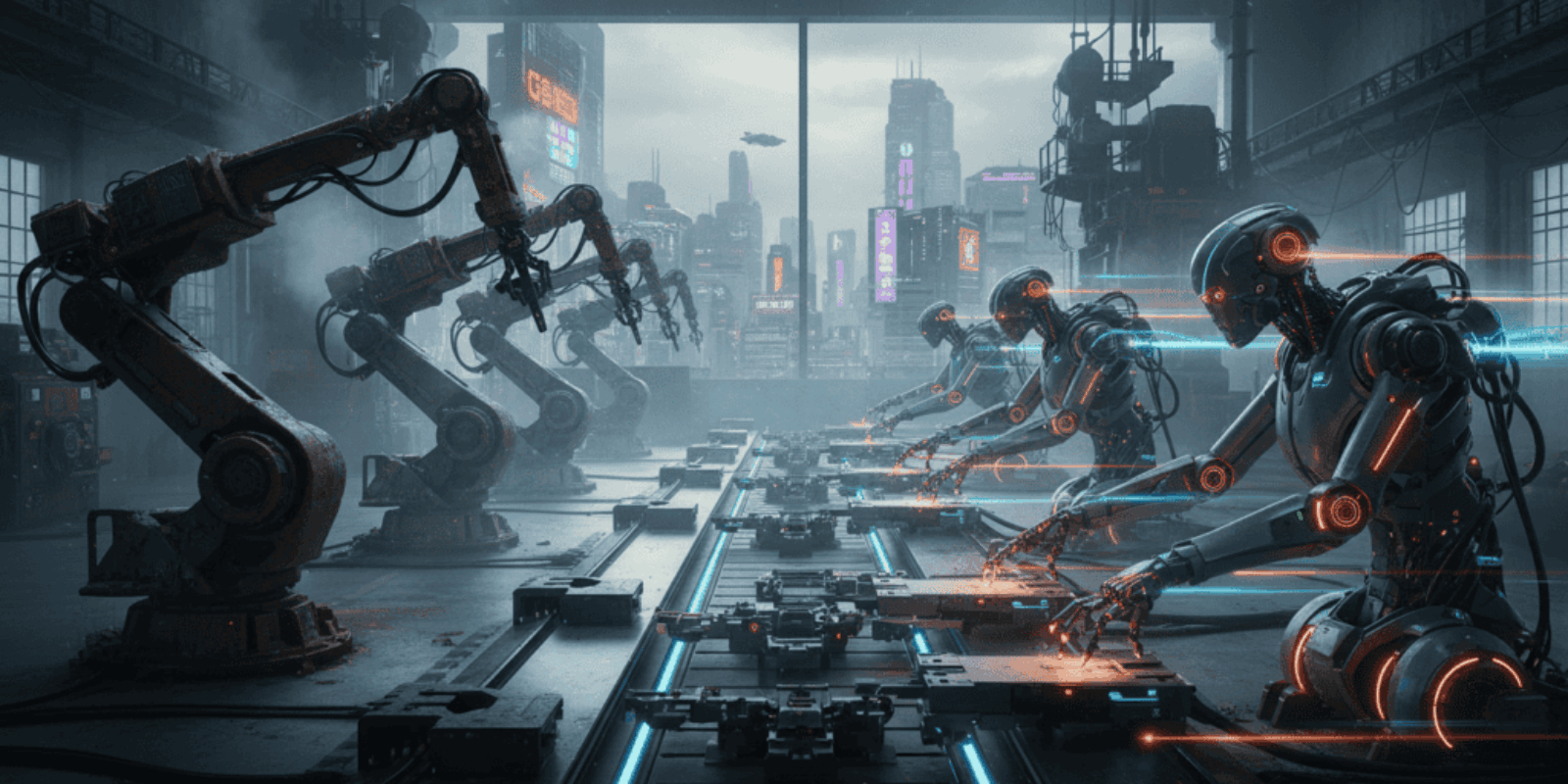
Old robots executed fixed routines in caged cells and required a PhD to change tasks. New systems pair vision, imitation learning, and cloud-connected simulation to let machines adapt to variable parts, imperfect lighting, and human coworkers. That shift turns robots into software projects as much as mechanical ones, changing budgets and timelines for both factories and AI firms.
Physical AI also means continuous improvement rather than a frozen specification. Software updates can tweak behavior across an entire fleet, which is great until someone forgets to run the test suite on a Friday evening. Slightly fewer surprises on Monday equals higher trust, unless the robot has an opinion about coffee break lengths.
Factories are buying adaptability more than horsepower, and that preference will reshape which AI startups survive.
The economics with real math and a plausible scenario
A mid-sized assembly line that runs two shifts and needs 10 to 12 repetitive kitting motions per minute can evaluate replacing a retiring worker with a humanoid or mobile manipulator. If a pilot robot demonstrates 90 percent uptime and handles 10,000 parts per week, the factory can compare labor cost savings, overtime reductions, and fewer quality rejects against a capital budget that vendors claim will pay back in three to five years in pilot materials. BMW’s published pilot numbers suggest humanoids can sustain high-throughput tasks once integrated. (press.bmwgroup.com)
Logistics automation math is simpler and often faster. Magazino’s SOTO units carry up to 24 small load carriers per trip and can be integrated to supply lines in 6 to 8 weeks according to vendor materials, which allows planners to model year one productivity gains with minimal floor redesign. That speed shortens the cashflow pain for CFOs who are allergic to long depreciation schedules. (jungheinrich.com)
The cost nobody is always calculating
Integration time is the silent budget eviscerator. Sensors, safety audits, IT hooks, and digital twins add material and professional services fees that often equal the hardware cost in year one. Accenture and industry partners are selling digital twin workflows and Omniverse simulations to reduce commissioning time, which helps but also creates a new vendor layer to negotiate with. The practical upshot is that the AI industry is not just selling models; it is selling systems integration and change management as a subscription.
Risks that could unmake the promise
Safety, standards, and interoperability remain unsettled. Humanoid pilots work under tight governance and heavy testing because a misapplied grasp is not a failed API call. Workforce displacement anxiety and works council negotiations in Germany complicate rollouts, and small firms can find vendor stacks overwhelming. The more a solution depends on proprietary simulation or cloud tooling, the more lock-in risk increases for buyers with conservative IT teams.
Regulatory scrutiny is also rising for any AI that controls physical movement, and product liability will be litigated long before it is standardized. That means the AI industry must bake in certification and traceability as a selling point rather than an afterthought.
What this means for the AI industry
AI vendors will need to repackage offerings as multidisciplinary solutions that bundle edge compute, simulation, orchestration, and training data pipelines. Accenture and Schaeffler’s work with NVIDIA and Microsoft shows how consultancies are carving the route to scale with digital twins and platform partnerships, turning pilots into repeatable blueprints. The companies that win will be those that remove the integration choreography from factory teams and make the economics visible to nontechnical buyers. (businesswire.com)
Winning in this space changes product roadmaps. Startups that can deliver predictable performance, clear ROI timelines, and simple operator experiences will attract the most industrial spending, because factories buy certainty and dislike surprises, unless those surprises come in the form of extra profit.
Forward-looking close with practical insight
German factories will not be fully autonomous in a year, but the modular arrival of physical AI means suppliers and AI vendors must design for staged adoption, clear ROI checkpoints, and human centricity from day one.
Key Takeaways
- AI-powered robots are being adopted in Germany because labor gaps force pragmatic decisions, not ideology.
- Vendors are selling systems integration and simulation as much as robots, changing the buyer profile.
- Shorter pilot to production timelines and payback claims are reshaping budget conversations in manufacturing.
- Safety, standards, and integration costs remain the primary commercial and regulatory risks.
Frequently Asked Questions
Will a humanoid robot replace my assembly line workers next quarter?
No. Humanoid robots are being trialed for repetitive or ergonomically risky tasks and require extensive integration, safety audits, and training before wider deployment. Trials focus on supplementing work, not wholesale replacement, and timelines typically span months to years.
How fast will a logistics AMR pay for itself in a small factory?
Payback depends on cycle times, uptime, and labor costs, but vendor pilots and ROI studies often model amortization in three to five years when units replace night shift handovers or highly repetitive internal transport. Include integration and maintenance in any spreadsheet to avoid surprise costs.
Do I need cloud infrastructure to run these AI robots?
Not always, but many solutions rely on cloud simulation, model updates, or fleet orchestration to scale effectively; on-premise edge compute is common for safety-critical control loops. The most pragmatic approach balances local control for latency and cloud for fleet learning.
What should a plant manager ask robot vendors during procurement?
Ask for measured pilot data on uptime, error rates, integration time in weeks, sample ROI spreadsheets from similar sites, and a clear support plan for safety certification and software updates. Contracts should specify exit clauses and data ownership.
Can small Mittelstand firms realistically adopt these systems without hiring more IT staff?
Yes, if vendors provide packaged integration and managed services, or if regional integrators consolidate support across multiple plants. The alternative is a longer adoption curve and higher internal resourcing costs.
Related Coverage
Explore stories about digital twins and factory orchestration, platforms that convert simulation into live robot behavior, and how workforce retraining programs are reshaping shopfloor upskilling. Coverage of vendor consolidation in robotics and vendor-neutral standards for safety would also be useful reading for procurement teams.
SOURCES: https://www.investing.com/news/stock-market-news/as-baby-boomers-retire-german-businesses-turn-to-robots-3213950 https://www.press.bmwgroup.com/canada/article/detail/T0456018EN/bmw-group-to-deploy-humanoid-robots-in-production-in-germany-for-the-first-time?language=en https://www.jungheinrich.com/en/newsroom/automatisierte-produktionsversorgung-mit-soto-robotern-1905344 https://www.wandelbots.com/automatica https://www.businesswire.com/news/home/20250331854959/en/Accenture-and-Schaeffler-Pave-the-Way-for-Industrial-Humanoid-Robots-with-NVIDIA-and-Microsoft-Technologies