YUMO GLOBE: A Glass-Domed Digital Clock That Repackages Hacker Aesthetics for Cyberpunk Design
Hand-bent brass wire, an ESP32-C3 brain, four 7-segment numerals and addressable LEDs tucked under blown glass make a punctual argument for why physical computing still looks like fiction.
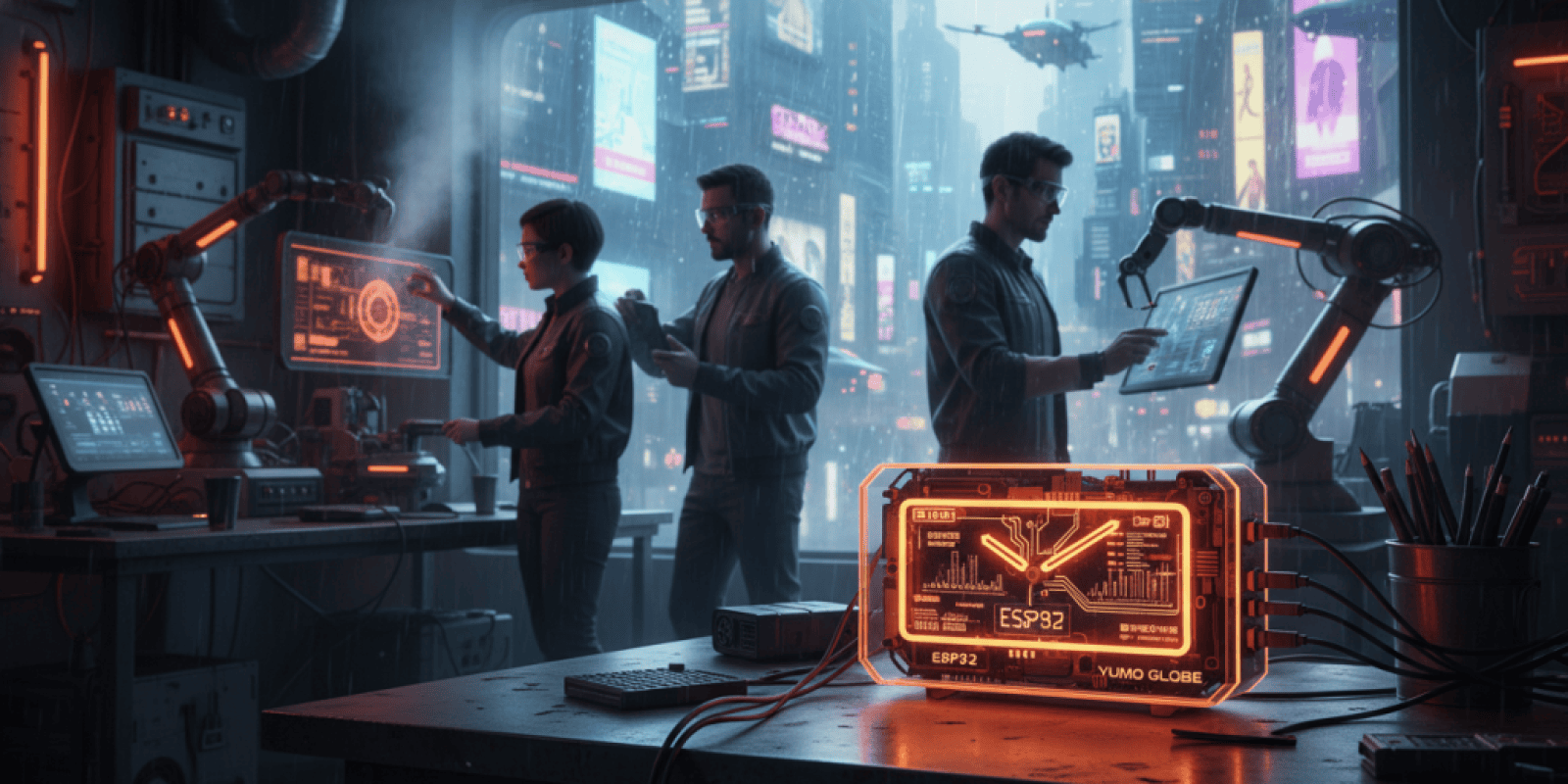
A visitor lifts the glass dome and a small constellation of brass wire resolves into a digital face that ticks in precise network time. The scene feels like a private prop from a Blade Runner set, except the parts were ordered from an online electronics store and the firmware was soldered in a kitchen well away from any studio budget. This is the everyday theater of modern maker culture, presented as an object that both performs and announces taste.
The obvious reading is the object as a neat hobbyist build, a satisfying weekend project that blends metalworking and microcontrollers. The overlooked angle is its cultural economy: objects like YUMO GLOBE become portable brand signals for cyberpunk aesthetics and micromanufacturing expertise, and they shift where design credibility is earned and traded in industries that sell atmospheres as much as products. According to the Reddit post documenting the build, the designer used an ESP32-C3 Super Mini to drive a LTD-4608E four-digit 7-segment display with SK6812 LEDs for startup animation, and NTP synchronization to maintain accurate time. (Reddit)
Why small manufacturing studios and boutique brands should watch this closely
Design studios and boutique hardware labels now compete not only on functionality but on visual storytelling. A 3 inch dome and a handful of hand-bent brass rods can substitute for a million dollar stage design when published with the right photos and a clear build log. In practice, that means a small team can manufacture atmosphere at low cost and monetize exclusivity through limited runs or commissions.
This is not purely nostalgic steampunk; the clock marries contemporary networked reliability with analog craft. The ESP32-C3 provides a modern connectivity and security feature set that matters for vendors shipping connected decor, and its datasheet shows why: Espressif documents Wi-Fi, Bluetooth Low Energy and low-power modes that make always-on niche devices viable for retail. (Espressif)
How the electronics layer the illusion of sophistication
The core technical story behind YUMO GLOBE is straightforward and replicable. The ESP32-C3 handles Wi-Fi and queries NTP servers to maintain accurate UTC time, then multiplexes four common-cathode 7-segment digits at a high interrupt-driven refresh rate so the numerals look steady in-camera and to the eye. That NTP-driven architecture is a common pattern in hobbyist internet clocks, where reliable time is the baseline feature. (Hackaday)
Driving pixel-level LED startup sequences is handled by SK6812 addressable LEDs which support per-pixel color and smooth fades, making the dome feel alive before the numerals lock into position. The SK6812 family is a practical choice for projects that need consistent white tones plus color effects without extra drivers. (Adafruit)
Materials meet microcontroller constraints
Hand-bent brass wire anchors the idea that technology can still show a maker’s touch. The physical tolerances of wirework are forgiving compared to precision machining and they photograph well under a glass dome. Meanwhile the ESP32-C3’s modest power draw and real-time clock integration allow for battery-backed sleep states if a productization path requires long shelf-life or shipping without a wall wart. (Espressif)
The cultural shorthand that sells to cyberpunk fans
Cyberpunk aesthetics value a collision between raw materiality and pervasive code. A clock that visibly exposes both wire and firmware gestures toward that collision and translates it into a decorative object. That shorthand is easily consumable in social feeds where provenance matters; a caption that lists a microcontroller, a handwork technique, and a time-synced LED animation signals credibility fast, almost like a recipe card for authenticity. Wikipedia’s overview of cyberpunk explains how the movement has always mixed high technology and low craft as part of its visual grammar. (Wikipedia)
A tiny glass dome can tell a larger story about who built the tech, how public it is, and why that matters to a buyer.
Practical implications for businesses with 5 to 50 employees
A small studio can prototype a product like YUMO GLOBE for roughly predictable costs and timelines. A conservative parts bill might be about 30 to 80 dollars per prototype for the microcontroller module, four-digit display, addressable LEDs, power regulator and a glass dome bought in small quantity; tooling for a custom base and wiring harness adds another 100 to 400 dollars one time. Assembly will take a skilled maker 6 to 12 hours for the first unit and 2 to 4 hours per unit after a jig and template are made; this yields a break even on labor and parts if the product can be sold wholesale at 3 to 5 times parts cost or bundled as a premium office object.
A realistic SKU strategy for a boutique brand is to offer two versions: a handcrafted run of 25 units with custom finishes that sell direct to consumer at a premium, and a simplified kit of electronics for enthusiasts to assemble. That dual channel keeps margins while seeding community adoption and user-generated marketing.
Risks and open questions that should shape product decisions
Networked devices invite software maintenance and security obligations. Using an ESP32-C3 that connects to NTP means handling Wi-Fi credential storage and OTA updates or else accepting field-obsolete products. Supply chain volatility for specific 7-segment modules and SK6812 LEDs can force last-minute BOM substitutions that alter color and current draw, which in turn impacts enclosure design and power budgets. Finally, scaling handcrafted finishes introduces labor unpredictability; a hand-bent brass aesthetic resists large scale without changing what made it valuable in the first place.
How competitors and the maker community respond
The surge in NTP-synced 7-segment clocks and RGB 7-segment hacks has been visible across maker outlets and publications, and designers lean on a mix of off-the-shelf modules and custom firmware to differentiate. The pattern is clear: differentiate visually and keep the electronics standardized so software updates can be shared or forked. This balance is how small teams can look like agencies with far larger budgets.
A sensible close with a practical steer
Physical computing objects such as YUMO GLOBE matter now because they translate software identity into tangible artifacts that can be bought, displayed and photographed; small teams that treat narrative and production equally will win the niche market for cyberpunk-flavored hardware.
Key Takeaways
- YUMO GLOBE proves that networked accuracy and handcrafted finishes can coexist in a low cost product that signals cyberpunk credibility.
- The ESP32-C3 provides modern connectivity and security features that make small batch connected decor viable for sale.
- Addressable LEDs like SK6812 add low-cost animation that increases perceived value during unboxing and display.
- Small studios can prototype and retail limited runs with manageable parts costs but must plan for software maintenance and supply variance.
Frequently Asked Questions
How much does it cost to make one YUMO GLOBE prototype?
Parts for a single prototype typically land between 30 and 120 dollars depending on display choice and dome quality, with one time tooling or base fabrication adding 100 to 400 dollars. Labor varies by skill; expect 6 to 12 hours for a first build and less with simple jigs.
Can this design be made safe and compliant for sale in multiple countries?
Yes, but safety requires certified power supplies and proper documentation for EMC and electrical safety in target markets; compliance testing adds cost and lead time, often several thousand dollars for proper certification if scaling beyond small direct sales.
What is the easiest way to keep time accurate without internet for a product like this?
A battery-backed real-time clock module paired with occasional NTP sync provides a hybrid model that minimizes Wi-Fi dependence while maintaining accuracy for long periods when offline.
Will using an ESP32-C3 expose user networks to risk?
Any Wi-Fi device demands secure credential handling and the option for updates. Using secure boot, flash encryption and an OTA strategy reduces risk, but obligations remain for vendors to patch vulnerabilities.
Can a small company offer customization without exploding costs?
Yes; offer a small set of finish options and modularize the base electronics. Limited edition runs with premium finishes justify higher price points while keeping manufacturing predictable.
Related Coverage
Explore stories on the rise of internet synced home objects and how maker aesthetics are reshaping product photography for luxury markets. Also read about modular firmware strategies for small hardware brands and the economics of limited run hardware as a service on The AI Era News.
SOURCES: https://www.reddit.com/r/esp32/comments/1twpz7a/i_built_a_digital_clock_inside_a_glass_dome_and_i/, https://documentation.espressif.com/esp32-c3_datasheet_en.html, https://cdn-shop.adafruit.com/product-files/1138/SK6812%20LED%20datasheet%20.pdf, https://hackaday.com/2024/03/17/simple-ntp-clock-uses-custom-rgb-7-segment-displays/, https://en.wikipedia.org/wiki/Cyberpunk