Dairy Queen Puts an AI Chatbot in the Drive-Thru and the AI Industry Should Pay Attention
A Blizzard of code is taking orders where cones used to be; the obvious headline is convenience, but the quieter consequence could reshape how voice AI companies capture real-world data and scale to thousands of physical sensors.
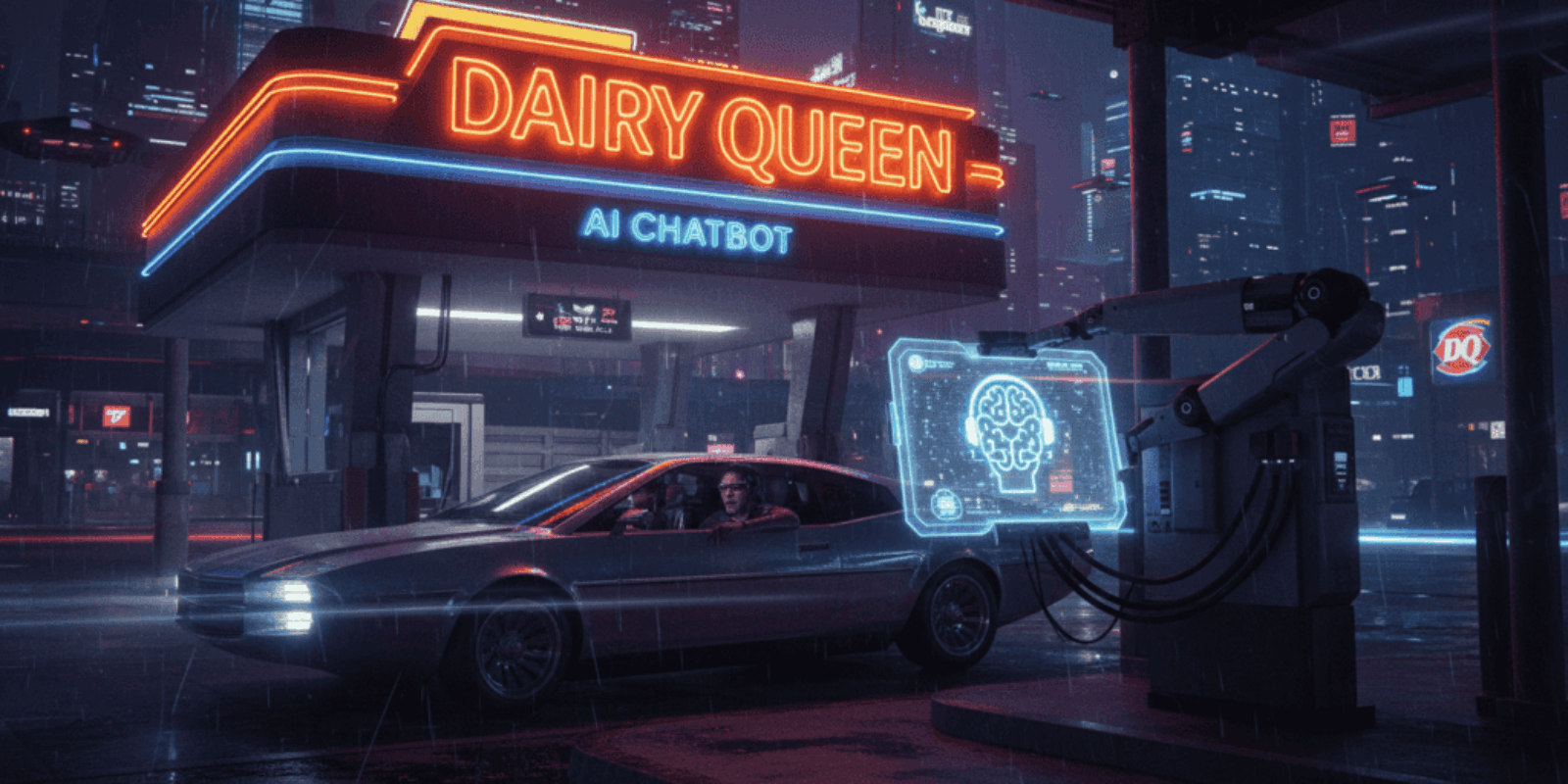
A car idles in a Dairy Queen lane as a polite synthetic voice asks whether the customer wants fries with that Blizzard. The scene reads like a slow-motion convenience ad, warm and tidy, except the voice is a neural model handling more than a few thousand menu permutations under pressure. This is the human moment the chain wants customers to feel, not the engineering trade-offs behind the speaker.
On the surface the rollout looks like another quick-service chain chasing speed and upsell gains. Reporting leans heavily on company statements and vendor press materials for early numbers, but those materials also reveal what matters most to the AI industry: live, high-volume deployment of conversational models in noisy, multiaccent environments at scale. [QSR Magazine] reports on the partnership details and corporate statements. (qsrmagazine.com)
Why this feels inevitable to restaurant leaders and venture investors
Fast food has always been an exercise in throughput and margin compression. Automating order intake is an obvious lever to reduce variable labor costs and to increase average ticket size through algorithmic upsells. Presto and other vendors have spent the last two years turning those demos into production listings, and Dairy Queen joining the roster signals a broader buyer confidence among franchised systems. [Nation’s Restaurant News] cataloged Dairy Queen’s expansion from pilot to select franchise rollouts across more than 25 U.S. states and Canadian provinces. (nrn.com)
The underreported angle that actually matters to the AI market
What often gets glossed over is not whether an AI can place an extra fry recommendation. It is whether vendors can turn millions of short voice interactions into standardized training loops while preserving privacy, franchise control, and regulatory compliance. Presto’s product pitch is not just about a friendly voice; it is about the ability to ingest complex menu data and continuously refine models from production conversations. That is the asset that will determine long term market power. [Presto’s press materials] outline these product capabilities and ambitions. (investor.presto.com)
The pilot data that pushed Dairy Queen to expand
Early tests reportedly showed order accuracy near 90 percent and double-digit lifts in customer satisfaction metrics, while also reducing the number of times staff needed to intervene during busy periods. Those figures come from company statements and third party reporting, which indicate the technology handled the chain’s complex menu and the seasonal Free Cone Day without major failure. A vendor claiming 90 percent accuracy while juggling over 1 million possible order combinations is the sort of performance number investors will parse carefully. [The Independent] summarized those outcomes and the company comments about the pilot. (the-independent.com)
The real product here is the live data pipeline from drive-thru speaker to model updates; the cones are only the reason people show up.
Who else is watching and why it matters to AI firms
Other chains and voice AI startups have been racing to prove the same thesis that Presto is selling: deployable voice AI equals recurring data, which equals faster iteration and defensibility. Public and private players are competing not just on accuracy but on menu unification tools, edge compute for latency, and human escalation pathways. The vendor landscape now matters as much as the models themselves because the integrations are what permit scaled learning. [Dexerto] placed Dairy Queen’s move in the context of a wider industry push and noted how scaling tests can reveal unexpected failure modes. (dexerto.com)
The cost and math every franchisee should run
Consider a hypothetical 24 hour store with average ticket of 12 dollars and 300 drive-thru transactions per day. A 5 percent uplift in ticket size from AI-driven upsells equals 0.60 dollars additional per transaction and about 180 dollars additional per day, translating to roughly 65,700 dollars additional annual sales per store. If an AI vendor charges a subscription of 2,000 dollars per month plus a modest transaction fee, the payback window for a single busy store could be months rather than years. These numbers ignore one-time integration costs and assume the accuracy and upsell rates hold at scale, which is not guaranteed. The math is simple; the operational reality is messier, and the franchisee contract will contain the real assumptions.
A second scenario: if AI reduces order errors by 3 percent, and each corrected error saves an average of 4 minutes of staff time, the cumulative labor savings across peak windows adds up fast. That is how an AI vendor sells ROI to CFOs and how data-driven companies attract capital. Dry aside: capital loves tidy spreadsheets, and fast food loves tidy margins.
Risks that stretch beyond a single menu
Voice models still struggle with accents, background noise, and adversarial inputs, and the drive-thru is a perfect adversary. There are documented incidents across the industry where automation was gamed or mis-triggered, which erodes trust quickly. Live systems also create vast troves of conversational data that raise privacy and consent questions when stored centrally, and franchise agreements complicate who owns those recordings and derived models.
Vendor claims should be stress-tested against real operational metrics: mean time to human takeover, error taxonomy, frequency of misreads that require refunds, and the model retraining cadence. Regulators will eventually care about nondiscrimination and accessibility impacts when voice-only interfaces become standard, and franchisees will care about uptime and vendor lock-in. A frank aside: if the bot upsells extra ice cream during a heat wave, that is capitalism working perfectly and empathy failing mildly.
Where this pushes the AI industry technically
Deployments like this create a feedback loop that favors vendors with unified menu ingestion, strong edge processing, and the ability to label noisy voice transcripts at scale. Those are not glamorous research problems, but they are defensible engineering moats. Vendors that lock in integrations and provide analytics to operators will capture data not just about orders but about human behavior patterns across geography and time of day. That dataset is valuable to model trainers, marketing teams, and private equity buyers. [QSR Magazine] covered the vendor pitch on complex menu integration and joint industry events where the partnership will be showcased. (qsrmagazine.com)
Closing: a practical purchase decision for restaurant owners
For operators, the decision will come down to contract terms, transparent accuracy and escalation metrics, and whether the vendor offers clear data ownership. The AI industry will learn more from Dairy Queen’s franchise-by-franchise expansion than from press photos; the first thousand stores that run real traffic will reveal whether voice AI is a marginal efficiency or a structural change in how hospitality is delivered.
Key Takeaways
- Dairy Queen’s pilot with Presto moves voice AI from demo to selective production, offering a live training loop that matters more than initial headlines.
- Vendors that standardize menu data and keep iterating on real drive-thru interactions gain a strategic data advantage.
- Franchise economics can make AI payback happen quickly in busy locations, but contracts and integration costs vary widely.
- The largest risks are in data governance, accessibility, and failure modes that reduce customer trust.
Frequently Asked Questions
How much can a single Dairy Queen store realistically earn from AI upsells?
A busy store with 300 daily drive-thru transactions and a 5 percent average ticket uplift could see roughly 65,700 dollars extra in annual sales. This is illustrative and depends on traffic, base ticket, and actual upsell conversion rates.
Will the AI replace all drive-thru workers at Dairy Queen?
No. Early deployments are marketed as augmentations that free staff for tasks like order checking and preparation. Contracts and franchise staffing decisions will determine actual labor shifts.
Is customer voice data owned by Dairy Queen or the AI vendor?
Ownership depends on contractual language between franchisees, the corporate brand, and the vendor. Operators should insist on precise clauses about recordings, retention, and derivative model rights before signing.
How accurate are these voice systems in noisy outdoor conditions?
Vendors report accuracy figures like 90 percent in pilot conditions, but real-world performance varies with speaker quality, ambient noise, and accents. Ask for third party verified metrics and error breakdowns before deployment.
What should small chains do differently when evaluating voice AI?
Small chains should prioritize interoperability with existing point of sale systems, clear escalation to human staff, and transparent pricing that scales to smaller transaction volumes. Testing in a few representative stores is essential before rollouts.
Related Coverage
Readers interested in this story should follow how AI is changing frontline labor metrics, the regulatory debates over consumer voice data, and the emerging competition among voice AI vendors for “menu unification” as a product category. Coverage of model accountability and franchise-level case studies will be especially useful for operators and AI professionals tracking deployment risk.
SOURCES: https://www.nrn.com/restaurant-operations/dairy-queen-rolls-out-voice-ai-for-drive-thru https://www.independent.co.uk/news/world/americas/dairy-queen-ai-drive-thru-b2958985.html https://www.dexerto.com/food/dairy-queen-becomes-latest-to-use-ai-in-drive-thru-3352895/ https://www.qsrmagazine.com/news/dairy-queen-partners-presto-on-voice-ai-in-drive-thrus/ https://investor.presto.com/news-releases/news-release-details/presto-introduces-presto-voicetm-pure-ai-enhanced-automated/ (nrn.com)