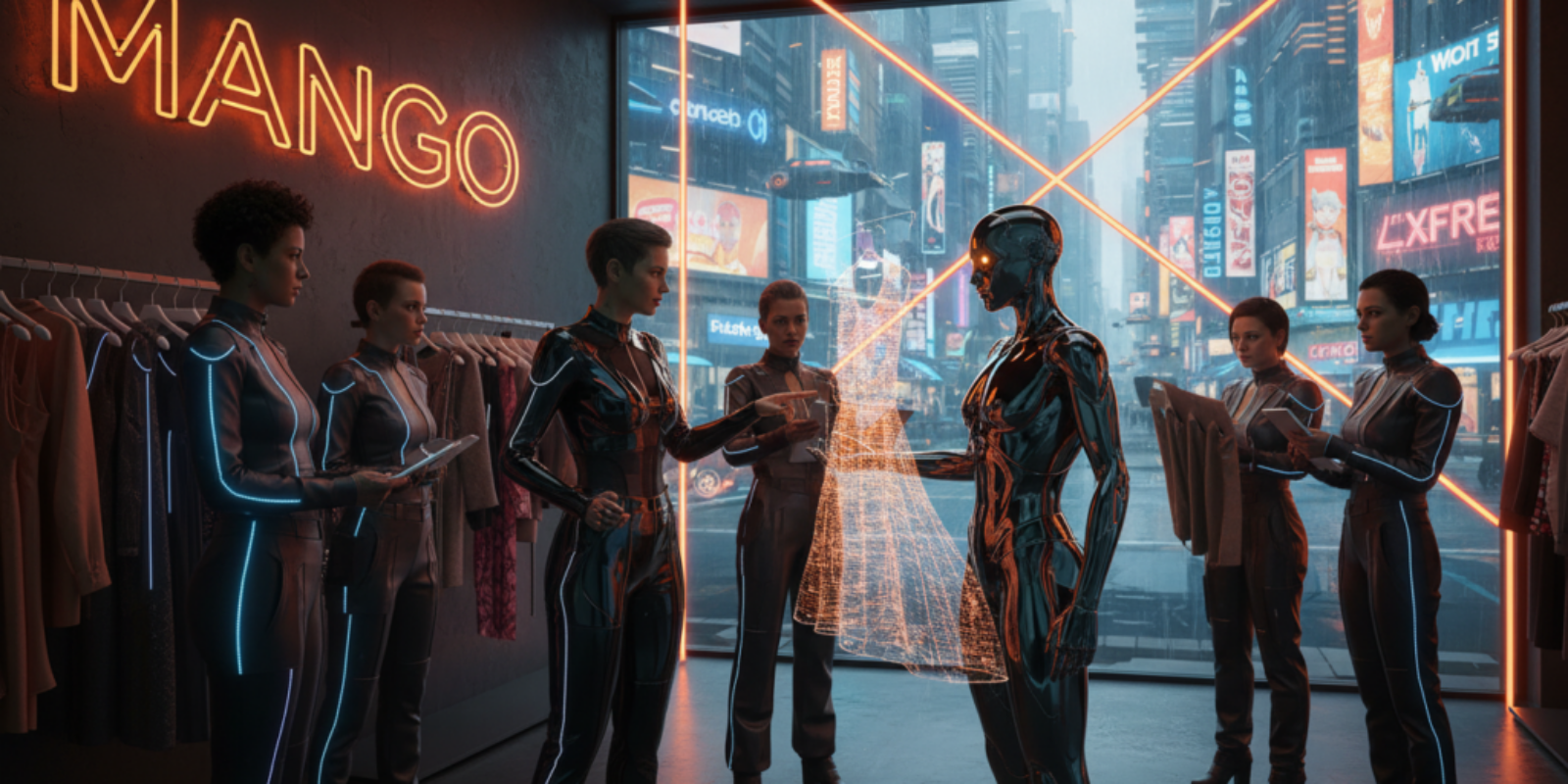
GenAI Fashion Assistants: Mango Stylist for AI Enthusiasts and Professionals
A Barcelona chatbot that recommends a whole outfit is not a fashion gimmick; it is a laboratory for how generative AI will be productized across the retail stack.
A shopper types a DM on Instagram asking what to wear to a summer wedding and receives a curated three-piece look with alternative sizes, complementary accessories, and checkout links in under a minute. The scene feels like retail theater, except the stylist is code and the production runs at global scale. That moment is the obvious headline: convenience, personalization, and a new way to browse clothes online.
Beneath the headline is a different story that matters more to AI teams and CTOs. Mango Stylist is not only a customer-facing feature; it is a testbed for deploying multimodal generative models, routing catalog data into conversational flows, and scaling on-demand content creation in regulated markets. That operationalization will ripple through model hosting, MLOps, content supply chains, and legal frameworks in the AI industry. According to Drapers, Mango launched Mango Stylist in July 2025 as a conversational assistant embedded in its e-commerce site and Instagram channels. (drapersonline.com)
Why retailers are racing to add a virtual stylist
Retailers see several benefits in one product: higher conversion, longer sessions, and the illusion of human curation without the payroll. Mango positions Stylist as part of a 2024 to 2026 strategic plan to digitize product lifecycles and drive value through data and AI, which explains why the company has invested heavily in internal machine-learning platforms over multiple years. (fashionunited.com)
At scale the feature becomes a distribution channel for imagery, promo messages, and inventory signals. The immediate commercial lift is easy to imagine; the harder part is integrating conversational outputs with inventory systems so the assistant does not recommend items that are not actually available. That integration is the meat and potatoes of enterprise AI work, and also the part that makes a marketer nervous and a platform engineer delighted.
The AI plumbing behind the chat
Mango Stylist sits atop conversational primitives and feeds into styling modules that mix trend data, product metadata, and user prompts. Digital Commerce 360 describes the tool as combining styling advice with existing customer service flows via Mango’s Iris assistant, which keeps the same conversational surface before and after purchase. (digitalcommerce360.com)
This architecture forces choices: edge inferencing versus centralized GPU clusters, strict session affinity to preserve context, and the tradeoff between real-time personalization and cached recommendation paths. Those choices determine hosting costs, latency, and whether a company ends up building a bespoke inference pipeline or buying a third-party solution that promises seamless multimodal reasoning. One should not underestimate the engineering bill; renting compute for high-traffic windows can feel like leasing a runway for a seasonal drop.
Who else is reshaping fashion with generative AI and why it matters
Fast followers include platform and marketplace players who use AI for imagery as much as for chat. Brands and platforms are already replacing parts of photoshoots with synthetic imagery and digital twins to cut time and cost. TwinTone, which helps brands generate AI twins and content at scale, reports that by the end of 2024 a major European retailer used AI to produce roughly 70 percent of its editorial images, cutting production time from weeks to days. That is not a novelty, it is a business model redesign. (twintone.ai)
The competitive landscape also includes retailers that emphasize curated subscription models and data-first personalization systems. The practical difference is whether a company uses AI to automate creative work or to augment expert stylists and designers. Either way, AI becomes the layer that converts product catalogs into narrative experiences.
The core economics: where the ROI shows up
Mango’s broader push into AI is tied to concrete financial targets. TheIndustry.fashion notes Mango’s increased investment under its strategic plan and the company’s recent revenue trajectory, which frames Stylist as part of a larger bet on tech-enabled growth. The math executives will watch is simple: incremental revenue per session times increased session frequency minus incremental servicing and compute costs. (theindustry.fashion)
For a quick scenario: if an AI assistant increases average order value by 10 percent and drives a 5 percent lift in repeat purchase rate, the incremental gross margin can cover substantial model hosting costs for even mid-sized retailers. The tricky variable is accuracy of personalization; bad recommendations can depress lifetime value faster than compute savings will compensate.
The new battleground for AI in retail is not model novelty; it is the plumbing that turns recommendations into paid orders.
Practical implications for businesses with real math
A 1,000 SKU brand running a seasonal campaign can spend 30,000 to 100,000 in traditional photoshoot costs and 4 to 8 weeks of lead time. Replacing half of that creative work with synthetic imagery and automated styling could cut cash outlay by 40 percent to 70 percent and reduce time to market to days. The caveat is governance: content labels, usage rights, and quality control add operational overhead that offsets some savings.
For AI teams this is a pragmatic playbook. Invest in high-quality catalog data, establish secure identity and consent workflows for any modelled likeness, and build a feedback loop that lets conversational signals retrain ranking models. Expect the first 12 to 24 months to be heavy on engineering and light on prestige.
Risks and open questions that stress-test the claims
Generative systems amplify bias in training data, and fashion is already a field laced with representation issues. There are also IP pitfalls around image synthesis and model replicas, and emerging labor rules that specify consent and compensation for digital twins. Regulatory attention and class-action risk will be proportional to scale and opacity.
Another open question is UX trust. If customers cannot distinguish between synthetic and photographed content, brands must decide whether to label content transparently. That decision has legal, ethical, and brand impact, and it will vary by market.
Why small teams should watch this closely
Small brands will find modular AI tooling attractive because it lowers the creative barrier to entry. A tightly integrated commerce platform plus a third-party stylist API can be a win, but reliance on external vendors creates vendor lock-in and data sharing that complicates future migrations. In short, agility now may be debt later; choose wisely, or at least negotiate a good exit clause.
A practical, short forward-looking close
Generative AI fashion assistants like Mango Stylist are the industry’s live experiments in turning models into reliable, revenue-generating products. The lessons learned in retail will inform how enterprises across sectors integrate multimodal AI into user journeys, and the winners will be those who master the software engineering that makes style feel effortless.
Key Takeaways
- Retail AI assistants convert catalog data and conversational models into new distribution channels that directly affect conversion metrics.
- Major retailers can cut creative production time from weeks to days using AI-generated imagery while needing new governance to manage rights and bias.
- The real technical challenge is operationalizing inference, personalization, and inventory synchronization at scale not just training fancier models.
- Small teams can adopt modular stylist APIs quickly but should plan for long-term data ownership and exit strategies.
Frequently Asked Questions
How much does it cost to add a GenAI stylist to my ecommerce site? Implementation costs range widely depending on scale, from tens of thousands for an API integration to millions for a fully owned stack; ongoing compute and model hosting are the recurring items to budget. Expect higher initial engineering costs and lower marginal costs once flows are instrumented and data pipelines are mature.
Will AI stylists replace human buyers and creative teams? AI automates repetitive creative tasks and content production but does not replace the strategic judgment of buyers or the brand voice that creative teams craft. Most organizations see these systems as augmenting talent, enabling staff to focus on higher order decisions.
Do customers trust AI-generated outfit suggestions? Trust depends on accuracy and transparency; customers accept recommendations that match their preferences and are truthful about availability. Building trust is more about consistent quality and clear signals than marketing slogans.
What legal risks should a retailer consider with digital models? Key risks include likeness rights for digital twins, copyright for synthesized backgrounds or patterns, and disclosure laws in some jurisdictions; securing written consent and clear licensing terms mitigates much of this risk. Legal exposure increases with scale and cross-border operations.
Can small brands get the same benefits as a retailer like Mango? Yes, but the strategy differs: small brands should prioritize high-quality product metadata and phased integrations with third-party stylist platforms to avoid excessive upfront costs. Incremental wins in conversion and content velocity justify staged investments.
Related Coverage
Explore how AI-driven supply chain forecasting changes markdown strategy and inventory turns, and read reporting on the ethics and regulation of synthetic models. Also consider deeper technical briefings on multimodal model deployment and the cost tradeoffs of edge versus cloud inference.
SOURCES: https://www.drapersonline.com/news/mango-launches-ai-powered-fashion-stylist, https://fashionunited.com/news/retail/mango-energises-shopping-experience-whatsapp-channel-and-ai-stylist/2025070366948, https://www.digitalcommerce360.com/2025/07/08/mango-new-stylist-assistant-conversational-ai/, https://www.theindustry.fashion/mango-becomes-ai-pioneer-with-new-virtual-assistant-mango-stylist/, https://www.twintone.ai/twintone/ai-twins-generate-high-converting-ugc-scale