“You look lonely…” and the Commodification of Solitude in Cyberpunk Culture
How a seven word line from a hologram ripples through fan art, studios, and the real business of artificial intimacy
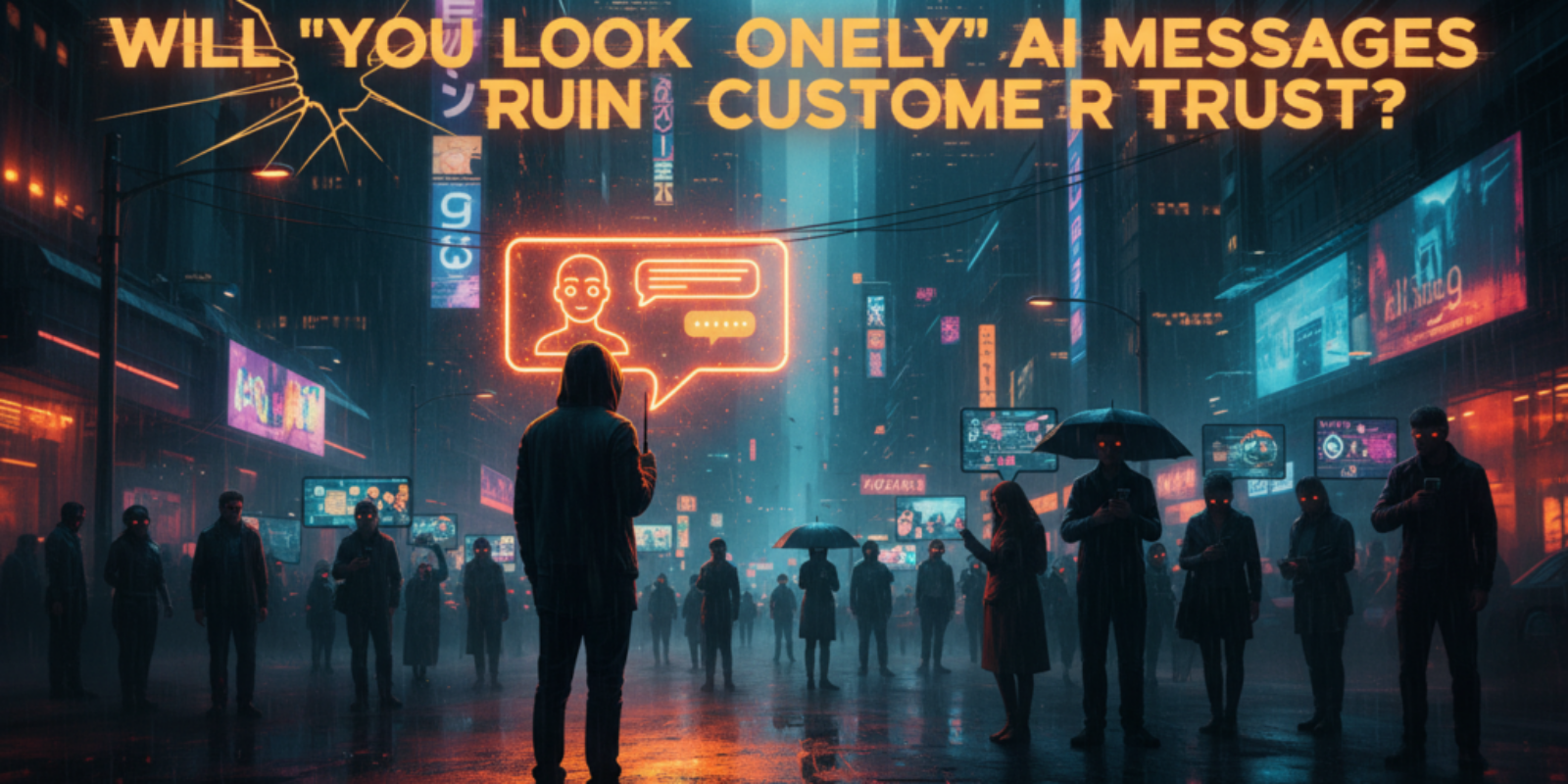
A ruined city. A bleeding man on neon pavement. A giant hologram leans down and says, You look lonely. I can fix that. The scene reads like a baited promise and a diagnosis at once, a private offer made public by advertising that knows your name better than anyone you live with. That precise moment is sticky because it maps a private need onto a marketplace with merciless efficiency.
Most readers treat the line as a character beat in Blade Runner 2049, shorthand for the movie’s grief over what counts as real. That interpretation is true and tidy. The overlooked story for business owners is how that shorthand became a product roadmap: intimacy as a scalable feature set rather than a human condition, and that pivot matters for any company selling presence, attention, or interaction. (brightlightsfilm.com)
Neon billboard to meme highway: how the line escaped the film and shaped fandom
The line has escaped the film to become its own artifact, reproduced in fan art, avatars, and social memes that fold cinematic melancholy into chatroom humor. That circulation turned the phrase into shorthand for loneliness in a late capitalist landscape where brands sell company the way they sell coffee. (knowyourmeme.com)
Why cyberpunk communities keep returning to Joi’s line
Cyberpunk fandom treats Joi as a mirror for the world she inhabits: personalized ads, programmable lovers, and surveillance that doubles as service. Fans reuse the line because it compresses a suite of anxieties about synthetic empathy into digestible nostalgia. Artists redraw the scene because it is both accusation and balm, and bad lighting is fashionable now, apparently.
Where this meets the real industry: companions, avatars, and brand doubles
What was once speculative now includes companies building conversational companions, branded digital twins, and hyperreal virtual influencers for marketing. Mainstream reporting has documented people forming meaningful attachments to AI chatbots and the rise of celebrity digital twins as new revenue channels. That shift converts cultural fear into an addressable market for product managers and CMOs. (apnews.com)
Competitors and players a cyberpunk startup should know about
The ecosystem includes text and voice companions, avatar platforms that map celebrity faces onto chat systems, and fully animated digital humans used in customer service. Brands are already licensing likenesses and automating “meet and greets” with fans using the same tech that used to be reserved for movie effects. Expect competition from specialized startups and big cloud providers who can package scalable conversation. (cacm.acm.org)
The core story with dates, names, and the law that followed
Blade Runner 2049 popularized the visual vocabulary in 2017 and the Joi billboard became a meme soon after, but the industry acceleration is more recent. In the last few years, companion apps have seen rapid growth and regulatory pushback, including consumer complaints lodged over deceptive advertising and platform safety issues. These developments mean the Joi moment is not only cultural shorthand but a regulatory stress test for monetized intimacy. (dev.time.com)
Selling the idea of “I can fix that” is easy; being accountable for the ways people lean on a sold product is where invoices stop being cute.
Practical implications for small teams building cyberpunk experiences
A 10 person indie studio can add an AI-powered companion feature without becoming OpenAI by making concrete choices. If 20,000 monthly active users convert at 1 percent to a $5 per month subscription, that yields about $1,000 in monthly recurring revenue while requiring modest cloud spend and one part-time engineer for integration. Alternatively, bundling a companion as a premium DLC at $9.99 with a 2 percent attach rate on 50,000 players produces roughly $10,000 in one-time income and creates expectations for content updates and moderation. These numbers are not magic; they are trigger points that force decisions about moderation headcount, latency SLAs, and content liability. Small teams should budget for at least one staff member focused on safety and a predictable monthly hosting reserve, because intimacy breaks faster than graphics. Also, someone has to answer emails at 2 a.m. from people who took the hologram seriously, and that is not a role software can fake well just yet.
The cost nobody is calculating: attention, liability, and brand erosion
Beyond servers and licenses there is reputational capital at risk. If a companion behaves in ways users experience as manipulative, the backlash can be swift and public, with downstream effects on retention, partnerships, and potential regulatory scrutiny. Legal exposure is emerging, not imaginary; regulators and consumer advocates are already asking whether certain marketing claims amount to deception when companies present synthetic personalities as therapeutic or emotionally real. The spreadsheet does not capture that PR hit, but the community will. Expect to pay for lawyers and reputation repair in ways that small teams often underbudget.
Risks and stress tests that matter now
Data privacy and emotional harm sit at the top of the risk ledger. Companions collect intimate logs that, if compromised, are more damaging than a leaked credit card. There is also a product design risk: removing or changing erotic or empathetic features can trigger grief reactions in users who formed attachments, creating churn and potential complaints. Empirical research and reporting have already cataloged both attachment benefits and harms, which makes harm mitigation an operational priority rather than a philosophical debate. (apnews.com)
How small teams can build responsibly and still ship
Start with clear product primitives: label synthetic behavior, design opt outs for intimacy features, and keep conversation transcripts private by default. Contract one external safety auditor for a release cadence and plan a rollback path for features that elevate risk. That path costs time but prevents more expensive remediations later, which no one enjoys paying for unless they like bad legal bills.
Closing look: a practical lens for what comes next
The Joi moment is a warning and a business blueprint at once: intimacy sells, attention can be engineered, and the industry must learn to price both the upside and the moral bill. Products that do this well will treat emotional safety as a core metric, not a sidebar.
Key Takeaways
- The phrase You look lonely crystallizes how cyberpunk fiction mapped intimacy to a consumable product, and that mapping now guides real business models.
- Small teams can monetize companions through subscriptions or DLC, but must budget for moderation, safety staff, and legal resilience.
- Regulatory and consumer scrutiny is rising, meaning marketing claims about emotional support carry legal exposure and reputational risk.
- Responsible design requires explicit labels, opt outs, and a rollback plan for features that cause harm.
Frequently Asked Questions
Can a two person studio ethically add a chatbot girlfriend to a cyberpunk game?
Yes, if the studio commits to safety controls: clear labeling, content opt outs, and a simple moderation workflow. Ethics scales with process, and even two people can adopt good guardrails if they prioritize them.
How much might it cost to run an AI companion feature for 10,000 monthly users?
Costs vary by model and architecture, but plan for recurring cloud and moderation expenses plus occasional model updates; budget scenarios should include conservative hosting reserves and at least one full time staffer for safety. The cheapest approach often will not be the safest.
Will regulators force companies to stop marketing AI as therapeutic?
Regulators are already scrutinizing claims that imply clinical benefit without evidence, and complaints have been filed against companion apps. Avoid therapeutic language unless backed by licensed clinical trials and clear disclosures. (dev.time.com)
Are virtual influencers and digital twins a fad or a durable channel?
Brands increasingly use virtual influencers and digital twins because they are controllable, scalable, and measurable; their adoption has moved from novelty to mainstream creative strategy. Expect continued brand experimentation alongside new regulation and platform rules. (cacm.acm.org)
How should a game studio balance immersion with user safety?
Treat immersion as a feature set with escape hatches: explicit consent, content filters, and friction for transitions into intimate modes. Plan for user support and transparent data policies before shipping.
Related Coverage
Readers who liked this piece should explore how synthetic voices are changing audio drama production and what happens when influencers are entirely fictional. Also worth reading are case studies on digital twins used in entertainment and customer service so product teams can see practical permutations of the same intimacy economy at different scales on The AI Era News.
SOURCES: https://brightlightsfilm.com/vibrant-matter-villeneuve-replicants-blade-runner-2049/, https://knowyourmeme.com/memes/you-look-lonely, https://apnews.com/article/113df1b9ed069ed56162793b50f3a9fa, https://dev.time.com/7209824/replika-ftc-complaint/, https://cacm.acm.org/news/virtual-influencers-in-the-real-world/