Tony Angel RnB Cyberwarrior and What a Viral OC Means for Cyberpunk Culture and Business
When a portrait of a velvet-voiced singer with a neon visor hit Reddit in mid February 2026, the thread read like a mixtape pitched to a noir city skyline.
A crowd stopped scrolling to argue whether the figure was more Prince than Punisher while someone else suggested an animated miniseries adaptation. The obvious read is that another cool original character went viral on image boards, but the more consequential story is how a single fan-made RnB cyberwarrior crystallizes new routes for IP, revenue, and creative risk in the cyberpunk ecosystem. According to a post in r/EbonyImagination, the character Tony Angel is an original character the artist has been workshopping and intends to develop further. (reddit.com)
A street performance that looks like a heist, and why the internet noticed
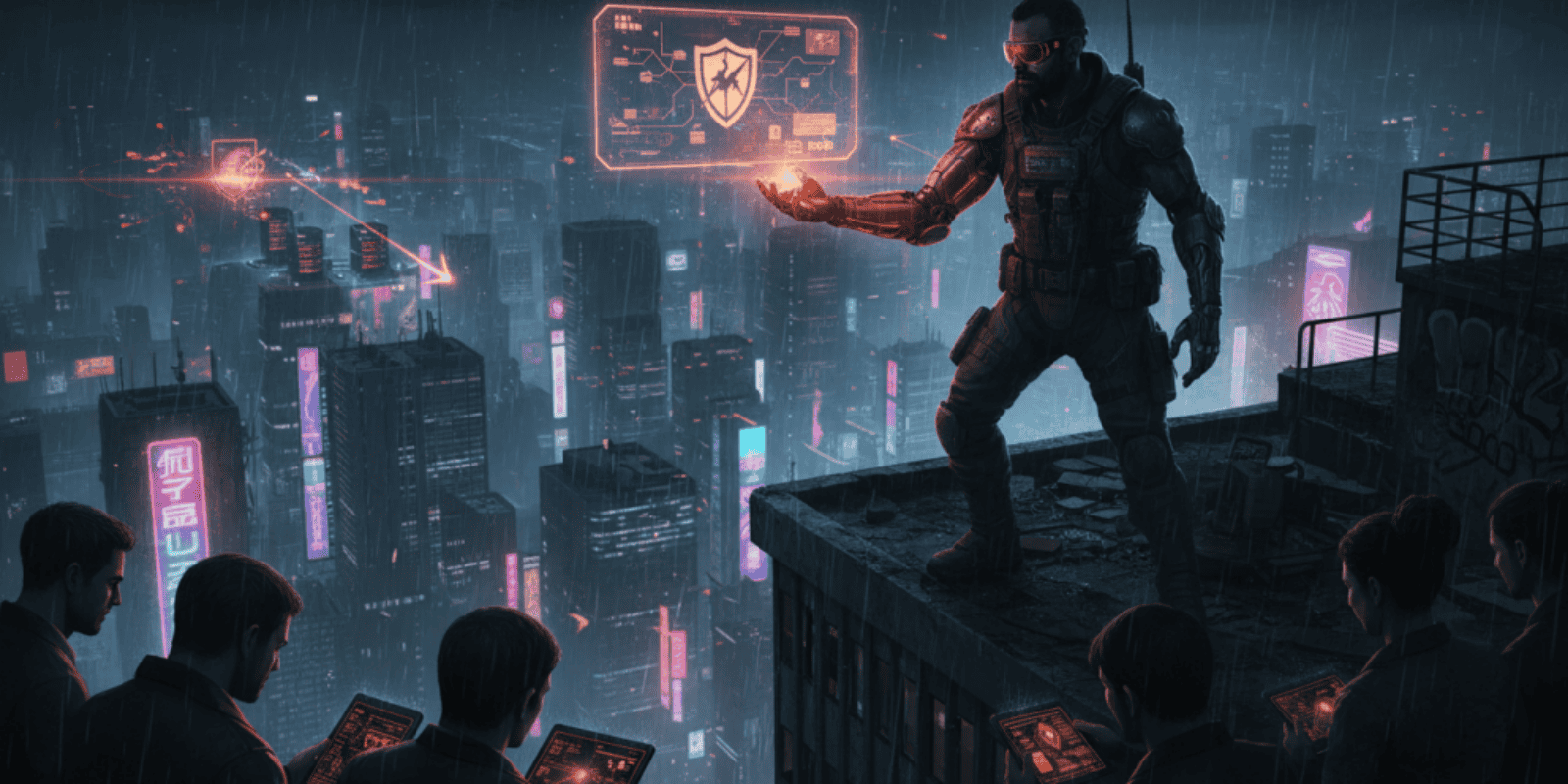
The opening image frames Tony Angel mid-song with luminous implants and a swagger that reads like a confession. Fans treated the reveal as an invitation to worldbuild, spawning comments across communities asking for animation, backstory, and soundtrack ideas. A parallel post in r/Cyberpunk amplified the design and the brief narrative hook, showing how niche subreddits can act like talent scouts and focus groups simultaneously. (reddit.com)
The mainstream interpretation and the underreported pivot every small studio should care about
Most observers see this as another example of community creativity and move on. The underreported pivot is that a single OC can now function as a near-ready prototype for cross-media projects: short animation, a themed EP, merch runs, and live performance concepts that tie into a city’s aesthetics. This is not fan art as leisure, it is early stage IP development that costs far less than a studio pitch and reveals consumer interest in real time.
Why the timing matters now for cyberpunk creators
The creator economy is crowded, but cyberpunk aesthetics continue to be commercially hot across games, music, film, and fashion. At the same time, the music and streaming landscape is reshaping rights, monetization, and trust after high profile AI-era fraud and regulatory responses. Industry reporting has documented a major 2024 to 2025 legal action that exposed how scalable AI music and bot networks can distort streaming metrics and royalties, a headline risk for anyone planning to monetize a character through music platforms. (wired.com)
Where Tony Angel sits against established cyberpunk properties
Tony Angel is not a studio tentpole like a major game franchise or a Netflix adaptation, but the aesthetic DNA is familiar: neon, urban decay, and morally grey vigilantism. That similarity is an advantage; franchises proved that recognizable tropes accelerate audience adoption. What differs is attribution and origin story: this Tony is born in the attention economy rather than a writers room, which shortens the feedback loop from concept to market testing.
The core story in numbers, names, and dates
The initial post by user dewitteillustration surfaced on February 14, 2026 and then reappeared in cyberpunk forums on February 17, 2026, gathering hundreds of upvotes and dozens of calls for animation and music tie‑ins. Those public signals are quantifiable market tests: if a short pitch yields hundreds of engaged comments within 72 hours, that is a cheaper A B test than a paid focus group. The currency here is engagement velocity more than follower count. (reddit.com)
A well-timed original character can become a marketable IP prototype faster than a studio can schedule a meeting.
Why name collisions and discovery matter for creators and brands
Creators should expect name collision friction. Searching music catalogs reveals multiple artists named Tony Angel or Tony Ángel on streaming services, which complicates discoverability and monetization for any new act using a similar handle. Building a distinct metadata strategy and controlling canonical sources matters for search and royalty attribution. (music.apple.com)
Practical implications for businesses with 5 to 50 employees, with real math
A small creative outfit of 10 people can run a low‑risk rollout for an OC like Tony Angel. Budgeting example: a 3 minute animated pilot at a modest indie rate might cost 40,000 to 70,000 dollars in production and post. Add 5,000 dollars for a three track EP produced with session musicians or vetted AI assist tools, and 10,000 dollars for a first merch run of 500 shirts and 200 posters. If the pilot drives 50,000 video views and converts 1.5 percent to a 15 dollar merch purchase, that is 11,250 dollars gross revenue from merchandising alone, which helps offset marketing spend. The same pilot, placed as exclusive content on a niche streaming platform with a revenue split, can push additional income while serving as proof of concept for a larger grant or publisher deal. These are small numbers compared with studio budgets but enough to test hypothesis and prove audience demand.
The cost nobody is calculating and a dry aside about taste
Platform moderation, metadata hygiene, and legal vetting can be invisible but expensive. Clearance for sampled RnB hooks, composer contracts, and trademark searches for the character name typically add 5,000 to 15,000 dollars to a project. Budget that before celebrating a viral moment; otherwise the math looks like a rave party paid for with IOUs. Also, if the character leans on a musical vibe too much like an existing artist, expect polite but expensive cease and desist letters.
Risks and open questions that stress test the optimistic roadmap
Monetization via streaming and digital audio carries a new set of regulatory and fraud risks exposed by recent prosecutions that involved AI‑generated catalogs and bot streaming. That case shows the platforms and law enforcement will scrutinize novel monetization schemes, and creators risk deplatforming or withheld royalties if distribution looks inorganic. Moreover, community OCs raise thorny questions around ownership, collaboration credits, and moral rights when fan communities iterate on a character without a clear licensing framework. (wired.com)
What to do next if Tony Angel inspired a project
First, register clear ownership with timestamped source files and a public provenance trail. Second, test small: drop a demo track, license nonexclusive art prints, and use each engagement to justify the next investment. Third, keep the soundtrack metadata pristine and the distribution transparent to avoid the exact traps that have snagged others in the AI music era.
A practical forward look for cyberpunk creators
Micro IPs born in fandom can scale into sustainable projects, provided creators treat viral attention as data, not validation, and use it to buy only the experiments that prove demand.
Key Takeaways
- Viral OCs function as cheap market tests for cross‑media cyberpunk IP and should be treated as prototypes to be validated.
- Protecting name and metadata is essential because discoverability and royalty attribution are already fragile.
- Small teams can prototype pilot content for roughly 60,000 to 100,000 dollars and recoup through smart merch and targeted platform deals.
- Platform, AI, and legal risks are real; transparent distribution and documented provenance reduce the likelihood of expensive disputes.
Frequently Asked Questions
How can a 10 person studio test an OC concept without blowing the budget?
Start with a short animated pilot or a lyric video and a three song EP produced on a tight schedule. Allocate funds to metadata and rights clearance up front so distribution does not get blocked.
What legal protections are necessary before selling merch for a new character?
File trademark searches for the character and secure written agreements with any collaborators or musicians. Keep a timestamped master file repository to prove original authorship.
Can AI tools be used to create the soundtrack without risking rights problems?
AI can accelerate production but creators must ensure training data and generated outputs comply with platform and copyright rules. Budget for manual review and at least one human composer to claim clear authorship.
Will a Reddit post actually attract publishers or studios?
It can, if engagement is sustained and measurable; studios often monitor grassroots signals as proof of concept. Treat initial traction as a bargaining chip for development funds.
How should small teams price early merchandise to maximize margin?
Aim for a 3 to 4 times markup on direct cost after factoring in fulfillment and returns; test with limited runs of 300 to 500 units to minimize inventory risk.
Related Coverage
Readers interested in this topic might explore how generative AI is rewriting music rights, deeper reporting on creator economy fraud cases, and profiles of indie studios that turned fan art into streaming series. Those threads illuminate the practical tradeoffs between speed to market and long term control that every cyberpunk creator will face.