
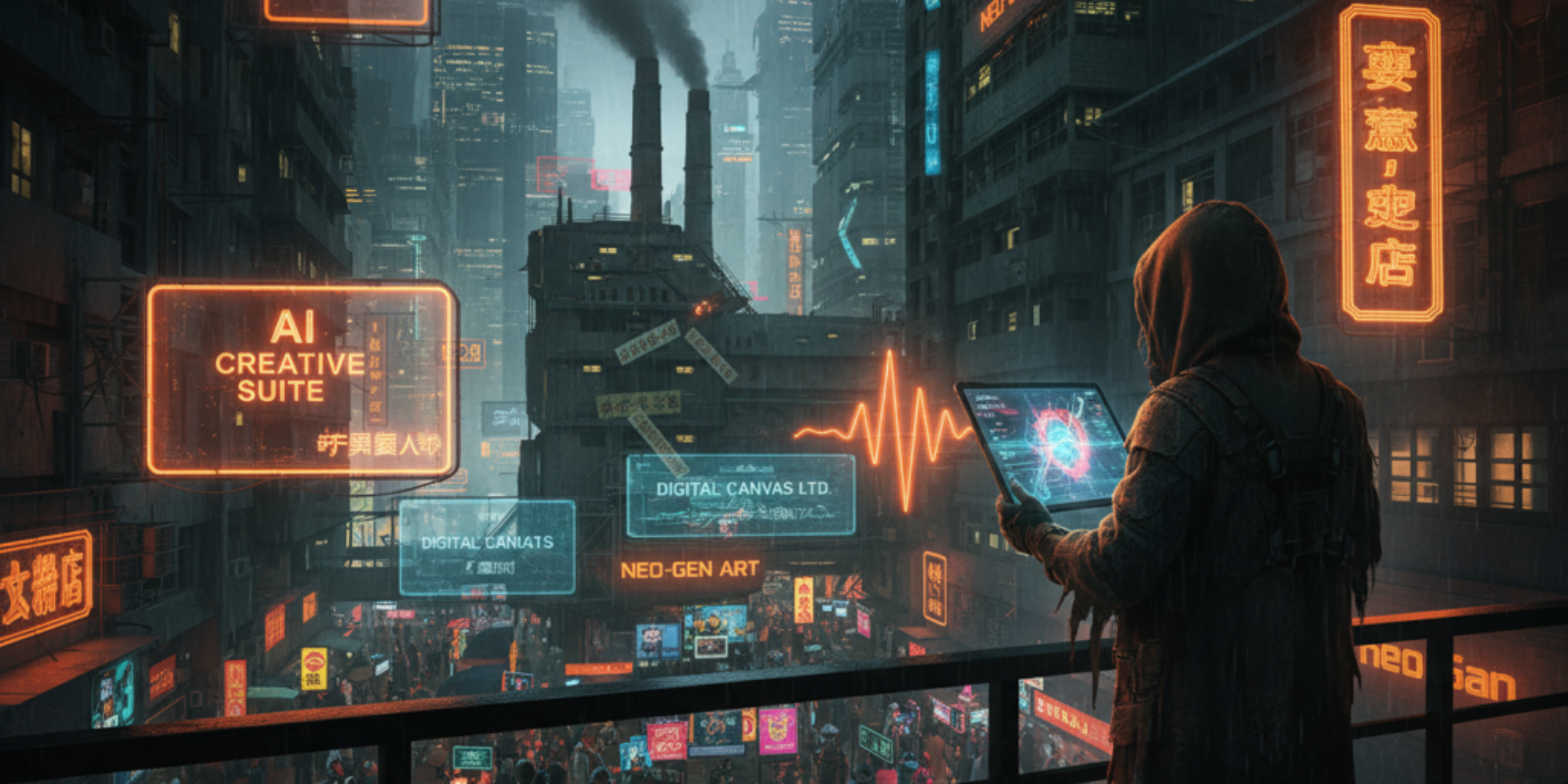
The Last Echo of Humanity: an artwork that makes cyberpunk fans revalue what a heart can be
A human-sized silicone organ sits under neon, its veins traced with fiber optics, and a crowd argues whether it is elegy or instruction manual.
Rain hisses on the gallery glass as a maintenance drone pads by and a solo synth line repeats like a distant heartbeat. The obvious reading is literal grief: a memorial for flesh in an age of machines, a tactile elegy for what was lost. That interpretation sells postcards and fits neatly in a gallery program; the deeper business question is how an object this theatrical reconfigures creative production, merchandising, and IP for small studios that operate where art, game design, and product converge.
The project’s public ecology is thin on independent coverage, so reporting leans on the artist’s materials and the project’s Steam presence to map how the piece will land with cyberpunk audiences. The Steam store page for Silicone Heart establishes the project’s premise and distribution timeline while promising that artwork like The Last Echo of Humanity will be embedded into a narrative ecosystem and interactive buildout. (store.steampowered.com)
Why a silicone heart matters to people who think in neon
Cyberpunk culture was born from a fusion of high tech and low life, an aesthetic of neon and neglect codified by writers such as William Gibson and chronicled in standard reference sources. That lineage makes physical objects like a silicone heart more than props; they are mnemonic devices that carry genre authority and social critique. (britannica.com)
This piece trades on that authority while flipping the script: instead of augmenting a human, the silicone heart is presented as an artifact built for and by machines. The result is a subtle cultural provocation that asks whether the human form is the original or the replica.
How material science and soft robotics shape the art
Soft polymers and silicone prosthetics moved from clinical labs into the studio decades ago, and research into silicone cardiac simulators shows how realistic these forms can be. That crossover legitimizes an artwork that claims scientific verisimilitude while asking aesthetic questions. The World Economic Forum summarized the development of silicone hearts as functional prototypes meant to mimic biological motion and texture, which makes this artwork readable as both lab echo and sculptural device. (weforum.org)
Presenting a medically plausible silicone heart inside a neon installation also grants the piece a credibility that audiences translate into narrative stakes. That trust is currency in cyberpunk communities that prize plausible tech, not just pretty pixels.
Who else is playing in this sandbox and why now
Blockbuster adaptations and AAA entries reset expectations for cyberpunk fidelity and scale, but indie creators keep the genre nimble and human. Major studio failures and lessons about workplace practices have shaped how small teams think about scope and ethics in production, and coverage of those industry experiences matters when a project mixes art, merch, and interactive content. Reporting on studio workflows and crunch-era lessons provides context for how independent projects must budget time and talent differently now. (kotaku.com)
Meanwhile, smaller titles and aesthetic successes in the indie space demonstrate appetite for tactile worldbuilding, encouraging gallery-to-game crossovers and limited runs of physical editions. That indie momentum helps explain why a silicone heart installation could be a strategic entry point for a larger transmedia project. (cbr.com)
The scene inside the installation the press will describe
A patron places a palm on the heart and feels a soft thrum synchronized to an algorithmic pulse. The surface glows in response, data-fed and slightly off rhythm as if the machine remembers human error. The mainstream narrative will label this a techno-memento; curators will call it immersive. Either way, the piece is engineered to seed merch, DLC, and a limited-edition replica market.
A well-timed artifact can be a work of art and the launch pad for an entire microeconomy.
Practical implications for small teams of 5 to 50 employees
A 10-person studio planning a gallery activation and a concurrent digital experience can model costs simply. Commissioning a life-size silicone artwork for exhibition fabrication might run from $2,500 to $7,500 depending on custom electronics and finish; studio labor for software integration at $60 per hour for 400 hours equals $24,000; a modest marketing push and local logistics add $6,000, bringing the one-time spend to roughly $32,500 to $37,500. If a limited-edition replica run of 500 units sells at $120 net per unit, gross revenue hits $60,000, covering costs and leaving room to fund future interactive content. The math rewards restraint and a clear physical to digital fulfillment plan.
For teams of 5, a smaller approach is sensible. Outsource fabrication to a prop shop for $1,200, build a simple AR filter for $6,000, and allocate $3,000 to targeted social ads. That smaller stack can break even at 200 replica sales or by licensing the 3D asset to a VR gallery for a flat $12,000 fee.
Those figures assume realistic take rates and conservative conversion of attendees to buyers. If the project leans on collectible scarcity and a prelaunch whitelist, the conversion curve tightens, which is good for cash flow and terrible for anyone hoping the art becomes a public commons. Dry aside: scarcity is a great marketing strategy until everyone forgets how to breathe.
Risks and tough questions no press release will front
The most immediate risk is reputational: a piece that reads as techno-melancholy can easily be accused of aestheticizing trauma if it trades on medical imagery without ethical framing. The second is IP fragmentation; mixing art, game assets, and physical replicas requires airtight licensing to avoid future disputes. Finally, there is market risk: novelty fatigue in cyberpunk circles moves faster than a neon fad.
Technical questions matter too. The more plausible the heart, the more likely legal or clinical actors may object, and the more expensive fabrication becomes. Practical aside: asking a gallery to host a beating organ will expand the risk profile and the indemnity clause.
Where the industry goes from here
Physical artifacts that read as both laboratory specimen and art object will be a repeatable pattern for cyberpunk projects that need to bridge fans and collectors. The smartest small studios will treat such pieces as modular IP that supports exhibitions, digital skins, and limited product runs while keeping a tight legal perimeter and realistic budgeting.
Key Takeaways
- The Last Echo of Humanity uses medically credible silicone craft to create a bridge between gallery art and cyberpunk transmedia commerce.
- Small studios can fund installations through a mix of limited-edition replicas, AR experiences, and licensing, with break even often reachable at 200 to 500 units.
- Ethical framing and clear IP contracts are nonnegotiable; missteps cost more than fabrication.
- Lean production and staged releases protect cash flow and preserve cultural goodwill.
Frequently Asked Questions
How much would it cost my 8-person studio to commission a display-ready silicone piece?
Budgeting conservatively, expect $3,000 to $8,000 for fabrication with integrated electronics. Add software integration and marketing and plan for $20,000 to $40,000 total depending on scale.
Can an art installation like this be used to promote a game without alienating players?
Yes if the installation extends narrative depth and delivers exclusive but reasonable rewards, rather than gating core story content behind expensive physical goods. Authenticity matters to cyberpunk fans.
What legal issues should a small publisher consider before selling replicas?
Secure clear licensing for the artwork, define reproduction rights, and include warranties and indemnities for health and safety where electronics and wearable components are involved.
Will a gallery activation meaningfully drive game sales or is it just press fodder?
A well-targeted activation with prelaunch whitelist and integrated purchase funnel can convert gallery attendees into early adopters and collectors, driving measurable sales uplift beyond press noise.
How to price limited runs so they do not cannibalize digital revenue?
Price physical items to cover fabrication and distribution while positioning them as collectible extras; avoid bundling essential digital content that would force noncollectors to buy.
Related Coverage
Readers who enjoyed this should explore how tactile artifacts inform virtual world economies and how indie studios leverage museum partnerships to fund game development. Also worth reading is coverage of soft robotics in design and the changing ethics of using medical forms in popular culture.
Final note on research: independent press coverage of The Last Echo of Humanity and direct reporting on Evgeniy Sergeevich was sparse; reporting therefore drew on the project’s Steam listing and wider sector sources to map likely industry impacts. (store.steampowered.com) (britannica.com)