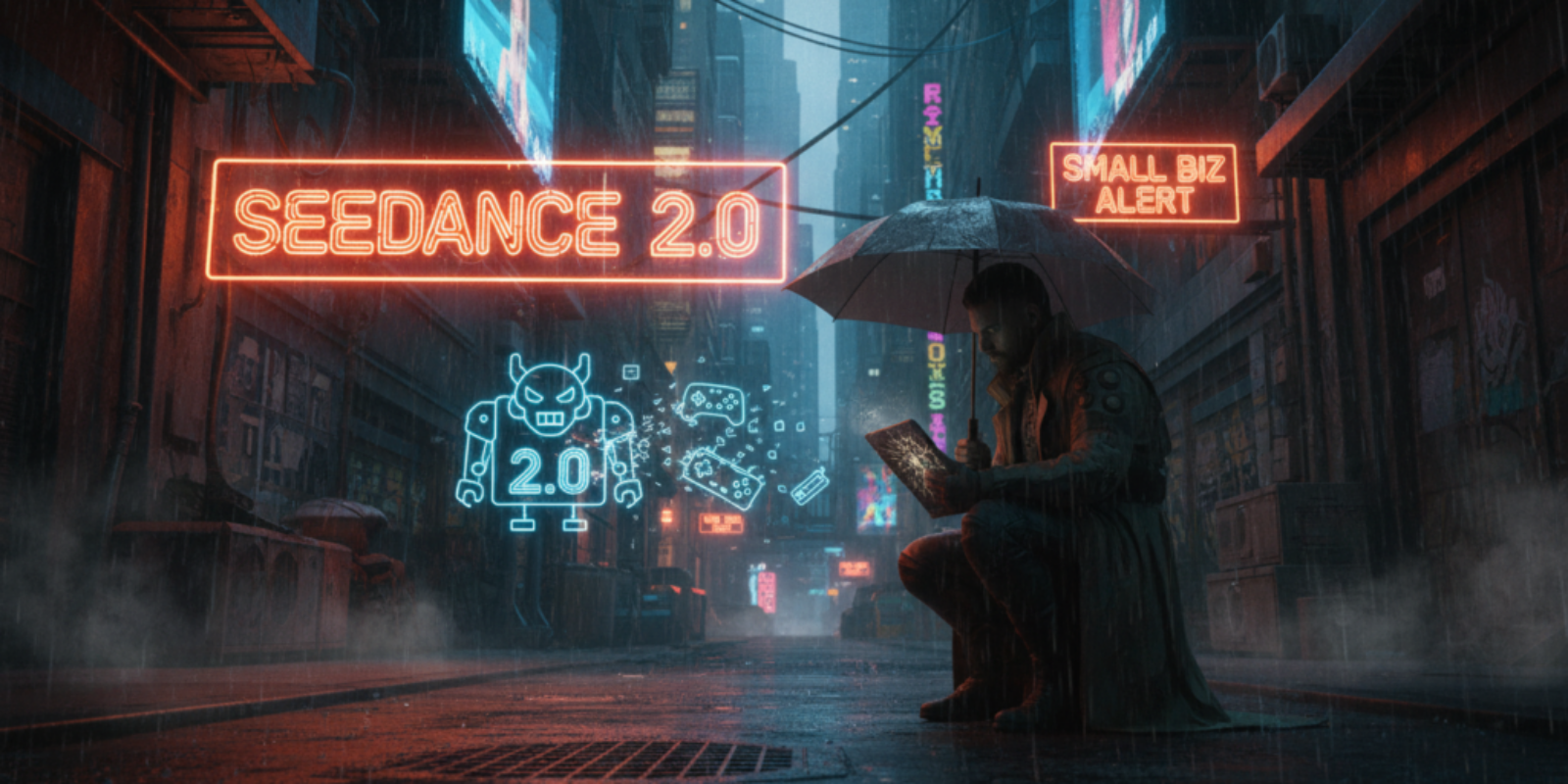
Hollywood Is Not Happy About Seedance 2.0 and the AI Industry Is Watching
A viral rooftop fight between AI versions of Tom Cruise and Brad Pitt made an executive hang up the phone and lawyers queue their stamps.
The clip looked like a deleted action scene from a summer blockbuster, which is the point and the panic. The obvious headline is simple: a new tool can make convincing short films in minutes, but the deeper, underreported issue is that the tool rewrites an entire industry value chain overnight, shifting where risk, cost, and legal exposure live.
Press reports and company statements form much of the public record around this launch, and that coverage shapes what follows. The reporting shows a rare collision of product capability, viral social distribution, and formal legal pushback, all in a matter of days. (theverge.com)
A single clip that forced Hollywood to look up from its coffee
An AI generated 15 second fight that spread across platforms and landed in studio inboxes, and suddenly executives were drafting legal notes instead of production schedules. The mainstream read is existential dread for actors and crews, a narrative that travels well on social media. The sharper view is operational: the industry now faces a flood of professionally polished unlicensed clips that can undercut commissioning budgets and cloud rights chains.
What Seedance 2.0 actually does and why that matters to AI companies
Seedance 2.0 stitches text, images, audio, and video into short cinematic sequences with native audio alignment and multi shot continuity, an advance beyond many earlier experiments. That multimodal fidelity is what made the actor deepfake so persuasive and what sets commercial risk levels much higher than last generation models. (theverge.com)
The legal volley that followed almost instantly
Within days of the viral content, the Motion Picture Association publicly demanded that ByteDance stop what it called massive unauthorized uses of copyrighted works, framing the launch as a direct attack on copyrighted catalogs. That public condemnation raises the political cost for platforms that redistribute generated content without robust rights controls. (thewrap.com)
When a studio writes a letter you do not ignore
The Walt Disney Company sent a cease and desist to ByteDance alleging the model was trained on and is reproducing Disney characters, accusing the company of treating iconic intellectual property as if it were public domain. Disney’s move formalizes the complaint and sets a litigation baseline that other studios can copy. (axios.com)
Talent unions and reputational pressure on builders
Actors unions and industry groups reacted with alarm, arguing that likeness and voice replication without consent threatens livelihoods and established bargaining leverage. The union and public outrage dimension complicates any company calculus that treats legal risk as a simple cost of doing business, because reputational damage can close distribution doors quickly. (techradar.com)
Why the AI industry should not treat this as a Hollywood problem only
Seedance 2.0 is less a product than a stress test for the entire ecosystem that builds, distributes, and licenses generative media. Competing models from other firms are racing to match fidelity and speed, which forces a market choice between aggressive growth with legal exposure and slower rollouts with licensing deals. That market tradeoff will determine which companies survive long enough to set standards. (theverge.com)
The question for businesses is no longer can AI make the image, but who will be held liable when that image costs a studio millions.
Practical implications for teams of 5 to 50 employees
A small creative agency using Seedance style tools might save 60 to 80 percent on production day rates, replacing location and stunt costs with hours at a keyboard. For example, a microbudget ad that previously required a three day shoot at 35,000 in total payroll and rentals could, on paper, be generated for under 2,000 in credits plus editing time, freeing cash for media buys instead of travel. However, those savings evaporate if a studio alleges infringement and demands a takedown or damages, which could reach six figures for willful misuse in worst case scenarios. In short, the math favors experimentation but penalizes sloppy rights management.
The cost nobody is calculating yet
Most vendors price generation by credits and speed, not by the downstream legal liability they create for customers. Developers and resellers are implicitly offering operational risk that is hard to insure, and insurers will soon reprice policies for intellectual property infringement in media. Small firms that treat AI output as finished goods are exposed to phoenix liability where an inexpensive clip creates outsized claims. A modest legal reserve of 10,000 to 50,000 may be prudent for agencies experimenting with unlicensed character likenesses.
Risks and open questions that stress test the claims
The key unknowns are how courts will treat model training data provenance and whether platforms that host generated clips will be held responsible for distribution. Cross border jurisdiction raises enforcement complexity when the builder is based outside the United States, and legislation is currently a patchwork that lags technology. Another open question is whether licensing markets will scale fast enough to monetize large catalogs or whether ad hoc litigation will become the default governance mechanism.
What this means for startups and investors
Investors will price legal and regulatory exposure into valuations and product roadmaps. Startups that bake rights management, provenance tracking, and revenue sharing into their stack will be advantaged, while those that optimize only for results per credit will face client flight when a big studio uses its legal clout. Expect consolidation around platforms that can both generate and clear rights at scale; that is reproducing a studio function, but automated and programmable.
A cautious, useful close
Seedance 2.0 is a technological leap that forces the AI industry to choose between rapid capability expansion and the slow, costly work of integrating rights, consent, and distribution controls into products. Companies that treat legal and ethical design as secondary will learn why contracts matter faster than they expected.
Key Takeaways
- Seedance 2.0 raises the operational stakes for AI video by combining multimodal fidelity with rapid distribution in ways that directly threaten established licensing models.
- Studios and unions are already responding with public condemnation and formal legal letters, making regulatory and reputational risk material.
- Small teams can save substantial production costs but must factor in potential legal reserves and clearance workflows.
- The market will reward platforms that integrate provenance, licensing, and commercial terms into generation pipelines.
Frequently Asked Questions
Can a small business use Seedance tools safely for client ads?
Yes if the business uses original prompts, ensures no recognizable copyrighted characters or celebrity likenesses are present, and secures written rights for any third party assets. Implementing a simple clearance checklist and a modest legal reserve reduces immediate exposure.
What should an agency do if a client asks for footage of a famous character?
Decline or propose licensed alternatives; obtain written proof of rights if the client claims ownership, and consider partnering with rights brokers for a fee. Taking shortcuts may save money today but invite takedowns and costly disputes tomorrow.
Are platforms likely to block copyrighted outputs automatically?
Many platforms will move toward automatic filtering and provenance metadata to avoid liability, but filtering is imperfect and will generate false positives and negatives. Businesses should not rely solely on platform filtering for legal compliance.
How will insurance respond to this trend?
Insurance companies will likely introduce exclusions or higher premiums for intellectual property liability related to generative content unless managed through approved controls. Expect higher costs for coverage until market practices and case law clarify risk.
Is litigation the only way studios will respond?
No; studios may pursue licensing partnerships, technical standards, and policy advocacy in addition to litigation. Commercial deals offer a faster route to monetization than years of court battles.
Related Coverage
Readers interested in the intersection of AI and creative labor might explore how voice cloning is reshaping podcast economics and how image generators changed advertising workflows last year. Additional reporting on copyright reform and platform moderation would help explain the policy levers likely to shape future AI releases on The AI Era News.