Inside the Neon Room: How Indoor Artworks Are Remaking Cyberpunk Culture and Business
From boutique apartments to brand playgrounds, the cyberpunk interior is no longer wallpaper; it is a programmable stage that changes who pays attention and how money moves.
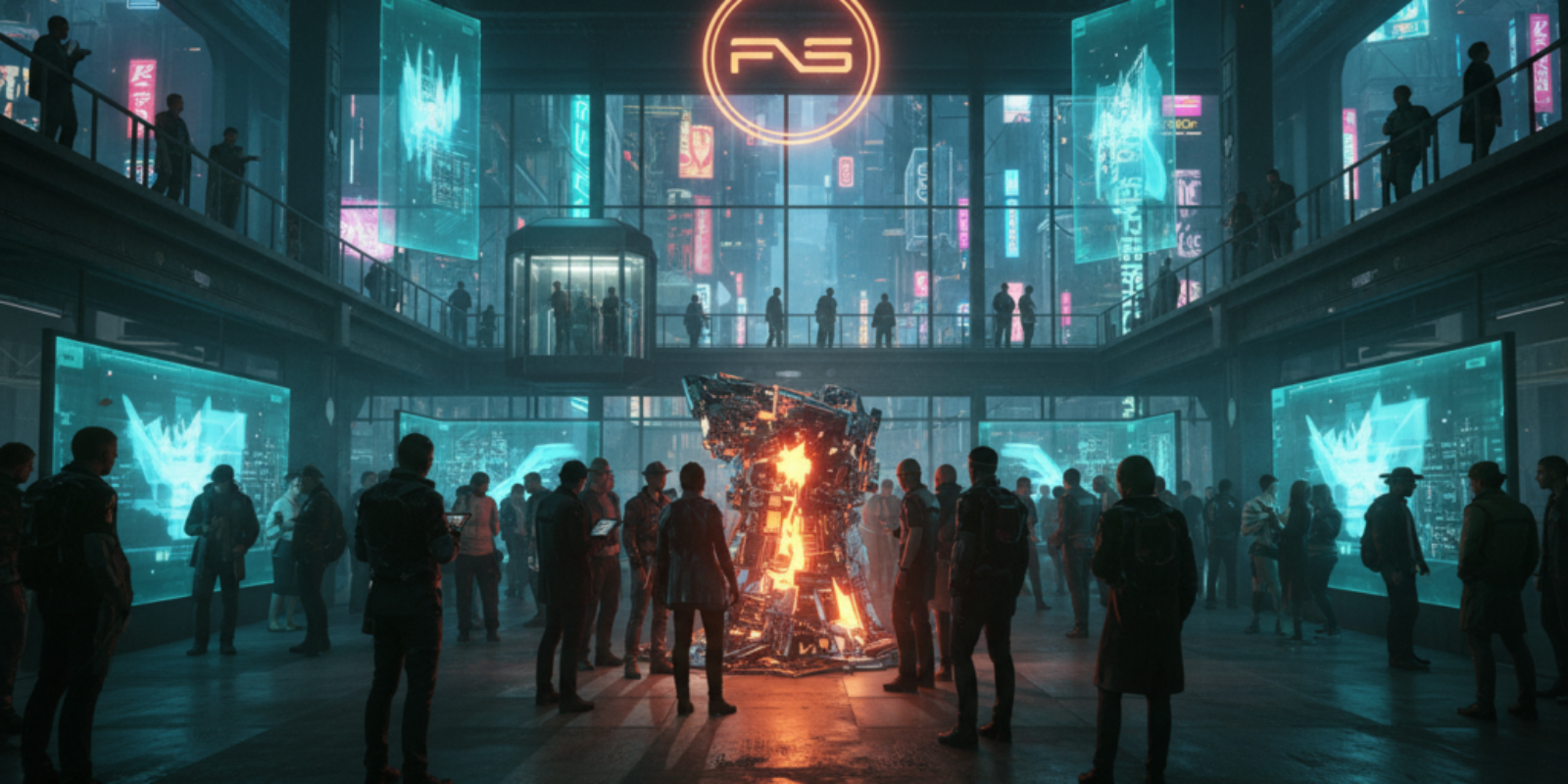
Rain tracks a high-rise window while a wall that was once matte plaster unfolds into a swarm of living data. A bartender programs a mood that syncs to wristband sensors, and every patron becomes a moving cursor in the work itself. Most observers treat these scenes as spectacle or lifestyle, token evidence that cyberpunk aesthetics have been gentrified for Instagram; that reading is correct and not wrong, but it misses the actual structural shift: indoor artworks are now a layer of spatial software that companies buy, lease, and monetize. This subtle composition change matters far more for small operators and the culture they serve than another neon sign ever could.
Why giant gallery tricks are now domestic and commercial
Digital artists have been moving from façades and arenas into enclosed, intimate places for years. Refik Anadol’s data-driven projections and “AI as brush” methodology showed that data can be turned into an interior surface people live with and think through, not only look at on a museum wall. (wired.com)
teamLab and similar studios proved the market for responsive indoor environments that read visitors and evolve in real time, creating repeat visits rather than one-off ticket sales. Those practices migrated into hospitality, retail, and private spaces because interactivity sells time in place, which is the currency businesses crave. (sfchronicle.com)
The players rewriting what an interior can do
The field now has distinct competitors: experiential collectives, entertainment producers, commercial AV firms, and solo generative artists who license loops to venues. Meow Wolf has blurred gallery, storyworld, and bar into a revenue-producing cyberpunk theater, designing indoor installations that double as hospitality and brand experience. That model signals how immersive art can be a core business line, not just a marketing stunt. (dmagazine.com)
Obscura Digital and its peers supply the heavy-lift technology and production pipelines that once only blockbuster events could afford, making technically ambitious indoor work available to corporations and municipal programs. Their playbook is logistics plus software, traded now as a service. (commarts.com)
How new projection and mapping research lowers the barrier to living sets
Researchers and engineers have made projection mapping more practical under real-world lighting, meaning rooms no longer need to be dark caves for images to read correctly. That technical push reduces installation complexity and operating restrictions, which is how cyberpunk apartments and branded lounges become feasible for small businesses as well as museums. (arxiv.org)
Rooms that used to be static are becoming canvases that can update in minutes. The business question shifts from “can we afford the artwork” to “how will this artwork earn back attention, operationally and financially.”
The cultural consequence many outlets miss
Surface-level coverage treats interior cyberpunk art as fashion; in practice it negotiates cultural ownership. When corporate venues pay top dollar for bespoke environments, scenes that once incubated counterculture risk being codified into experiential revenue streams. That is not a moral panacea, it is market math. A neighborhood that once birthed a scene may now sell it back in limited runs, and the artists who translate authenticity into installable modules become the gatekeepers.
Programmable interiors change where subcultures form and who gets paid when they do.
Practical implications for a business with 5 to 50 employees
A small café, boutique hotel, or creative showroom can build an indoor cyberpunk experience in steps that make financial sense. An entry-level professional projector plus mounting and wiring typically ranges from one thousand to eight thousand dollars. Content creation and one-time mapping may run five thousand to thirty thousand dollars depending on complexity and whether artists are commissioned or licensed. With that outlay, a venue that increases average nightly covers by four people at a twenty dollar average check and operates 300 nights a year would add about twenty four thousand dollars in annual revenue, which covers a modest installation in under two years. This is example math, not a promise, but it shows how incremental returns can justify investment. Small teams should budget for content updates of five hundred to one thousand dollars per month if the experience is meant to remain fresh.
A second model is leasing modular content from studios, which converts capital expense into operating expense and accelerates deployment. That option trades ownership for lower up-front cost and faster time to market, useful when staff headcount and bandwidth are limited. A tiny aside for reality: this is the only kind of interior where the wallpaper might come with a service-level agreement. The people writing those SLAs are not inherently romantic.
The cost nobody is calculating
Upfront hardware and creative fees are easier to price than maintenance, energy, and rights to data-driven content. When installations collect movement or biometric cues to personalize visuals they become sensors in public spaces, raising questions about consent and long-term storage. There is also a steady burn of compute, licensing, and artist royalties that adds unpredictable line items to operating budgets. These ongoing costs can double total ownership expense over five years if not planned for.
Risks that stress-test the claims
Technical fragility is real; projectors fail, calibrations drift, and software updates can change aesthetics overnight. Vendor lock-in is another risk: proprietary pipelines make swapping suppliers costly. Cultural backlash is also possible when an authentic local scene recognizes its cues being packaged and sold; brand damage from that misstep can be more expensive than the installation itself. Those are not hypothetical doomsday points, they are the business risks that need a contract and a contingency fund.
What small teams should watch closely
Watch for turnkey tools and platforms that let nonexperts publish spatial visuals without full production teams. Also watch licensing models that separate content ownership from display rights; those clauses determine whether the artwork is an asset or a subscription. Third, track local regulations around public-facing sensors and biometric triggers because compliance can become a hard cost.
Close with a practical insight
Indoor cyberpunk art is now infrastructure, and treating it as a modular, budgeted business capability will separate operators who gain durable foot traffic from those who bought a one-night headline.
Key Takeaways
- Indoor cyberpunk artworks are shifting from one-off spectacle to programmable infrastructure that venues can monetize.
- Advances in projection and mapping make immersive rooms viable for small operators, not just mega budgets.
- Decide early whether installations will be treated as owned assets or subscription services because that changes finance and risk.
- Plan ongoing content and compliance costs into the budget; the initial install is only the beginning.
Frequently Asked Questions
How much does it cost to add a simple projection-mapped wall to a small bar?
A basic professional setup including projector, mounting, and a short mapping session can total one thousand to fifteen thousand dollars depending on brightness and installation complexity. Expect additional costs for bespoke content and ongoing updates.
Can a small retail shop use reactive visuals without hiring a full studio?
Yes, plug-and-play solutions and licensing services exist that let shops run curated loops or modular generative pieces, converting capital expense into manageable monthly fees. Those platforms trade customization for speed and lower up-front cost.
Will adding interactive lighting and visuals increase customer dwell time?
Deployments that change mood and respond to people tend to increase time in place, which can boost spend; using conservative assumptions like a 5 percent to 15 percent retention bump helps model ROI. Measure with simple A to B tests before a full rollout.
Are there privacy concerns with sensor-driven interiors?
If installations collect movement, proximity, or biometric data they cross into privacy territory that may require disclosures and opt-out mechanisms. Treat sensor data like revenue data: secure it, limit retention, and document how it is used.
What skills should a 10-person venue hire or contract for this work?
At minimum, contract a content lead with projection experience, an AV integrator for installation, and a part-time ops person for calibration and updates. Outsource specialized creative direction to avoid hiring full-time for infrequent iterations.
Related Coverage
Readers interested in this subject might explore how AI-generated content licensing is reshaping creative royalties and how smart lighting manufacturers are packaging ambience as a managed service. Another useful thread follows the economics of experiential retail and why some chains are turning store floors into ongoing artistic programs rather than seasonal displays.
SOURCES: https://www.wired.com/story/artist-refik-anadol-turns-data-art-help-ai/ https://www.sfchronicle.com/entertainment/arts-exhibits/article/teamlab-s-continuity-at-the-asian-art-museum-is-21176909.php https://www.dmagazine.com/arts/2025/07/meow-wolfs-new-bar-is-just-as-trippy-as-you-might-expect/ https://www.commarts.com/features/obscura-digital https://arxiv.org/abs/2403.02547