AI Will Destroy Millions of White Collar Jobs in the Coming Months, Andrew Yang Warns, Driving Surge of Personal Bankruptcies
How a political alarm about mass white collar displacement is reshaping the aesthetics, economics, and survival strategies of the cyberpunk scene
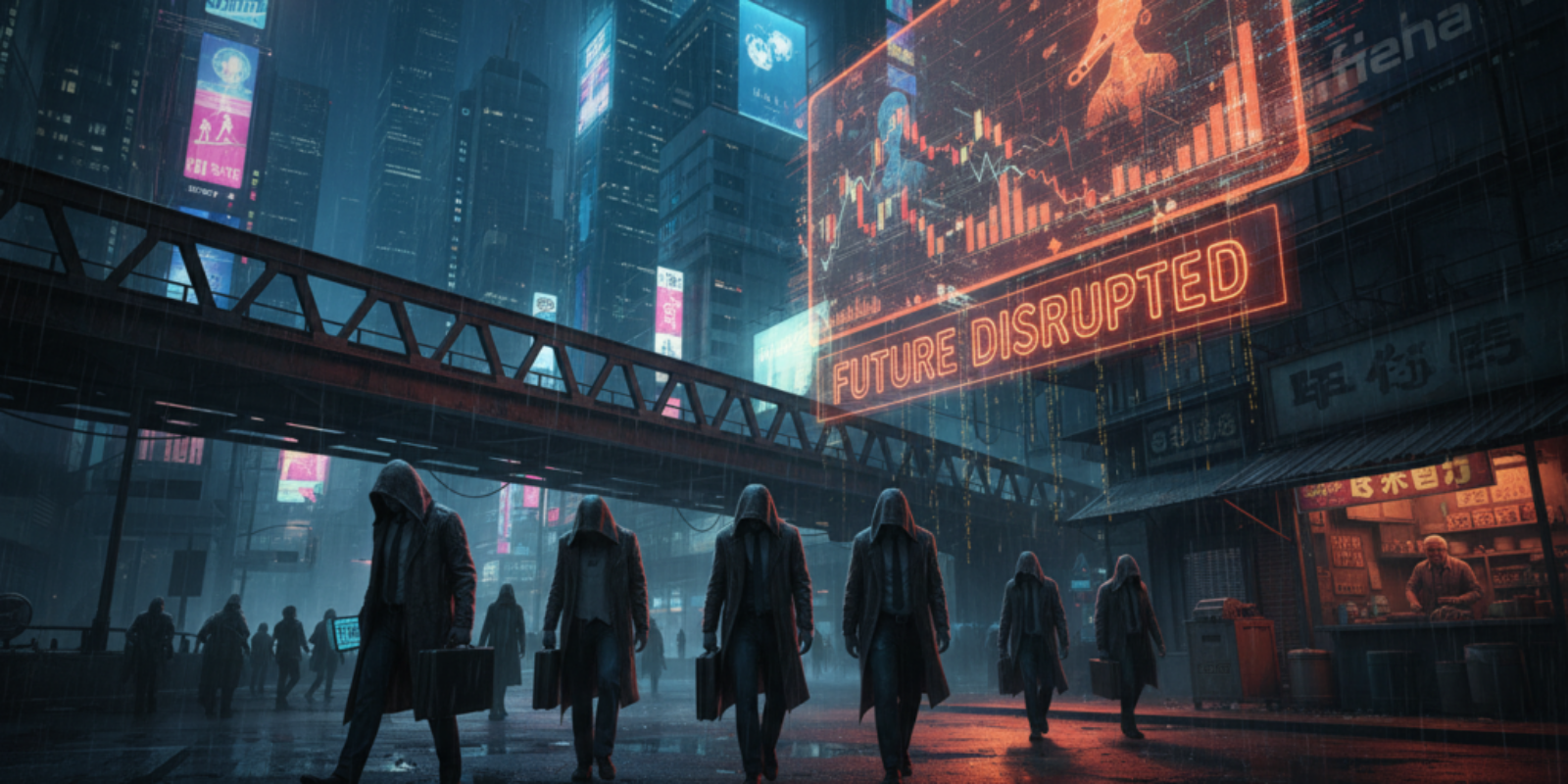
A downtown coffee shop that used to hum with junior consultants is now a rehearsal space for synth bands and a co-op for freelance UI designers. The scene looks like a music video shot through a cracked smartphone lens: suits traded for vinyl coats, LinkedIn bios replaced by Discord handles, and a sudden nervous interest in survivalist finance apps. For many in cyberpunk culture this is not style but supply chain.
Most headlines frame Andrew Yang’s latest warning as another apocalyptic push on the automation panic button: white collar roles will be swept away in months and workers must prepare for a tidal wave of layoffs. That reading misses what matters to cyberpunk communities and adjacent industries: the change will be both aesthetic and economic, collapsing paying gigs, altering who funds creative projects, and accelerating already fraught debates about authenticity in digital art. According to Business Insider, Yang argues that millions of desk-based workers are vulnerable in the next 12 to 18 months. (businessinsider.com)
Why downtown culture will feel the shock before Wall Street does
Service economies tied to office density are the leading edge of economic contagion when white collar payrolls fall. Stylists, cafes, and dry cleaners lose customers; local bands lose small audiences; indie game nights lose organizers who could previously pay venue fees. That ripple is familiar to cyberpunk spaces whose microeconomies depend on part-time incomes from tech workers, who often fund zines, mod projects, and DIY VR experiments in between sprints.
The financial data now catching up to the anecdote is blunt. Total bankruptcy filings rose 11 percent in the year ending December 31, 2025, with consumer filings leading the increase, a sign that personal safety nets are fraying as labor markets wobble. This trend is not theoretical for people living close to the tech-industrial complex; it is an immediate economic headwind. (uscourts.gov)
Why the obvious interpretation misses the cyberpunk business model
Mainstream thinking treats creative communities as lightweight casualties in a broader employment story. The overlooked fact is that cyberpunk culture is tightly coupled to mid-career professional spending. When a cohort of 30 to 50 year old knowledge workers loses steady paychecks, patronage for niche publications, indie games, and gallery shows contracts quickly. That contraction changes what projects get made, who can afford to workshop a role playing module, and whether small studios can survive an expensive art pipeline. A shrinkage in discretionary income is the infrastructure collapse artists do not usually highlight, unless they are trying to pay rent. The math is boring and brutal and therefore very punk.
Creators, studios, and fandoms are already reacting — sometimes badly
Online communities are splitting between those who embrace AI as a creative tool and those who see it as existential theft. Threads on dedicated cyberpunk forums reveal a mixture of resignation and rage: veteran artists report commissions evaporating as clients opt for instant AI images, while some creators pivot to AI-assisted workflows to survive. The tone swings between righteous banter and the very real fear of obsolescence, which reads like a subcultural mirror of the broader labor debate. (reddit.com)
Where policy and finance intersect with gritty aesthetics
When a cultural economy loses patrons, funding models shift from patronage and micro-commissions to platformized monetization or corporate sponsorship. That means creative output often tastes more like ad copy. Political warnings, including those from economic authorities, are beginning to shape investor expectations and corporate behavior. Federal Reserve officials have even sketched a scenario where rapid AI adoption could lead to a jobless boom and severe short-term displacement, forcing a rethinking of social safety nets. That regulatory imagination gives Yang’s warnings institutional weight beyond headline politics. (federalreserve.gov)
The collapse of office economies does not leave empty streets and nothing else; it turns the patron into an algorithm and the patronage into a subscription.
The cost nobody is calculating for small cyberpunk enterprises
Small studios and zine publishers operate on thin margins and irregular cash flow. If a boutique studio of 10 people loses two mid level producers, the payroll hole is immediate. Assume a mid level salary of 90,000 dollars, employer burden of 30 percent, and annual overhead of 20,000 dollars per employee; replacing two such roles costs roughly 234,000 dollars a year. An enterprise AI tool might cost 10,000 dollars a year and provide workflow automation, but it cannot replace the network, IP, and relationships that those humans hold. The arithmetic looks tempting to a CFO and cruel to an artist; that tension explains why some companies will automate and some communities will hollow out.
Practical implications for businesses with 5 to 50 employees
Small teams should calculate break even points before swapping headcount for tools. If a company of 20 people saves the equivalent of two salaries by deploying AI tools, that is about 234,000 dollars in recurring savings against roughly 20,000 to 50,000 dollars in annual AI subscriptions and integration costs. If lost human capital reduces revenue by 10 percent because client relationships dissolve, a 1 million dollar studio could lose 100,000 dollars in revenue while saving 234,000 dollars on payroll, which looks profitable on paper but imperils continuity and IP. Scenario planning with both revenue sensitivity and client churn assumptions will identify whether automation is a runway extender or a mission killer. Also build a 6 month cash buffer and consider staggered role transitions to preserve institutional knowledge; redundancy is not sexy, but it is less bankrupting than a band that never tours because the promoter got laid off and bought too many modular synths.
The risks and open questions that stress test Yang’s claim
Yang’s timeline is aggressive and some executives say AI is being used as a pretext for cuts already planned. The central uncertainties are speed of adoption, regulatory responses, and whether new job categories absorb displaced workers quickly enough. For cyberpunk culture the question is whether the value placed on handcrafted digital labor will increase as commodified output floods the market, or whether commodification wins and human craft becomes a boutique relic. That is both an economic question and a cultural one, and it will vary by subscene.
How cyberpunk aesthetics could pivot into new funding architectures
If patronage collapses, cyberpunk projects could migrate toward subscription collectives, cooperative studios, and blockchain-style licensing that aims to recapture secondary value. Expect more experimental funding models and a spike in DIY monetization, from limited edition physical zines to curated paid communities that offer authenticity as a premium. Some creators will monetize scarcity; others will lean into AI as a co-creator and sell the human curation instead of the raw output. Either way, the market will sort authenticity into a scarcity premium you can inexplicably pay with Venmo.
A practical close for readers who run small creative businesses
The immediate play is defensive liquidity, meaning three to six months of operating expenses, staged AI adoption that preserves client touchpoints, and a pivot plan to monetized community offerings. That is not glamorous, but it prevents a good project from closing because a patron became an avatar. Think of it as survival planning with better fonts.
Key Takeaways
- Andrew Yang warns of rapid white collar displacement within 12 to 18 months, a message that reframes funding for cyberpunk projects and local creative economies. (businessinsider.com)
- Bankruptcy filings rose 11 percent year over year through December 2025, signaling strained personal safety nets that directly affect cultural patronage. (uscourts.gov)
- Cyberpunk communities show fractured responses: bans on AI art sit next to wholehearted AI adoption, creating both conflict and new markets. (reddit.com)
- Small studios should run concrete scenarios: compare payroll savings to revenue loss risk and build cash buffers to survive client churn, not just automation.
- Policy discourse is shifting; Federal Reserve scenarios now include fast AI adoption and a potential jobless boom, which raises the stakes for safety net planning. (federalreserve.gov)
Frequently Asked Questions
How soon could AI actually cost my small studio real revenue?
If clients who fund your projects are in AI vulnerable roles, revenue can contract within 3 to 12 months as discretionary spending tightens. Monitor client pipelines and model revenue declines of 5 to 15 percent to stress test your runway.
Should a team of 5 to 50 switch to AI tools to cut payroll immediately?
Adopt tools incrementally and protect client-facing roles first; losing relationship managers typically reduces recurring revenue faster than headcount savings recover it. Pilot automation on non-client workflows and measure productivity gains for at least two quarters.
Will banning AI art protect my creative business?
Community bans can preserve perceived scarcity but will not stop commodification across platforms; combine policy stances with business models that sell human curation or limited editions to maintain value. Enforcement is costly and often symbolic.
Is there public policy that could help displaced creative workers?
Policymakers are discussing retraining programs and income support models, but implementation timelines vary; small businesses should plan for minimal near term assistance and prioritize private sector resilience strategies.
What should creatives do to defend their income immediately?
Diversify revenue streams into subscriptions, workshops, and limited physical goods, and build direct-to-fan channels that reduce dependence on single patrons or corporate contracts.
Related Coverage
Readers interested in the intersection of labor, technology, and culture might explore reporting on AI in game development, the economics of creator patronage, and policy proposals for universal basic income. Each offers a different angle on how artistic communities and small studios can respond to structural shocks in funding and demand.
SOURCES: https://www.businessinsider.com/andrew-yang-mass-layoffs-ai-closer-than-people-think-2026-2 https://www.uscourts.gov/data-news/judiciary-news/2026/02/04/bankruptcy-filings-rise-11-percent https://www.federalreserve.gov/newsevents/speech/barr20260217a.htm https://www.reddit.com/r/Cyberpunk/comments/1i0048u/happy_2025/ https://time.com/7212502/grimes-ai-art-interview/