AI Is Shaking Up Fashion’s Workforce
Why a new kind of automation is not just replacing tasks but remapping the way AI companies sell themselves to brands
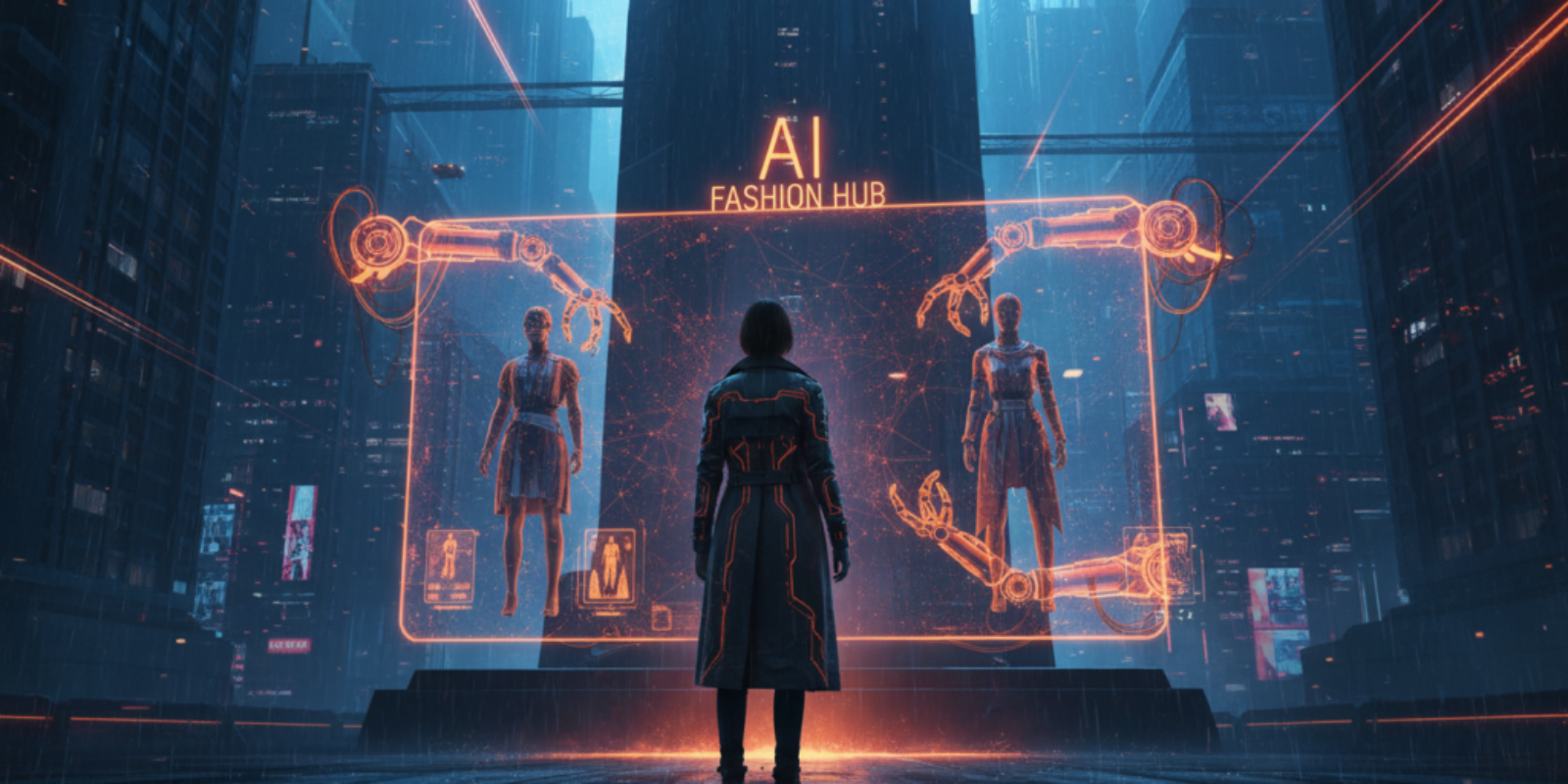
A photographer checks a camera that will not be used. The creative director clicks through AI-generated looks on a laptop while a stylist waits in a Slack thread. The industry scene is less about a dramatic machine at the factory than about quiet substitution of talent that once defined value on the balance sheet.
Most commentary frames this as artists versus gadgets, with familiar moral outrage about jobs lost to code. The more consequential business story is about how AI vendors are now selling labor arbitrage disguised as creative augmentation, and why that changes the economics of model supply chains, data licensing, and product-market fit for the entire AI ecosystem.
The frontline evidence is plain in recent reporting on fashion houses experimenting with synthetic visuals and generative design. According to The Business of Fashion, brands are moving gen AI into design and creative workflows in ways that are already reshaping hiring and role descriptions inside companies. (businessoffashion.com)
Why a marketing trick becomes a structural change
Brands are not only chasing lower production costs. They are chasing predictability: fewer shoot days, fewer last minute cancellations, and assets that can be variant-tested at internet scale. Vogue Business traced how digital models and on demand imagery let retailers iterate campaigns in hours rather than weeks, which in turn lowers the marginal cost of creative experiments and shifts budget from headcount to compute. (voguebusiness.com)
Startups like Lalaland and several 3D and avatar platforms are selling a slightly different promise. Wired documented outfits that supply hyperreal virtual models and avatars to ecommerce teams, offering immediate diversity at scale and a smaller creative team to manage. For a tech investor, that is an attractive capital-light substitution; for an AI engineer, it is now a product problem about fidelity and retraining costs. (wired.com)
When a trend becomes an industry standard
The Financial Times reported that H&M and others are piloting digital twins of models for marketing and ecommerce, a move that extends beyond novelty into supply chain decisions about who gets hired and how images are produced. The strategic implication is that front-of-camera talent becomes a licensable asset and back-of-camera roles get reframed as platform operators rather than full time employees. (ft.com)
What this means for AI companies pitching fashion clients
AI vendors now sell three separable things: model creation, asset management, and compliance tooling. Each has its own margin profile and regulatory exposure. Vendors that supply avatars must also solve consent, rights management and realtime personalization, which adds engineering overhead and legal exposure that looks very different from a pure recommendation model sale. The business plan for an AI startup is no longer just about accuracy benchmarks, it is about contract frameworks and payment routing for human subjects. The journalism covering these experiments has foregrounded the liability gap that product teams will inherit. (aljazeera.com)
The real disruption is not that photos are synthetic, it is that the ledger of who owns an image is being rewritten into software.
The cost nobody on the spreadsheet planned for
A retailer that replaces 10 photoshoots a year might save tens of thousands of dollars on travel, studio rental and talent fees. That is the superficially neat pitch. The hidden math shows up in dataset curation, reannotation, and human oversight. Train a custom avatar engine and the up front labeling and model tuning can run into six figures, followed by recurring compute bills for render pipelines. Cheaper per asset does not mean cheaper to scale if every SKU needs a fresh pass. A clever startup will charge per variant, but a careless one will hit runaway GPU bills faster than the CFO can say console. Dry aside: that is how a chronically overslept budget turns into a midnight engineering sprint, and someone inevitably blames the photographer who is now freelancing.
Why talent moves, not just disappears
Roles that vanish are often brittle. Repetitive retouching, bulk product photography, and copy generation scale easily into AI flows. But hybrid roles appear in their place: model licensors, AI ethics managers, and render ops leads. This is not always a net job loss; it is a displacement from routine labor to oversight and integration work that requires new technical skills. Companies that invest in reskilling often find employees stepping into higher value roles, though that requires time and an HR director willing to run training instead of spreadsheets.
The regulatory and brand risk ledger
The ethical and legal fights are unfolding in public. Reporting has shown that use of unconsented imagery and opaque training data catalyze both consumer backlash and regulatory attention. Brands face reputational risk if virtual assets are used in ways that feel exploitative, and AI vendors face potential liability for unlicensed datasets. That is a commercial problem as much as a moral one, because a single well publicized misstep can cost a runway of sales and client trust.
Practical scenarios for retailers and AI teams
Imagine a mid market retailer that lists 5,000 SKUs and wants personalized product pages. Option one is human photography at an average of $100 per image, plus styling and logistics. Option two is generating images via an avatar and a render pipeline, costing $2 to $20 per image after the initial model build. The break even point depends on reuse rate and return rates; if generated images lift conversion by a few percentage points and reduce returns, the ROI is immediate. Conversely, if generated imagery causes mismatch and returns rise, the cost equation flips quickly. The key variable is reuse frequency and the fidelity of fit to real world items.
Risks that stress test the claims
Quality remains uneven across body types, fabrics and motion. Hallucinated patterns, incorrect seams, and odd fit in generated images translate directly into returns and customer complaints. There is also an emergent compliance tax: disclosure rules in some jurisdictions will require brands to label synthetic media, which changes consumer trust dynamics and campaign effectiveness. Finally, AI companies that treat fashion as a plug and play market will discover that domain expertise in textiles and manufacturing matters, and that domain ignorance is not a bug, it is a market exit strategy. Dry aside: underestimating fabric science is how a product demo goes from sleek to meme in one investor call.
How to act now without breaking things
Buyers should treat pilots as experiments with clear success metrics tied to conversion, returns, and asset reuse. Contract templates must route payments for likeness rights and specify reuse limits. Operationally, stitch AI outputs into a content governance framework and budget for human-in-the-loop quality control for at least the first 6 to 12 months. Vendors should price for lifetime support and dataset refresh, not just an initial license.
A practical close
The fashion industry is moving toward a hybrid creative model where AI handles volume and humans curate value. That change is not neutral for AI practitioners; it privileges firms that can combine visual fidelity, legal frameworks, and efficient compute economics into a single offer.
Key Takeaways
- Fashion brands are replacing routine creative tasks with AI while creating new roles for oversight and rights management.
- Virtual models and avatars reduce per image marginal costs but increase fixed costs in training and legal compliance.
- AI vendors that solve contractable rights, consent and scalability will win larger enterprise deals.
- Short pilots tied to measurable metrics are the safest way for retailers to adopt generative workflows.
Frequently Asked Questions
How quickly will AI replace fashion photographers and models?
AI will automate many repetitive photography and modelling tasks within 1 to 3 years for ecommerce use, but high end editorial and experiential shoots will remain human led for longer. Replacement speed depends on fidelity needs and brand tolerance for synthetic imagery.
Can small fashion brands afford the shift to AI generated content?
Small brands can access avatar and render services via subscription models that lower up front costs, but must watch recurring compute and licensing fees which can scale with variant volume. Starting with a limited SKU set and measuring conversion is a pragmatic approach.
What legal protections should models and creatives demand?
Contracts should define likeness rights, compensation for derivative uses, and revenue share for ongoing licensing. Creative teams should also insist on audit rights and transparency about the datasets used to train the AI.
Will AI reduce the number of design jobs or just change them?
AI will change design work by automating ideation and rapid prototyping, shifting human roles toward curation, validation and storytelling. Some routine positions may disappear, but new roles requiring AI literacy and domain expertise will grow.
How should an AI vendor pitch to a cautious fashion buyer?
Lead with measurable cost savings, show quality benchmarks across body types and fabrics, and present clear legal and ethical frameworks for consent and data sourcing. Demonstrating governance and fast rollback options wins conservative buyers.
Related Coverage
Readers interested in this topic may want to explore how generative AI is reshaping retail supply chains, the economics of digital fashion and NFT style ownership, and the interplay between AI ethics and advertising regulation. Deeper reporting on reskilling programs and case studies of brands that have integrated AI into product development will illuminate practical next steps for executives.
SOURCES: https://www.businessoffashion.com/articles/workplace-talent/how-fashions-creative-class-can-fight-ai//, https://www.voguebusiness.com/story/technology/are-digital-models-about-to-become-the-industry-standard, https://www.ft.com/content/a9416d75-9ebd-46a1-ae31-0c60545070d0, https://www.wired.com/story/your-next-job-ai-modeling-agent, https://www.aljazeera.com/economy/2024/2/23/the-latest-industry-upset-with-the-use-of-ai-fashion. (businessoffashion.com)