Moon Denialists Are So Pathetic That They’re Using AI to Fake Artemis Footage for cyberpunk enthusiasts and professionals
When the cameras on the Orion capsule sent back a small, perfect earthrise in early April 2026, it was supposed to be a moment of shared awe. Instead a torrent of doctored images and AI-manufactured clips turned the shot into a mirror for paranoia.
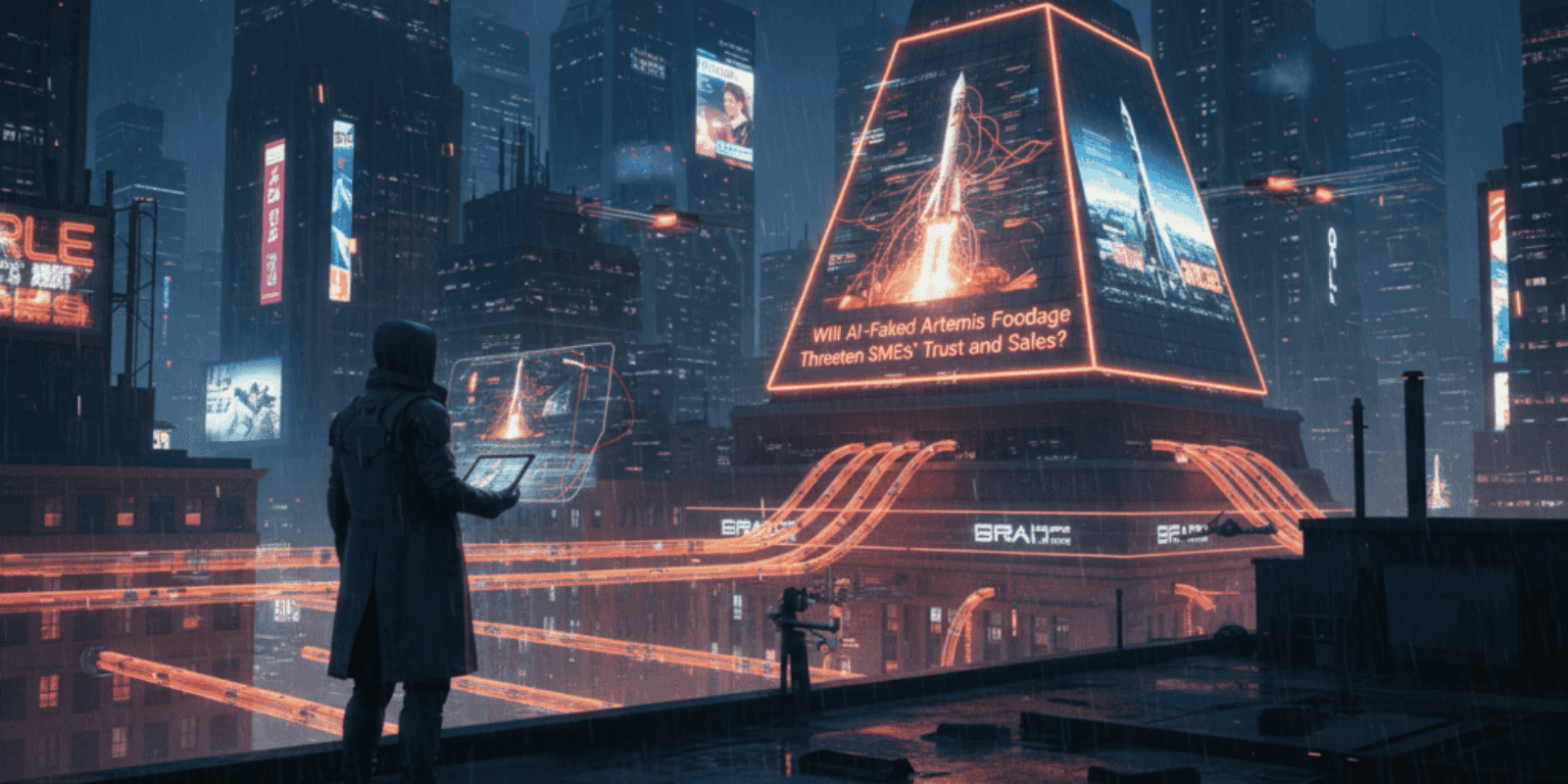
A clip showing the crew and a floating toy with odd lettering was clipped, reposted, and reimagined until it no longer resembled anything NASA produced. The obvious interpretation is simple: bad actors plus an attention economy. The overlooked issue for cyberpunk culture and its industry is sharper and stranger; this is the first time the aesthetic language of speculative futures and the tools that make them have been weaponized to rewrite a real space mission’s visual record.
The scene most people saw and what they missed
On social platforms the posts looked familiar to anyone who has lived through a viral hoax: grainy screenshots, bold claims, and an audience eager to outrun nuance. Most outlets correctly called out the fakes, but the bigger story is technical. Several viral images carried detectable metadata and invisible watermarks that point directly to AI image tools rather than spacecraft cameras. (politifact.com)
Cyberpunk culture prizes the blurred line between reality and augmentation. That aesthetic makes it fertile ground for these forgeries; the community appreciates altered images the way a sommelier appreciates oak. That appreciation now clashes with the responsibility of distinguishing homage from disinformation, because the same tools that generate striking retrofuture art are also being used to fabricate evidence.
Why this matters to creators and studios right now
The last five years saw a rapid drop in the cost of photorealistic image and video synthesis, putting cinematic VFX in the hands of indie designers. Companies such as major cloud providers and specialized model vendors compete to offer lower-latency, cheaper rendering pipelines that democratize hyperreal imagery. That competitiveness is why the moment matters: creative tools and partisan motives have collided in public. The result is a trust deficit that directly affects freelancers, small studios, and venues that trade on authenticity.
The core story with names, dates and the tech thread
Artemis II launched in early April 2026 and the mission’s public image releases triggered a wave of social posts between April 6 to April 10 claiming images were staged. Fact checkers found that many of the most viral pictures were not in NASA galleries and in some cases contained SynthID markers indicating Google AI tooling. (fullfact.org)
Analysts at AFP and other outlets ran images through detection tools and flagged watermarks and diagnostic patterns consistent with AI generation rather than optical capture. That pattern repeated across posts that juxtaposed Apollo era photos with alleged Artemis images, creating a false narrative of visual continuity. (factcheck.afp.com)
Mainstream commentary has focused on the tawdry spectacle. A deeper economic fact is that these fakes are cheap to produce and lucrative to amplify because controversy converts to clicks. Writing about the cultural fallout, commentators have tied this cycle to older moon hoax myths and Hollywood tropes, noting the ease with which cinematic techniques are repurposed for deception. (forbes.com)
The cyberpunk audience reaction and supply chain
Fans and professionals within the cyberpunk scene split into predictable camps: those who enjoyed the surreal visuals as art, and those who worried that the aesthetics were being weaponized against reality. The split is not theoretical. Design studios that license retrofuture assets now must contend with clients asking whether an image is authentically shot or algorithmically conjured, which changes licensing, attribution, and moral risk.
The tools that once made neon-soaked dreams accessible are now also being used to counterfeit history.
Practical implications for businesses with 5 to 50 employees
A boutique cyberpunk game studio with 12 staff and $1.2 million in annual revenue can illustrate the math. If a viral fake wrongly attributes proprietary assets to the studio and causes a 10 percent short-term drop in sales, that is $120,000 in lost revenue. Hiring a part-time community moderator at $25 per hour for 20 hours a week costs about $2,000 per month and can cut the spread of misinformation by reducing the window in which false claims gain traction. Paying for third-party image verification tools or a content forensics subscription typically runs from $300 to $1,000 per month; that is less than a single month of lost sales in the scenario above.
For a small VFX house doing client work, an unexpected takedown or a public relations surge could cost $5,000 to $20,000 in damage control and legal fees, while the cheaper route of proactive verification and watermarking of original assets would cost a fraction of that annually. These are concrete choices: absorb reputational risk and hope for the best, or invest in verification, watermarking, and community management. The latter scales far better for teams that cannot afford surprises.
The cost nobody is calculating
Many cyberpunk NFT projects and themed bars rely on provenance for value. When AI fakes flood the same visual space, the cost is not just direct revenue but the erosion of perceived authenticity. The unseen ledger entry is trust, and it devalues at a rate faster than any marketing campaign can replenish. A weekend meme wave can rewrite months of brand building, and no one is billing that to an insurer yet.
Risks and open questions that stress-test the claims
Detectors like SynthID are useful but imperfect; watermarks can be removed and false positives occur under heavy postprocessing. There is also a strategic risk in heavy-handed takedowns because they feed the “censorship” narrative that fuels conspiracy communities. The unresolved question is governance: should platforms adopt mandatory provenance labels for space imagery, or will that simply create new workarounds? Answers will determine whether creative communities remain a haven for experimentation or become collateral damage in culture wars.
What cyberpunk creators and venues should do next
First, institutionalize provenance inside asset pipelines by embedding signatures and publishing originals on authoritative archives. Second, treat community moderation as infrastructure not an optional marketing line item. Third, when repurposing mission footage or making homage pieces, add clear disclaimers to avoid accidental cooptation by denier accounts. These steps raise costs modestly while preserving creative freedom.
Forward-looking close
The collision of AI, spectacle, and conspiracy around Artemis II is a practical warning for cyberpunk professionals: creative tools will keep getting cheaper and more convincing, and the only sustainable response is to build verification and trust into the business model now.
Key Takeaways
- Viral Artemis II images were widely found to be AI-generated or not from NASA, creating a trust problem for visual culture. (politifact.com)
- Invisible AI watermarks and detection tools identified many fakes, but detection is not a perfect defense. (fullfact.org)
- Small studios should budget for verification, moderation, and provenance to avoid outsized reputational losses.
- The mainstream press and tech industry debate about AI provenance will shape the economics of cyberpunk media for years. (factcheck.afp.com)
Frequently Asked Questions
How can a small creative studio prove an image is authentic?
Embed cryptographic signatures in originals and publish high resolution masters to a trusted archive. Use basic third-party verification tools and keep versioned metadata for every asset so provenance can be shown within minutes.
What is SynthID and should studios rely on it?
SynthID is a watermarking approach used by certain AI tools to signal generated content. It is useful as one signal but not a silver bullet because adversaries can reprocess or mask markers. Use it as part of a layered verification strategy.
Will platforms require provenance labels for all space imagery?
Regulation is possible but not guaranteed. Platforms have incentives to reduce misinformation, yet mandates are politically sensitive. Prepare for voluntary industry standards before regulation forces costly compliance.
How much should a 10 person cyberpunk studio budget for moderation and verification?
A reasonable baseline is $2,000 to $4,000 per month for a part-time moderator and verification subscriptions; this cost is small compared to the potential revenue loss from a viral misinformation episode.
Can art that uses moon imagery still be sold or exhibited?
Yes, but add clear attribution and separate original NASA imagery from AI-generated or edited pieces. Transparency protects both buyers and creators and preserves long term brand value.
Related Coverage
Readers interested in the business side of image provenance might explore reporting on AI watermarking standards and platform moderation economics. Coverage of indie game studios adapting AI tools offers practical playbooks for creators. Also consider deeper reads on historical conspiracy culture to understand why certain audiences are primed to accept fabricated images.
SOURCES: https://www.politifact.com/factchecks/2026/apr/08/social-media/Moon-photos-artemis-II-AI-NASA/, https://fullfact.org/technology/artemis-2-earth-pictures-fake-ai/, https://factcheck.afp.com/doc.afp.com.A7233KE, https://www.forbes.com/sites/marshallshepherd/2026/04/03/artemis-ii-hollywood-and-moon-landing-conspiracy-theories/, https://www.nasa.gov/maf-space/maf-images-and-video-library/