The Cyberpunk Database – Movies, Games, Music, Books
A neon-lit catalog of cultural assets, a taxonomy of influence, and an intelligence brief for small and medium sized enterprises: the Cyberpunk Database is a concept and a resource that maps a genre that began as speculative fiction and now functions as both aesthetic shorthand and strategic barometer for how technology, culture, and commerce collide. For business leaders who want to understand the narratives shaping customer expectations, talent pools, and brand signals, the cyberpunk archive is less trivia and more market intelligence. The word “cyberpunk” itself grew out of 1980s counterculture and rapidly became shorthand for stories about high technology and low social capital. (britannica.com)
Origins and a Short Literary Genealogy
- Bruce Bethke coined the word in a short story first published in 1983, but the movement coalesced around authors who turned the early digital revolution into fiction about networks, corporate power, and identity. (britannica.com)
- William Gibson’s 1984 novel Neuromancer crystallized the vocabulary of cyberspace, hackers, and neon noir aesthetics and won major science fiction awards while seeding decades of creative work across media. Those narrative building blocks now function as cultural primitives that designers, advertisers, and product teams unconsciously remix. (britannica.com)
Blade Runner as Prototype Cinema and Design Text
- Ridley Scott’s Blade Runner, released in 1982, serves as the cinematic milestone that translated cyberpunk’s literary atmosphere into a visual language: rain, layered signage, overflowing urban density, and corporate monoliths. The film’s slow-burn commercial arc and ultimate canonization turned it into a blueprint for how mood, production design, and sound can create a future that feels both plausible and profitable. (britannica.com)
Why this matters for business: Blade Runner is not just a movie. It is a durable case study in intellectual-property longevity, world building, and the economics of nostalgia. Brands that borrow its visual cues borrow a contract with collective memory.
Games, Platform Risk, and the Live Product Lifecycle
- Cyberpunk as an interactive category moved from tabletop and tabletop role playing games into major video-game properties. The recent history of Cyberpunk 2077 illustrates how the gap between brand expectation and product reality can damage reputation and then be partially repaired by persistent postlaunch investment and platform expansion. The title’s troubled early launch and subsequent platform rollouts provide a cautionary tale about QA, community management, and the long tail of software as a service. (theverge.com)
For SMEs building digital products or engaging in licensing, the lesson is structural. One misstep at launch can echo through marketing, partnerships, and reseller relationships. Then again, a committed patch cycle can restore trust. That sentence reads like an ad for humility.
Music, Subculture, and the Sonic Brand of Decay and Drive
- Cyberpunk’s musical fingerprints run from industrial and synth scores to contemporary electronic and hybrid orchestral palettes. The genre’s sonic vocabulary is as important as its visual one: mechanical rhythm, metallic textures, and dystopian ambience inform immersive retail, branded playlists, and sound design for apps meant to feel “edge aligned.”
Curation of soundscapes can be an economical way to convey a product’s emotional positioning. Think of it as the difference between espresso served in a chrome cup and espresso served in a polished tin can with tiny LEDs. One suggests boutique. The other suggests a future with better Wi Fi.
The Database Architecture – What SMEs Should Expect from a Cyberpunk Catalog
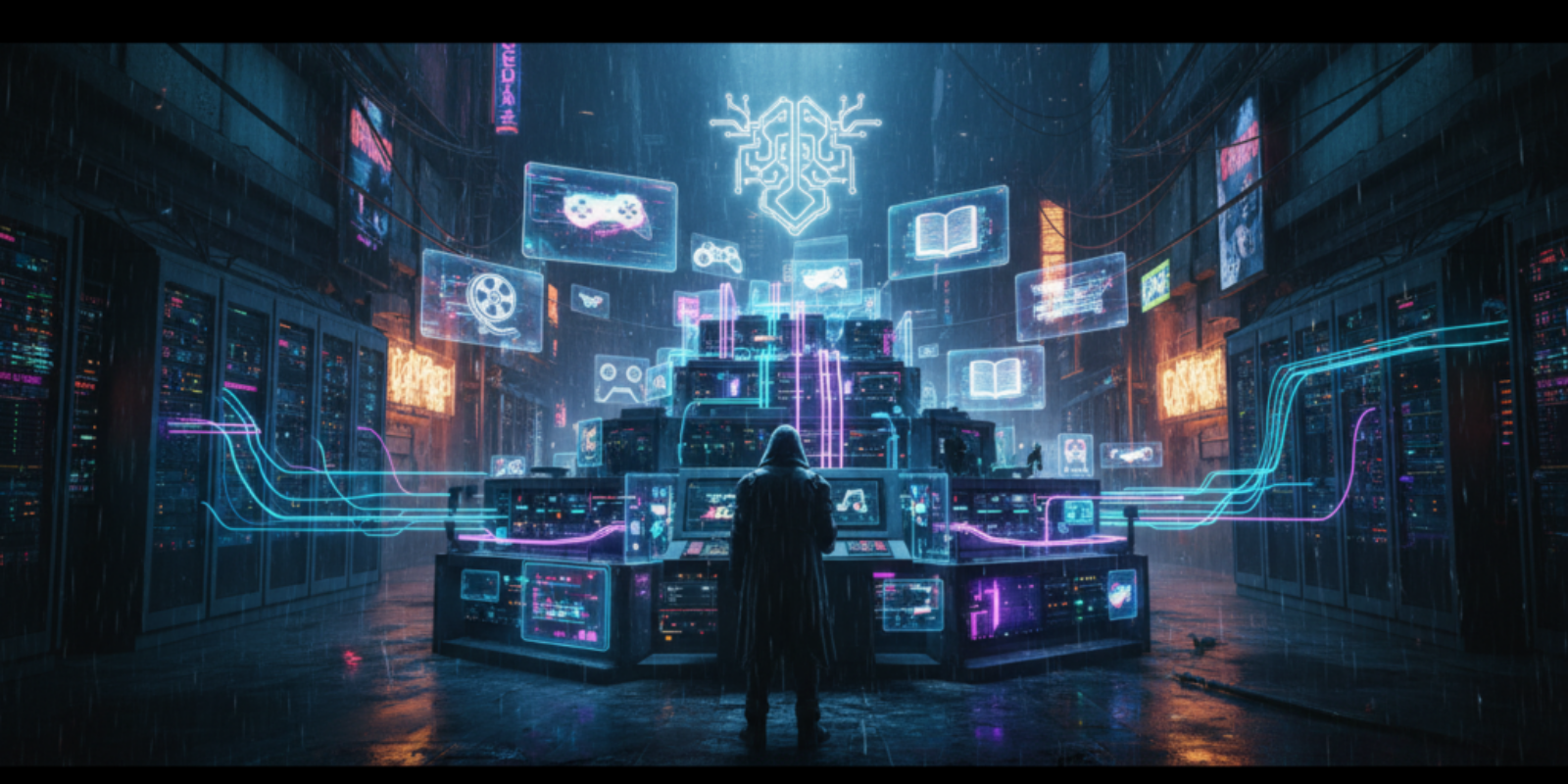
A practical index for professionals can be organized around discrete fields that make entries actionable for marketing, licensing, and product work:
- Core metadata: title, year, format, creators, studio/publisher, country of origin.
- Thematic tags: corporate dystopia, AI governance, body modification, hacking, noir moral ambiguity.
- Cross media links: adaptations, source texts, soundtracks, games, licensed merchandise.
- Visual assets: stills, poster art, color palettes, typefaces (where licensing permits).
- Rights notes: public domain status, owner, license windows, and clearance flags.
- Influence map: which later works cite or elide this entry, and which cultural movements it fed.
- Risk signals: controversy history, problematic content flagged for modern audiences, and potential PR triggers.
This structure functions as a lookup table and as a decision-support layer when marketing, IP, or partnerships teams need to answer the immediate question: is a reference safe, collectible, and on-brand?
Curation, Credibility, and the Politics of Reference
Assembling a credible database requires more than aggregation. Historical context matters. Cyberpunk emerged from both literary theory and technological anxiety, and its authority rests on tracing source lineage from short fiction to major novels and films. Good metadata remembers origin stories and respects authorship. (britannica.com)
A second credibility layer asks for provenance on visual and sonic assets. Film stills, game screenshots, and soundtrack clips are useful, but their licensing constraints determine whether a firm can use them in campaigns without turning a PR problem into a legal problem. Blade Runner style imagery is evocative because the film’s production design and score became a lingua franca for the genre. That lingua franca has legal owners. (britannica.com)
Cross-Industry Use Cases That Read Like Market Signals
- Brand design and packaging: using cyberpunk palettes to signal premium-tech, niche-luxury, or speculative cred.
- Content strategy: serialized newsletters, playlists, and short-form video that borrow genre tropes to tell human stories about automation.
- Product experience: layered UI motifs that echo noir interfaces without sacrificing accessibility.
- Talent attraction: creative teams often resonate with clearly signaled cultural references; cyberpunk can attract engineering and design talent who identify with hacker mythology.
- Risk management: reputation mapping for references that may appear tone deaf under changing cultural standards.
These are not futuristic hypotheticals. Cyberpunk’s cultural threads are active in film, games, and museums, and contemporary scholarship and exhibitions continue to reframe the genre for a global audience. The genre is being curated, exhibited, and historicized in ways that make it both a commercial language and an academic object. (mitpressbookstore.mit.edu)
Data, Ethics, and the Narratives That Shape Trust
The cyberpunk archive contains repeated moral questions: who owns identity, who governs emergent AI, and who pays the cost of technological convenience. For SMEs deploying AI or data-driven services, those narrative concerns are not theatrical. Customers and regulators increasingly expect transparency about model behavior, data provenance, and third-party dependencies. The genre’s recurring ethical motifs can serve as early-warning themes that surface in policy debates and consumer sentiment.
Collecting the Database Without Collecting Legal Headaches
- Map rights early. Identify owners of high-value assets.
- Use low-friction assets where possible: soundtrack-inspired compilations that are fully licensed, commissioned artwork with cyberpunk motifs, and original short fiction that riffs safely on genre tropes.
- Track cultural context. Some properties age into contested zones. Keep a “context note” on entries that may require content warnings.
Conclusion: Why a Cyberpunk Database Is Business Intelligence, Not Nostalgia
The cyberpunk archive is a living map of how cultures imagine technology and how that imagination feeds markets. For SME owners and professionals, it is an interpretive toolkit: a way to read aesthetic cues, understand source credibility, and anticipate the policy questions that will be asked when a product touches people’s lives. The database converts mood into metrics and myth into a manageable asset class. If the future arrives wearing vinyl and neon, at least the accounting department will know how to code the expense.
Sources (selected for factual grounding)
- Encyclopaedia Britannica, entry on Cyberpunk. (britannica.com)
- Encyclopaedia Britannica, biography and context on William Gibson and Neuromancer. (britannica.com)
- Encyclopaedia Britannica, entry on the film Blade Runner. (britannica.com)
- The Verge, reporting on Cyberpunk 2077 platform launches and product lifecycle. (theverge.com)
- MIT Press / Academy Museum related publication on cyberpunk cinema and cultural influence. (mitpressbookstore.mit.edu)