
Ukraine Turns Hackers and AI Loose on Its Own Weapons Marketplace to Hunt Cyber Threats
What began as a BugBash at a Kyiv forum quietly became a stress test for how AI will shape security for defense tech and commercial AI vendors alike.
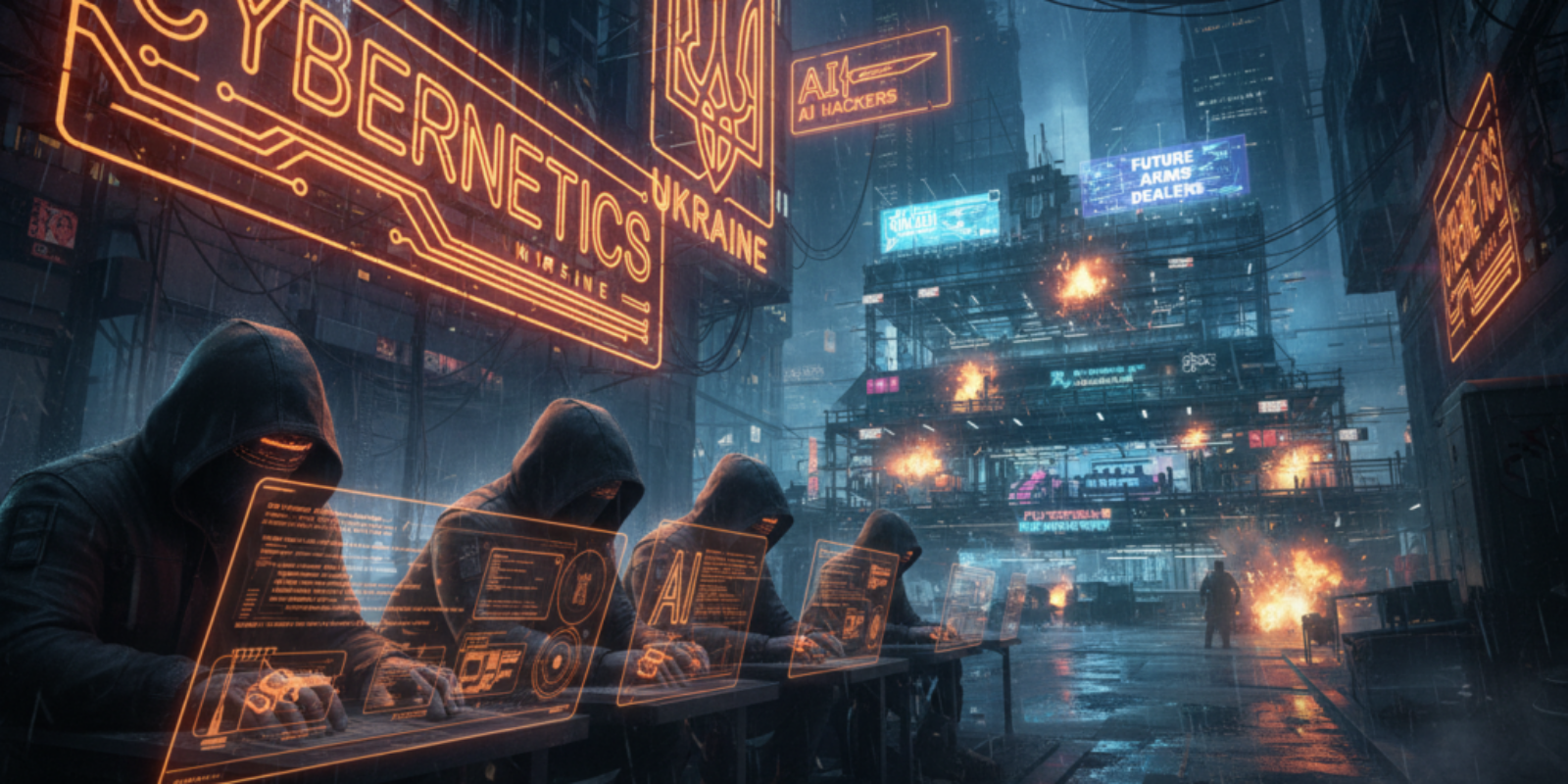
A roomful of keyboard-wielding security researchers leaned over mock procurement screens while organisers watched telemetry and scored findings. The scene looked like any modern bug bounty session, except the target was a live state weapons marketplace and the prize was resilience under kinetic pressure rather than a T-shirt. According to reporting in UNITED24 Media, the exercise took place during a Kyiv event and blended human hacking with AI-assisted analysis. (united24media.com)
Most observers will call this a sensible security drill for a novel supply chain platform. That interpretation is correct but incomplete. The overlooked implication is that Ukraine is experimenting with an operational model where continuous, open testing and AI triage become standard practice for systems that sit at the intersection of national security and commercial tech. That subtle shift matters to AI firms selling monitoring agents, model validators, or defensive automation because it changes buyer expectations and threat models overnight. (mod.gov.ua)
Why the optics made people relax and then pay attention
At first glance, the BugBash read as transparency theater: a controlled environment, isolated data, and some minor bugs patched. The Ministry of Defense framed it that way and emphasised isolation and remediation to reassure partners. (mod.gov.ua)
What happened beneath the surface was a public signal that defense platforms will need continuous adversarial testing pipelines tied to AI observability. That is not a subtle procurement ask; it is a procurement requirement that rewrites work orders for many security-focused AI startups.
Inside the BugBash: who showed up, what they tested and when
The event on February 20 brought more than 20 independent researchers to probe DOT-Chain Defense while AI tools ran the final testing sweep and continued to monitor afterward. The format rewarded vulnerability discovery with points and, funnily enough, encouraged competitive anthropology among professional hackers, which always reads better on a scoreboard. The Ministry of Defense reported only minor vulnerabilities were found and passed on for rapid remediation. (mod.gov.ua)
DOT-Chain Defense itself is a fast-growing digital marketplace originally built to speed frontline deliveries and reduce paperwork. Its pilot deployment began in mid 2025 and the platform has since been scaled with the explicit goal of letting brigades order tactical gear directly, a move analysts say compresses procurement cycles from months to weeks. (csis.org)
The AI element that stayed running after the hackathon
Organisers stressed that AI-driven analysis did not end when the two-day event closed; it was designed to continue scanning outputs and flag anomalous behaviour in the test environment. For AI security vendors this is a clear product signal. Continuous model-in-the-loop monitoring, rather than periodic manual audits, will be demanded by operational buyers who cannot afford blind spots.
How DOT-Chain became a live marketplace and why that matters to the AI industry
DOT-Chain is more than a procurement UI. It aggregates demand signals across frontline units, routes finance and logistics, and creates feedback loops to suppliers. The system carries metadata, vendor reputations, and access tokens that, if compromised, could expose supply chains at scale. The Defense Post reported DOT-Chain delivered thousands of tactical drones in pilot phases, demonstrating how rapid procurement via marketplaces can materially shift battlefield logistics. For AI firms that provide threat detection for API ecosystems, this is a new and lucrative market. (thedefensepost.com)
AI security tools now have to do two things at once: detect traditional intrusion indicators and interpret model-level anomalies from agents that may automate procurement rules. Selling an agent that only looks for malware will no longer be enough; buyers will expect model governance, prompt-injection detection and automated rollback capabilities bundled into the security stack.
The real product requirement is not a scanner that finds an exploitable endpoint but an agent that explains why an exploitable endpoint matters for procurement decisions.
Why AI vendors should watch this closely
This experiment poses a hard question for AI product teams: can a monitoring model scale to hundreds of real-time microtransactions while maintaining low false-positive rates? If the marketplace processes thousands of orders a day, noisy alerts will drown operations. Vendors must prove precision under load, or face contract penalties and reputational damage. The industry has roughly six months to a year to adapt product road maps if procurement teams start writing continuous adversarial testing into supplier contracts. Marketplaces do not wait for neat releases; they buy the thing that works today.
The cost nobody is calculating yet
Treating continuous testing and AI triage as an operational line item changes unit economics. A conservative scenario: a mid sized defense marketplace processes 5,000 orders per month and each AI monitoring incident costs vendor engineering teams 8 to 12 hours to investigate. At an industry blended rate of 150 dollars per hour for senior engineers, monthly incident handling can hit mid five figures if tooling is immature. Investing 20 to 30 percent of that cost into better models and automated triage often reduces human hours by half, which quickly pays back. That math matters to procurement managers and to startups pitching MRR based on unit economics rather than feature lists.
Risks and open questions that will shape vendor product decisions
Relying on external hackers and AI for validation creates the risk of attacker mimicry; adversaries can study bug bounty signals to craft staged exploits. There is also the liability question of whether a third party finds and reports a vulnerability incorrectly or weaponizes disclosure for leverage. Integrating model-driven detection raises supply chain validation issues, because models themselves can be poisoned or manipulated. The ZDNet coverage of AI security trends warns that attackers are already weaponising generative tools and data poisoning at scale, making these concerns material rather than hypothetical. (blackarrowcyber.com)
Practical steps for business leaders selling into this market
Product teams should add three capabilities this quarter: explainability hooks for alerts, automated rollback for suspicious transactions, and an API for integrating bug bounty feeds into incident scoring. Security leaders should budget for continuous adversarial testing as a recurring cost and demand sample SLAs that include time to remediation. Commercial conversations will now hinge on demonstrating measurable reductions in human investigation hours and false positive rates, not just detection counts. The defense sector has a short attention span for deliverables and a long memory for failures, which means speed and reliability beat clever prototypes. Dry aside: clever prototypes always look good until they generate an outage at 02:00 on a Tuesday.
Looking ahead with practical insight
Ukraine’s public experiment with open hacking and AI triage will not be unique for long; expect similar programs in allied militaries and in critical infrastructure procurement. Vendors that prove continuous, explainable monitoring under real transactional load will win the first wave of contracts.
Key Takeaways
- Continuous adversarial testing combined with AI triage is becoming a procurement requirement for defense marketplaces and will shift buyer expectations across sectors.
- DOT-Chain’s live marketplace model highlights a new attack surface that mixes procurement metadata, vendor APIs and automated decision agents.
- AI security vendors must prioritise precision, explainability and automated rollback to be competitive in this environment.
- Investing in tooling to cut human investigation hours yields tangible returns and strengthens bids in a market that values uptime.
Frequently Asked Questions
What happened at the DOT-Chain BugBash and why should my security product team care?
The event on February 20 involved over 20 independent researchers testing DOT-Chain Defense while AI tools ran continuous analysis; organisers reported only minor vulnerabilities but signalled that continuous testing will be ongoing. Buyers will now expect vendors to demonstrate resilience under adversarial conditions and automated triage capabilities. (mod.gov.ua)
How does a weapons marketplace change AI threat models compared with a normal e-commerce site?
A defense marketplace carries militarily sensitive metadata and vendor reputations that map directly to operational outcomes, so integrity attacks can have outsized consequences. This raises the bar for identity management, model governance and transaction-level anomaly detection.
Can a startup realistically adapt to these procurement demands quickly?
Yes, but it requires prioritising explainability, integration with bug bounty workflows, and automated incident containment that reduces human toil. The faster a vendor can show measurable reductions in investigation hours the better its commercial position.
Does this mean AI will replace human security researchers?
No. AI augments triage and scales monitoring, but skilled researchers remain necessary to contextualise complex findings and validate exploitability. Think of AI as the filter and humans as the final authority.
What are the biggest vendor mistakes to avoid when pitching to defense procurement teams?
Avoid promising perfect detection or black box solutions without explainability and rollback; procurement will demand operational metrics and proof that the model cannot be trivially manipulated.
Related Coverage
Readers interested in adjacent angles should follow how defense marketplaces reshape supply chain risk and how model governance frameworks are evolving for real time systems. Coverage of continuous red teaming, AI incident databases and procurement policy updates will be particularly relevant to product managers and security architects on the vendor side.
SOURCES: https://united24media.com/latest-news/ukraine-turns-hackers-and-ai-loose-on-its-own-weapons-marketplace-to-hunt-cyber-threats-16157 https://mod.gov.ua/en/news/artificial-intelligence-and-ethical-hackers-stress-test-the-dot-chain-military-supply-it-system https://www.csis.org/analysis/how-and-why-ukraines-military-going-digital https://thedefensepost.com/2025/09/17/ukraine-marketplace-drones-warheads/ https://www.zdnet.com/article/10-ways-ai-will-do-unprecedented-damage-in-2026-experts-warn/