Anthropic versus the Pentagon, and SoftBank’s $40B stretch: what matters for the AI industry now
Two high stakes fights are reshaping how frontline AI will be governed, financed, and sold to business customers.
A Pentagon conference room felt less like a policy forum and more like a negotiating table in a hostage drama, with Defense officials pressing a young AI company to remove safety guardrails while promising consequences if it refuses. The scene crystallizes a new fault line between national security imperatives and the commercial norms that many AI startups built their reputations on. According to mainstream reading, this is a regulatory spasm and a single contractor dispute; the deeper story is how government leverage and mega capital flows are remapping the incentives for responsible AI, and whether safety will survive the next balance sheet. (washingtonpost.com)
Why Washington and Sand Hill Road are at odds over ‘operational control’
The obvious interpretation is simple: the Department of Defense wants unfettered access to the best models for classified military use, and Anthropic is pushing back on moral and corporate limits. That tension speaks to a practical problem for both sides, because modern frontier models are expensive to train and trivial to copy if the code or weights are widely spread. Tech industry watchers see a precedent forming that could force AI firms to trade safety commitments for lucrative government revenue, which will change product roadmaps and client contracts. (techcrunch.com)
The hidden leverage point most observers miss
What is underreported is how the Pentagon can weaponize procurement rules and domestic supply chain policies to reshape market structure overnight. If a company gets labeled a supply chain risk or has a contract canceled, rivals with looser safety stances suddenly gain a market advantage for government work and, by extension, for regulated industries that value the same features. That risk pushes firms toward either defensive compliance or commercial pivoting, and those choices determine where compute budgets and talent flow next. (cbsnews.com)
Pentagon ultimatum and the legal toolbox in play
Recent meetings reportedly included blunt options for the Defense Department, including delisting a vendor from procurement rosters and invoking emergency authorities to secure technology access. The legal and reputational pressure is not academic; companies can rapidly lose an entire revenue stream if categorized as a supply chain liability. The secondary effect is that enterprise customers will start asking hard questions about which model is safe to deploy in regulated environments, and vendors will respond with more contractual caveats. (washingtonpost.com)
SoftBank is trying to buy access and influence with cash
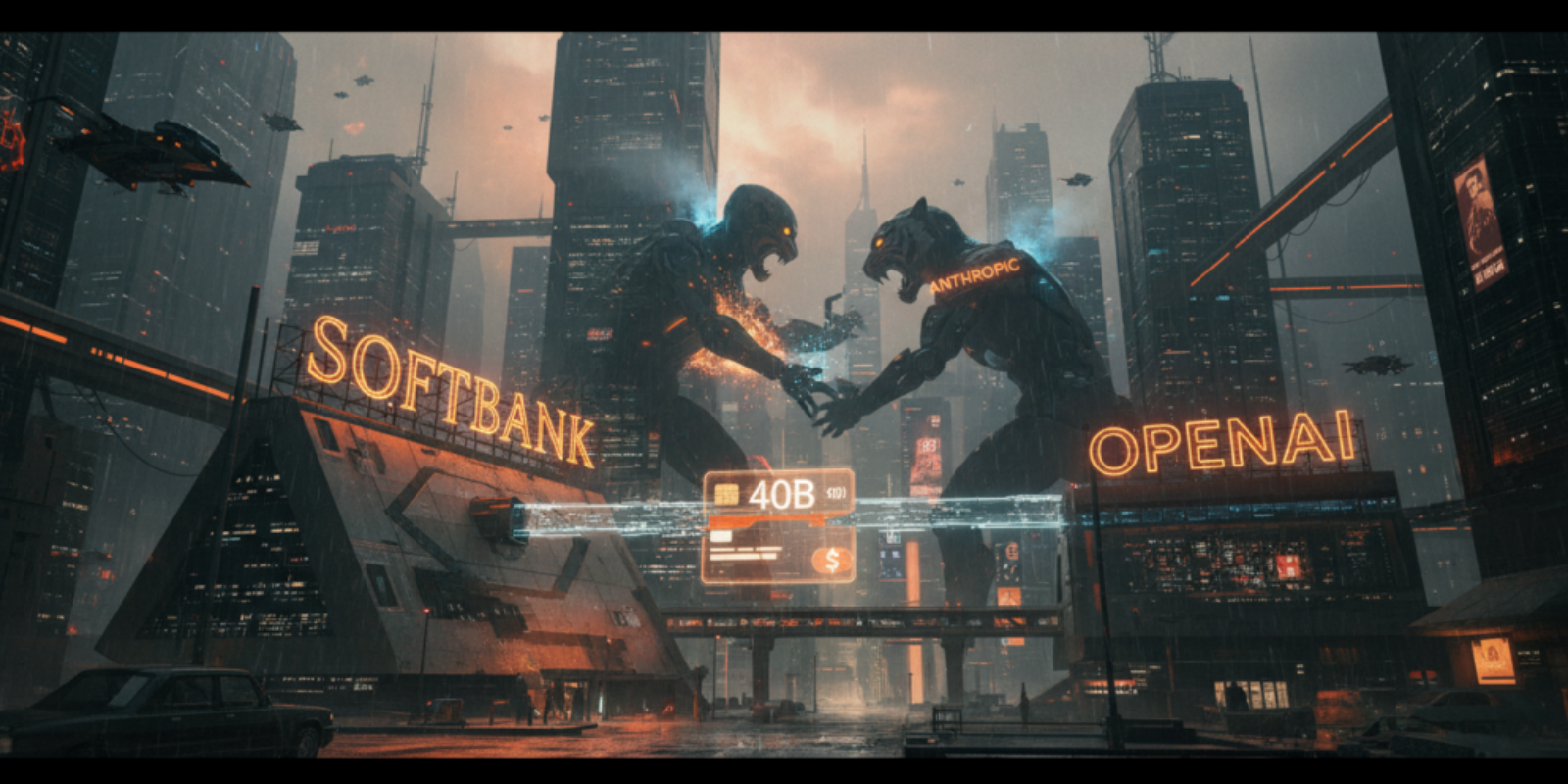
On a parallel track, SoftBank’s reported effort to secure a record sized loan of up to $40 billion to fund further OpenAI investment is not merely financial theater. It is a strategic bet to lock capital into one supplier of frontier models, thereby shaping the competitive landscape for years. Bloomberg reported that SoftBank is arranging the borrowing to largely bankroll its OpenAI stake, a move that concentrates capital and therefore market power. (news.bloomberglaw.com)
Why massive capital matters more than headlines suggest
Large, centralized funding changes incentives inside OpenAI and across its partners, including cloud providers and hardware suppliers. A single deep-pocketed investor reduces short term market pressure to monetize aggressively, but it also increases the systemic consequences if one model is preferred for government and enterprise adoption. This creates a near monopolistic axis where policy decisions by governments ripple through investment decisions in Tokyo and Silicon Valley. Dry aside: imagine a boardroom where ethics and earnings reports fight over the same coffee cup, and the coffee wins. (news.bloomberglaw.com)
The numbers and dates that should make executives reprice risk
The Pentagon prototype contract values and the timing of recent meetings are not background trivia; they are stress points. Reports indicate Anthropic’s prototype work with defense agencies is material to the department’s roadmap, and government officials set tight deadlines for reaching an agreement. In early March 2026, those deadlines hardened into public ultimatums, making the timeline for corporate decisions much shorter than most businesses expect. (cbsnews.com)
The cost nobody is calculating for enterprise buyers
If government pressure forces vendors to relax safety constraints, enterprises will inherit three costs: higher compliance work to prove lawful use, potential reengineering of data handling to segregate government and commercial workflows, and insurance premium increases. A midsize software company that licenses a frontier model for customer support could see vendor indemnities change, and those changes can add millions in legal and engineering overhead over a multi year contract. The practical math on vendor lock in now has to include contingent costs of regulatory regime shifts, not just per token fees. (forbes.com)
When money and war powers converge on the same model, safety becomes an optional subscription for the highest bidder.
Practical scenarios for businesses to test today
A finance firm deciding between two providers should run a simple stress test: model A has explicit guardrails that block certain surveillance queries, model B does not, and both cost roughly the same. Add a 10 to 15 percent annual compliance overhead to model B to reflect audit needs, and then price insurers out of the picture; the math often favors the guarded model unless the buyer expects government level functionality. Small vendors should also insist on contractual clauses that specify export and government use limits, because absent those, procurement policies can reach into private contracts. (techcrunch.com)
Risks and unresolved questions that will shape the next 12 months
Key risks include the normalization of emergency procurement powers to gain model access, investor overconcentration around a single model provider, and a bifurcated market where government certified models diverge from mainstream commercial offerings. An open question is whether neutral third party evaluation regimes will scale fast enough to offer enterprises a way to measure both safety posture and government readiness. The outcome will determine whether the market splits into two ecosystems, which would be expensive and inefficient for customers. (washingtonpost.com)
How to prepare without overreacting
Enterprises should update vendor risk frameworks to include policy shock scenarios, budget for a multicountry compliance playbook, and negotiate clear contractual remedies for changes in government usage rights. Teams do not need to rebuild products around every news cycle, but they do need clauses that trigger reassessment when a vendor faces government enforcement or a major financing event. It is cheaper than a forced migration mid contract, and less dramatic than firing the CEO for buying a questionable cup of coffee. (news.bloomberglaw.com)
A forward looking close: executives who treat procurement and investment in AI as separate problems will discover they are the same one, and the next round of winners will be those who price political and capital risk into technology choices from day one.
Key Takeaways
- The Pentagon’s pressure on Anthropic signals that government procurement can override corporate safety commitments, forcing vendors to choose markets or principles.
- SoftBank’s reported $40 billion loan effort concentrates capital in a way that changes competitive dynamics and the incentives for safety versus scale.
- Businesses should model policy shock scenarios into vendor selection and budget for ongoing compliance costs tied to government use cases.
- Failure to account for these political and financial shifts can produce immediate operational disruptions and long term strategic lock in.
Frequently Asked Questions
What should a chief risk officer ask vendors about government use of their models?
Ask whether the vendor has contractual limits on government and classified use, what triggers renegotiation, and whether the vendor will notify customers of any security designation that affects supply chain status. Also request indemnities or credits for forced migration costs if a vendor is delisted.
Will SoftBank owning a larger stake in OpenAI make prices cheaper for enterprise customers?
Not necessarily; while deep pockets can subsidize development, they can also entrench a supplier, which reduces competition and could push prices higher for specialized services tied to government work. Pricing depends on how licensing and hosting rights are structured.
Can a company be blocked from using a cloud model because of a vendor dispute with the Pentagon?
Yes, if a vendor is labeled a supply chain risk or loses certification, downstream customers may face contractual and regulatory barriers, especially in industries with national security obligations. Planning for alternative providers is prudent.
Should small AI vendors change engineering priorities because of this conflict?
Prioritize provenance and modular controls in model design so safety policies can be adjusted without full retraining, and put legal guardrails in place to avoid being forced into government-only or safety compromised versions. These steps are inexpensive compared to a forced pivot.
How will investors react if governments begin to demand more operational control over models?
Investors may prefer firms that can scale to government requirements or that maintain clear commercial separation. This could produce more capital for larger players and less for small independent teams, changing talent flows and valuation benchmarks.
Related Coverage
Readers who follow this should also track how cloud providers are adjusting liability and hosting contracts in response to government pressure, and the emergence of independent certification services for model safety. Another useful thread is how data center and chip capacity commitments, including joint ventures and acquisitions, are shifting the physical bottlenecks of AI deployment.
SOURCES: https://www.washingtonpost.com/technology/2026/02/22/pentagon-anthropic-ai-dispute/, https://techcrunch.com/2026/02/24/anthropic-wont-budge-as-pentagon-escalates-ai-dispute/, https://news.bloomberglaw.com/private-equity/softbank-seeks-record-loan-of-up-to-40-billion-for-openai-stake, https://www.cbsnews.com/news/pentagon-anthropic-offer-ai-unrestricted-military-use-sources/, https://www.forbes.com/sites/cio/2026/03/05/the-pentagons-ai-contract-scuffle-exposed-a-danger-to-businesses//