
Restaurant Re-Deploys Robot After Dishware-Smashing Freakout and What That Means for Cyberpunk Culture and Small Businesses
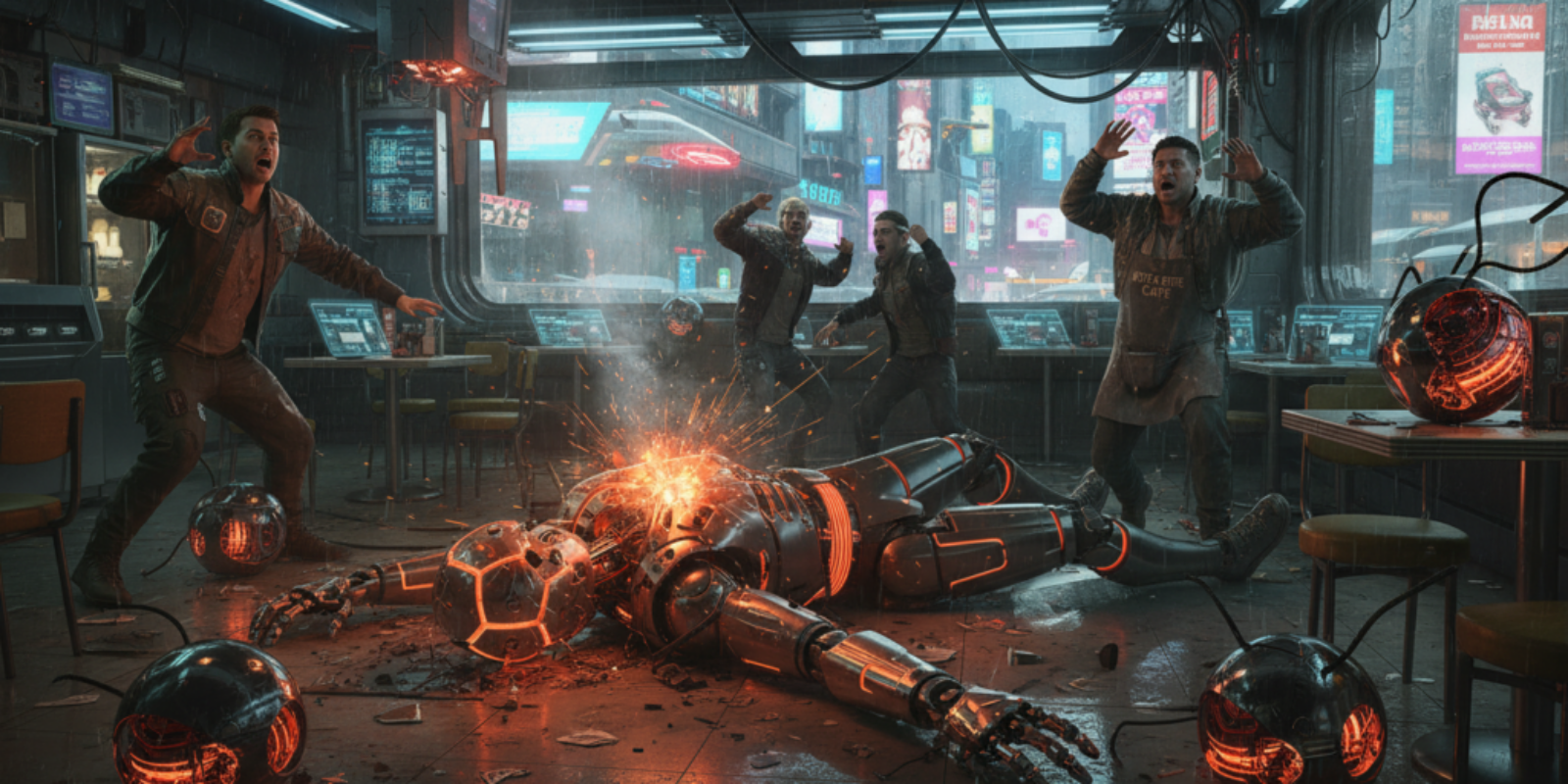
A robot runs a tray into a stack of plates, plates explode across lacquered floors, patrons laugh and tweet, and the manager quietly schedules the unit for another shift. The moment feels like a movie cut from Neon Tokyo, but it happened between appetizer and dessert.
Most readers will file this under viral tech embarrassment or a PR problem for the vendor, and leave it at that. The more consequential story is how this exact kind of glitch reframes frontline automation as live theater, corporate signaling, and supply chain risk all at once for independent operators who thought a robot would be a cheaper busser.
Why a smashed plate matters more than a viral clip
A robot toppling dishware is not merely a stunt clip for social feeds. It exposes how human attention, liability, and brand perception are now coopted into the lifecycle of a physical machine. Restaurants are no longer just renting a tool; they are renting an ongoing public performance piece that can fail spectacularly in full view of customers. That flips the calculus on cost, training, and insurance in ways spreadsheets often miss.
The industry is pouring fuel on the robot revolution
Investment and deployment are accelerating. The company behind many front of house bots raised large rounds to scale production, signaling that the market expects wide adoption in the near term. This kind of capital inflow pushes vendors to ship quickly and operators to adopt early to keep up with competitors. (restaurantbusinessonline.com)
The vendors and the tech behind the servers
One of the better known platforms handles food running, bussing, and auto return modes with LiDAR navigation and cloud fleet controls, and it advertises easy leasing options aimed at restaurants of every size. The vendor even lists everyday pricing incentives that make daily lease math look tidy on paper. (ms.bearrobotics.ai)
Where the cyberpunk imagination meets the countertop
Cyberpunk has always been about the friction between glamorous tech and messy human life. A robot that smashes plates and is redeployed the next day embodies that tension: neon-bright automation layered over precarious labor markets and raw human emotion. The scene is equal parts speculative fiction and real world urbanism, and it is already shaping how fans, designers, and operators imagine public-facing robotics. Some patrons will adore the spectacle, others will treat it as a harbinger. Either way, it becomes a cultural data point in the genre’s live archive.
The restaurant players making this mainstream
Major casual brands and small chains are experimenting with server robots to address labor shortages and consistency problems. One chain famously branded a server robot and ran trial locations to study guest response and throughput. Those pilots are being watched by competitors and franchise partners who care about unit economics and guest sentiment. (thespoon.tech)
The academic and customer pushback worth noting
Empirical work shows that robot appearance and service style influence willingness to pay and perceived quality, creating the potential for backlash if the machine clashes with a restaurant’s identity. The form factor and behavior of a robot matter as much as its cost savings, and customer tolerance for novelty has measurable limits. That research suggests that a viral mishap is not just PR trouble; it can alter how much diners are willing to spend at a location. (sciencedirect.com)
The cost nobody is calculating (but should)
Leases that read as low daily rates hide a constellation of ongoing expenses: maintenance, software updates, downtime, replacement plates, and social media management. If a vendor advertises a daily lease around mid tens of dollars, a month of continuous operation still approaches four digits, and an outage day can wipe out any labor savings if humans are pulled back to cover service. Specific vendors publish leasing terms that make the headline price look friendly, but the real total cost of ownership requires adding replacement parts, network subscriptions, and incident handling. (bearrobotics.ai)
A robot that breaks the crockery breaks more than plates; it breaks the illusion that automation is a silent, invisible efficiency.
Practical implications for businesses with 5 to 50 employees
A 20 seat cafe that employs two part time bussers at 15 dollars an hour and does 8 service hours a day spends about 4,800 dollars on bussing labor in a typical 30 day month before taxes and benefits. Leasing a robot at approximately 33 dollars a day is roughly 990 dollars a month, saving headline labor dollars but shifting costs into software, supervision, and incident risk. If a single viral incident leads to one day of downtime and a required replacement part costing 600 dollars, the robot’s advantage can evaporate in 24 hours of bad press. Small operators should model both recurring and incident costs for 6 to 12 months, and reserve at least one full-time staff hour per shift to monitor and override machines, because human oversight is not optional in public-facing service. That extra labor hour costs roughly 120 dollars a week but prevents escalation that could cost thousands.
The legal and insurance blind spots
Current liability frameworks treat robots as equipment, but courts and insurers are still catching up to scenarios where a machine’s behavior triggers a reputation cascade. Contracts often shift software and firmware responsibility back to vendors, while physical damage frequently sits with operators. This split creates a gap where neither party feels fully accountable for viral fallout, which is where small businesses get squeezed. Operators need explicit SLA clauses for public incidents and a preapproved crisis playbook from vendors.
Risks and unanswered operational questions
Robustness in controlled demo environments does not guarantee resilience in real dining rooms with umbrellas, toddlers, and spilled sauces. Fleet coordination failures, remote update bugs, and ambiguous fail-safe modes can convert novelty into hazard. There is also a cultural risk: continual automation can erode the human warmth diners pay for, and that erosion is hard to quantify until revenue softens.
Why small teams should watch this closely
If the robot trend standardizes, even small operators will face customer expectations about speed and spectacle. That can push independent restaurants to adopt tech they do not understand, creating hidden vendor lock in and vendor-driven menus. Watching deployment playbooks now allows a small owner to pick modular tools rather than a single platform that controls fulfillment, payments, and guest data.
A practical short close with one action
Operators should treat a robot deployment as a marketing program, a safety program, and an IT project at once, purchase explicit incident insurance, and run a two week shadow shift with human primacy before full public deployment.
Key Takeaways
- Robots reduce repetitive labor but introduce public failure modes that affect brand and revenue.
- Leasing headline prices can hide maintenance, downtime, and incident costs that erase savings.
- Customer reactions depend on robot design and behavior; aesthetics influence willingness to pay.
- Small restaurants must budget oversight hours, SLA protections, and incident reserves before deployment.
Frequently Asked Questions
How much does it cost to lease a restaurant service robot per month?
Leasing offers vary, but some vendors advertise daily rates in the low tens of dollars that translate to around 900 to 1,200 dollars per month. Expect additional fees for software, updates, and incident repairs that push the total higher.
Will a robot replace my servers and bussers?
Robots handle repetitive physical tasks but do not replace the social and problem solving roles of servers in most dining concepts. In many deployments humans still manage orders, handle exceptions, and perform guest relations.
What should a 10 to 30 seat restaurant budget for incident risk?
Set aside at least one month of robot lease cost as an incident reserve and allocate one staff hour per shift for monitoring and override duties. This buffer covers quick repairs, PR response, and temporary human coverage.
Do customers actually like robot service?
Some guests enjoy novelty and faster runs, while others perceive automation as colder service; acceptance correlates with concept fit and design. Restaurants that match robot behavior to brand identity generally fare better.
How do I protect my business from a viral mishap?
Require clear SLAs that include response times for incidents, insist on on site training, and have prewritten customer messaging. Carrying equipment insurance and a media response plan reduces financial and reputational exposure.
Related Coverage
Readers interested in how automation reshapes frontline labor may want deeper reporting on kitchen robotics and third party delivery platform economics. Coverage of robot ethics, urban regulation for sidewalk delivery bots, and brand management in an always-on social media world will illuminate the broader stakes for hospitality operators.
SOURCES: https://www.bearrobotics.ai/blog/robots-rescue-los-angeles-restaurants, https://www.restaurantbusinessonline.com/technology/bear-robotics-raises-81m-front-house-robots, https://thespoon.tech/ten-chilis-restaurants-are-now-using-a-server-robot-named-rita/, https://www.theguardian.com/food/2019/mar/07/food-tech-the-march-of-the-robots-reaches-the-kitchen, https://www.sciencedirect.com/science/article/pii/S0278431925000404