Neon Reverie and the Night City Music Economy
How a scattered collection of synthwave releases named Neon Reverie is quietly reshaping the sonic and commercial grammar of cyberpunk culture
A busker on a back-alley overpass loops a three minute synth hook into a cheap speaker and ten teenagers stop, held by a sound that smells like ozone and late rent. In another city a one person studio tags a Bandcamp page with the same title and suddenly a videogame studio in Eastern Europe buys the license, then a stock footage library bundles the track into a promotional pack. That chain of small, uncoordinated acts is the story Neon Reverie tells about how music travels through the cyberpunk ecosystem today.
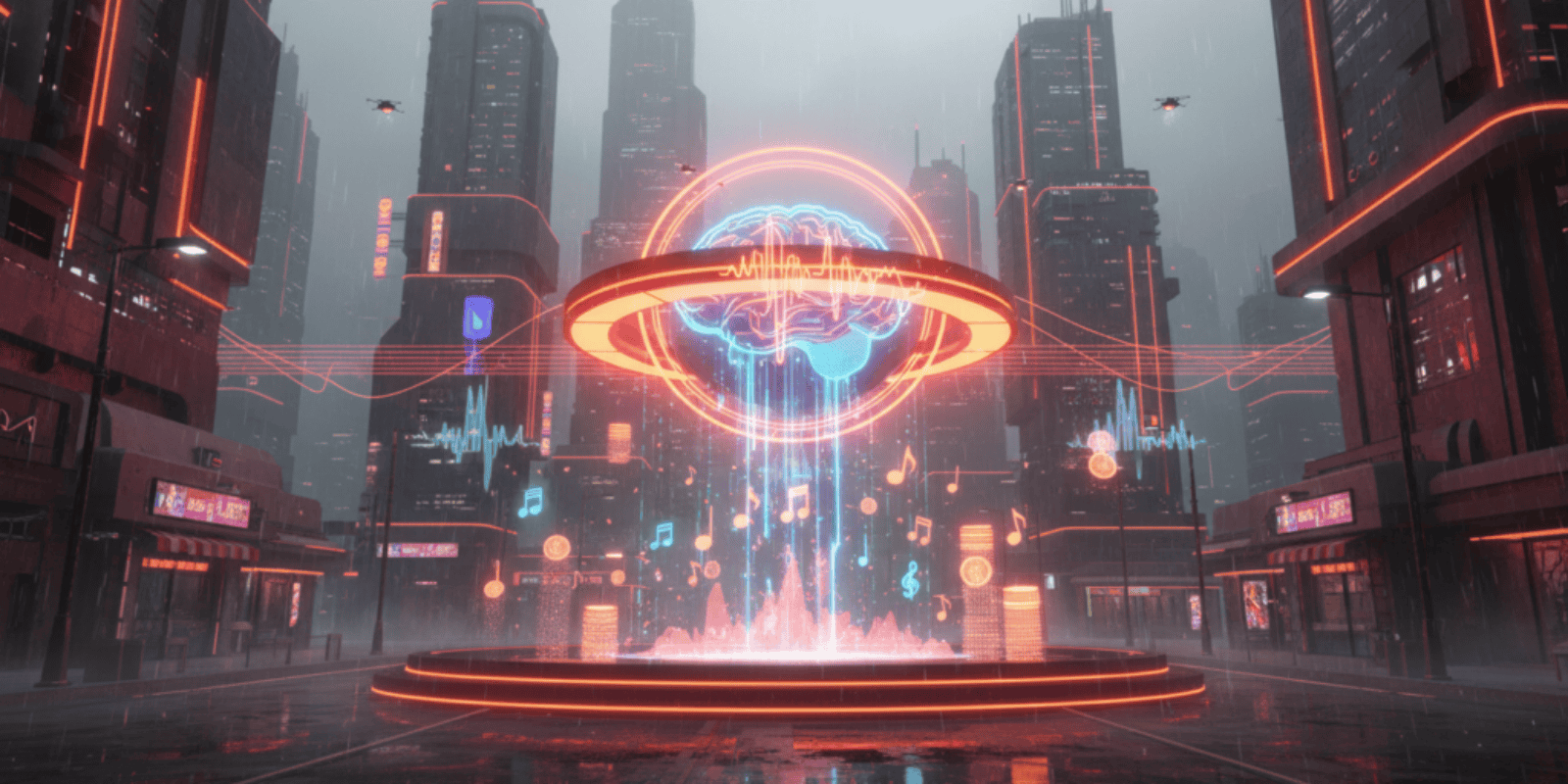
Most coverage treats each Neon Reverie release as another aesthetic product in the synthwave catalog, useful for playlists and indie film scores. A less obvious business story matters more to studio owners and scene builders: the name functions like a modular sonic asset, moving from artist pages to royalty free libraries to storefront licensing and becoming a low-friction building block for cyberpunk IP. This article relies mainly on platform pages and press materials to trace that movement and its practical consequences.
Why a single title shows a wider pattern in cyberpunk sound design
The Neon Reverie tag reappears across Bandcamp, Apple Music, SoundCloud and stock audio libraries, not because of one band or label but because the aesthetic is cheap to replicate and high in utility for digital creators. Bandcamp lists a Neon Reverie release that explicitly credits AI tools for parts of its production, signaling how new tools accelerate output and lower barriers for scene entries. (neonreverie.bandcamp.com)
Competitors in this emergent market include legacy synthwave labels and curated production houses that sell exclusive tracks, but the big shift is toward nonexclusive asset circulation. Apple Music hosts an album titled Neon Reverie that arrived on June 20, 2025, demonstrating how platform-level playlists can mainstream niche tracks and create cross-platform demand. (music.apple.com)
How the asset pipeline actually works from bedroom to game
A plausible pipeline begins with an independent artist uploading to SoundCloud or Bandcamp, where metadata and tags enable discovery by content buyers. SoundCloud hosts several tracks called Neon Reverie, each with its own license profile, which makes it simple for a content producer to sample and adapt a hook for a short trailer. (soundcloud.com)
From there a licensing marketplace or a royalty free library ingests the track and reissues it under a different model, sometimes even as an AI-assisted composition. Pixabay and other free libraries now carry Neon Reverie style pieces that are explicitly labeled for reuse, changing the calculus for creators who must decide between exclusivity and speed. (pixabay.com)
The numeric logic that makes Neon Reverie attractive to studios
A small indie game needing a 30 second loop can license an existing Neon Reverie track for a nonexclusive fee of about 8 to 30 credits on many marketplaces, or use a royalty free version for zero dollars and minimal paperwork. BeatGenStudio lists synthwave assets priced to sell for game soundtracks, illustrating how modest unit prices scale into meaningful revenue when sold to dozens of micro buyers. (beatgenstudio.com)
If a studio of 8 people budgets 250 to 500 dollars for sound across a six month project, buying three to five precleared Neon Reverie style tracks covers most needs and frees sound design time for unique cues. That math flips the previous model where commissioning original scores often cost five to ten times that amount. Small teams win time and predictability, which is the new currency in indie cyberpunk production.
The cultural ripple: why fans notice and curators worry
Cyberpunk culture prizes specificity in worldbuilding, yet modular sonic assets risk producing undifferentiated audio cityscapes. When five different indie games all use a Neon Reverie loop, the aesthetic coherence of neon nights becomes a reflex rather than a crafted experience. Some curators react by demanding exclusivity or bespoke sound design while others accept the remix economy and lean into curation as a value add, which is more labor intensive but arguably more defensible.
The result is a bifurcation: high volume, low cost sound for rapid prototyping and marketing, and boutique, high fidelity scores for flagship projects. Both markets can coexist, although the boutique end must now justify higher costs with demonstrable uniqueness and metadata provenance.
“The cheapest neon is often the loudest in the feed.”
The cheapest neon is often the loudest in the feed.
Practical implications for businesses with 5 to 50 employees
A five person indie studio can save an estimated 1,500 dollars per project by using nonexclusive Neon Reverie assets for menus and trailers and reallocating that budget to a standout 60 second bespoke theme. Assume a custom composer charges 2,000 dollars for a main theme; using stock packs for ancillary tracks turns a 3,500 dollar audio spend into a 1,500 dollar spend plus a targeted investment. That tradeoff buys marketing runway and faster release cycles.
A 50 person boutique studio will want a hybrid approach: license nonexclusive Neon Reverie stems for early builds to speed testing, then invest three to five thousand dollars to remix or re-record key motifs for the final release to avoid sonic fatigue across the market. This strategy keeps the cost curve predictable and still protects perceived value at launch.
The cost nobody is calculating
The hidden cost is metadata entropy. When tracks proliferate under the same title without clear provenance, rights management becomes riskier and audits more expensive. A single disputed sample can delay a release by weeks and cost tens of thousands in legal fees if the project is revenue generating. Small teams rarely price in that contingency, which is why a modest spend on cleared assets or counsel is often the rational move. A little legal insurance looks boring and capitalist, but it beats explaining to investors why the trailer was pulled.
Risks and the credibility checklist to stress test claims
Attribution confusion and AI provenance are the immediate risks. If a Neon Reverie track claims human authorship but used AI tools for melodic ideas, some platforms may later reclassify licenses, creating downstream headaches. The second risk is homogenization: if too many products use the same sonic shorthand, audience fatigue reduces engagement metrics without anyone tracking that metric until it is costly.
A credibility checklist should include direct license copies, explicit AI usage statements on the asset page, and a short provenance note in the game or film credits. Studios that add these three checks will sleep better and avoid last minute rework.
What happens next for the cyberpunk soundscape
Expect more curated micro-labels offering semiexclusive Neon Reverie variants along with clear provenance tokens and optional stem packs priced for mid market buyers. Platforms will likely implement better metadata tagging for AI involvement because buyers will demand it. That will nudge the market toward a clearer separation between disposable loops and investable compositions, which benefits teams that plan their audio strategy rather than wing it.
Key Takeaways
- Neon Reverie is not a single artist but a recurring sonic asset that moves from indie uploads to royalty free libraries, reshaping how cyberpunk soundtracks are sourced and paid for.
- Small studios can save significant audio budget by combining low cost Neon Reverie assets with a single bespoke piece to retain distinctiveness.
- Metadata and provenance are the new risk items; invest in clearer licensing or minor legal checks to avoid costly audits later.
Frequently Asked Questions
What is Neon Reverie and who owns it?
Neon Reverie is a recurring title used by multiple independent artists and libraries rather than a single owned property. Ownership varies by track and platform, so check the specific license on the page before using a track commercially.
Can a small game studio legally use a Neon Reverie track for a trailer?
Yes if the track is explicitly labeled as royalty free or you have purchased the appropriate license. Always download the license text and store it with project files for audits.
How much should a team of 10 budget for music using Neon Reverie assets?
Budget 250 to 500 dollars for stock and licensing plus 1,000 to 2,500 dollars for at least one bespoke theme to maintain uniqueness and marketing value. This balance speeds production while protecting the product from sonic sameness.
Do AI tools change the legal status of Neon Reverie tracks?
AI use itself does not automatically change legal status, but platforms are increasingly asking for disclosure and some buyers prefer human-authored music for exclusivity. Keep clear records of production methods for each asset.
Will using Neon Reverie hurt a brand that wants a unique cyberpunk identity?
Not if the studio reserves the core motifs for bespoke work and uses Neon Reverie pieces for filler or testing. Thoughtful allocation prevents brand dilution and preserves standout moments for paid composition.
Related Coverage
Readers interested in this topic should explore how AI-assisted composition platforms are changing composer workflows and how metadata standards for music licensing are evolving. Coverage of indie game audio pipelines and the economics of royalty free libraries will also illuminate adjacent decisions for teams building cyberpunk worlds.
SOURCES: https://neonreverie.bandcamp.com/album/digital-dreams, https://music.apple.com/us/album/neon-reverie/1818590591, https://soundcloud.com/freevibevault/neon-reverie, https://pixabay.com/music/upbeat-neon-reverie-377201/, https://www.beatgenstudio.com/products/5534-neon-reverie