When a Photo Became a Product Signal: OpenAI’s OpenClaw Hire and the Lobster-Claw Roast of Anthropic
A staged moment in New Delhi turned into a public taunt and a strategic reveal, exposing how product hiring and playful PR are now weapons in the AI wars.
A puff of tension, a frozen smile, and two raised fists lit up social feeds worldwide as the India AI Impact Summit photo-op went sideways. Cameras caught Sam Altman and Dario Amodei standing apart while other leaders linked hands, and within hours an edited image of lobster claws had been posted by the ChatGPT account, sending the clip into viral orbit. Reporting draws heavily on company posts and press coverage. According to TechCrunch, the original tableau was brief but unmistakable and immediately framed as a symbol of the growing rivalry between OpenAI and Anthropic. (techcrunch.com)
Most observers read the moment as straight rivalry theater: two CEOs who once worked together now signaling distance. That reading is valid, but it misses what matters commercially. The subtler signal is product and talent consolidation. OpenAI did not just meme the moment; it quietly announced a strategic hire that accelerates its push into autonomous, multiagent assistants, a move that reshapes how customers and enterprises evaluate vendor road maps. The mainstream joke is fun. The business consequence is not.
Why a meme matters more than it looks
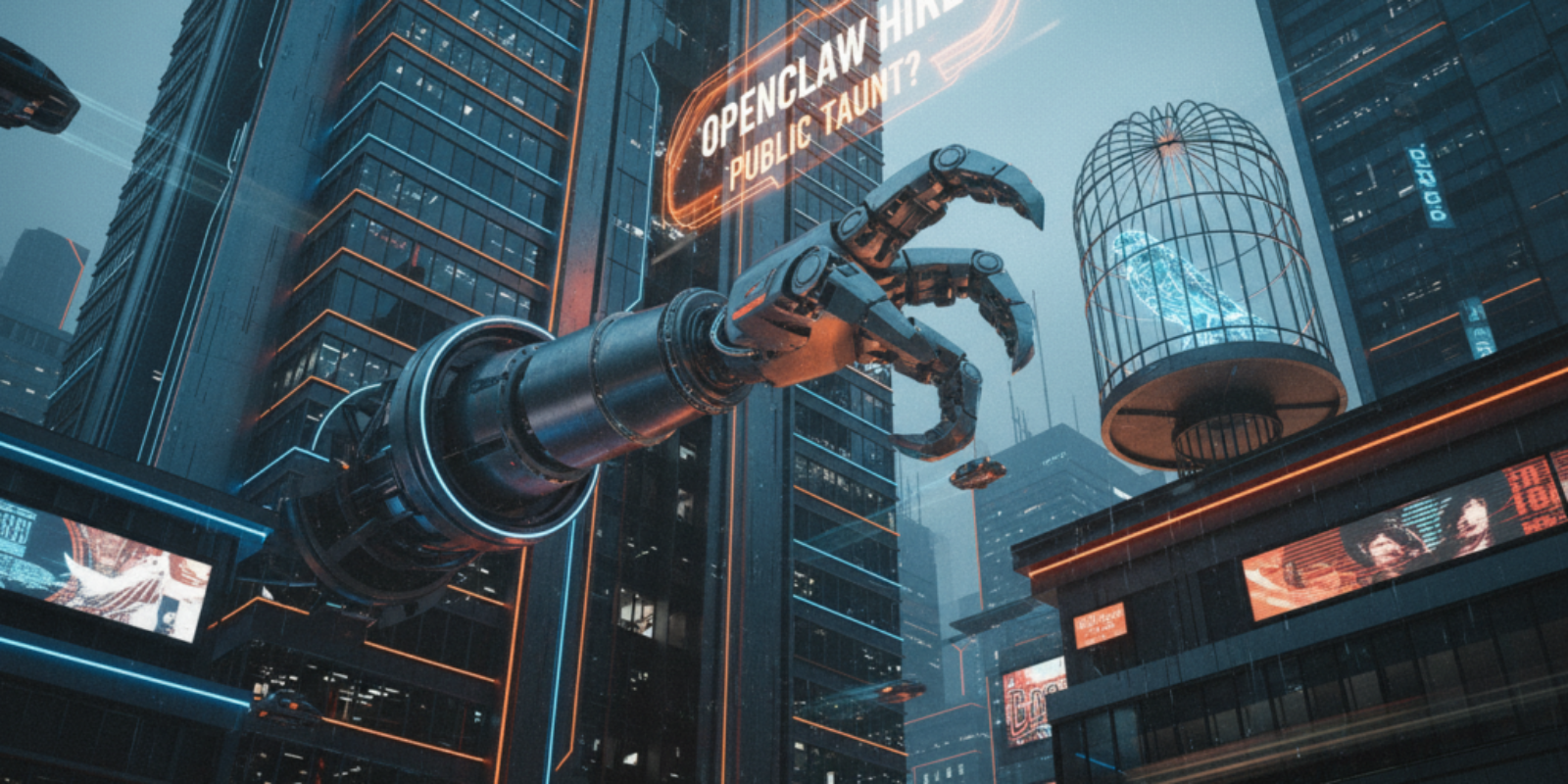
A social-media jab can be a temperature check and a press release in one. The lobster-claw edit was more than a cheeky comment; it threaded together personality, product, and positioning in a way an earnings slide never could. The image created a narrative frame that primes customers and partners to read subsequent hires and feature launches through a rivalry lens. According to the Times of India, OpenAI’s social post replacing hands with giant lobster claws deliberately amplified that narrative while pointing attention at a recent OpenClaw hire. (timesofindia.indiatimes.com)
A public taunt reshapes perception without spending ad dollars. That is precisely the kind of low-cost influence that can sway developer mindshare, attract third-party integrators, and make enterprise procurement teams ask whether they want to bet on the safe route or the fast-scaling one.
The product move nobody should ignore
OpenAI’s hiring of OpenClaw founder Peter Steinberger signals a pivot from dialog models to agents that perform tasks across apps and systems. Multiple outlets reported the move and framed it as a bet on personal agents becoming a core product category. Tom’s Hardware summarized the hire and OpenAI’s stated intent to fold that expertise into building smarter, interactive agents for real users. (tomshardware.com)
This hire is not just talent acquisition. OpenClaw’s code and community have already proven patterns for multi-step automation, contextual memory, and workflow orchestration. Transplanting that IP and leadership into a large lab with vast compute and distribution amplifies those capabilities quickly. It is the difference between a popular open-source proof of concept and a production-grade feature integrated into mainstream products.
How competitors are reading the tea leaves
Anthropic has differentiated on safety and controlled deployment. OpenAI has leaned into scale and a broad set of consumer and enterprise touch points. The public moment in New Delhi made that philosophical split visible. Associated Press coverage highlighted how the two CEOs avoided touch during the summit photo, a human moment that underscores deeper strategic divergence between the labs. (apnews.com)
In practice, Anthropic could respond with policy-oriented narratives or with accelerated safety features to outflank OpenAI on trust. Alternatively, the studio of public optics may continue, with each firm trying to win developer hearts and enterprise contracts simultaneously. Either path forces customers to re-evaluate technical due diligence and procurement timelines.
What the OpenClaw codebase brings technically
The OpenClaw project has focused on agent modularity, long-memory contexts, and low-latency orchestration across services. OpenClaw’s own blog announces Steinberger’s move and outlines a foundation-backed road map that preserves the open-source core while enabling deeper product integration at OpenAI. That combination reduces adoption friction for enterprise customers who want both community-driven innovation and commercial support. (openclawai.net)
This means OpenAI can ship features that let a single agent manage email triage, calendar negotiation, and vendor interactions with safety constraints baked into the workflow. The net effect is faster time to value for business buyers and a higher bar for competitors.
The little theatrical shrug in a summit photo just became a strategic lever for product and talent consolidation.
Real math for business buyers
For a midmarket software company planning a pilot, these changes cut both cost and timeline in measurable ways. A conservative estimate: a bespoke agent stack that integrates LLM hosting, memory storage, connectors, and monitoring can cost 50,000 to 100,000 dollars in initial engineering and infrastructure for a six month pilot. If OpenAI packages agent primitives and connectors as first-class product features, that pilot cost could drop to 10,000 to 25,000 dollars by reducing integration work and shifting risk to a vendor. That math shifts ROI from hypothetical to procurement-ready within one budget cycle. Which means vendors that do not offer out-of-the-box agent support risk being tabled in vendor shortlists.
For agencies and platform partners, the commercial upside is material. Faster implementations mean more pilots per year, higher billable velocity, and easier recurring revenue. Or in plain terms: speed beats bespoke in the agency business, and a productized agent platform helps scale that speed.
Risks and the parts this move does not fix
Consolidation of agent expertise into one lab raises concentration and interoperability risks. Dependence on a single provider for agent orchestration can create lock-in that complicates migration and compliance. Open-source preservation helps, but foundation-backed projects can drift toward compatibility that favors the sponsoring vendor. Press coverage so far has been clear on the hire; the long-term governance fine print is where enterprises need answers. (tomshardware.com)
Privacy and safety questions persist. Agents that act across accounts magnify the attack surface for data leakage and prompt-injection vulnerabilities. Competitors like Anthropic will emphasize safety architecture, and regulators will watch for incidents that could trigger stricter controls or procurement constraints.
Where this likely goes next
Expect a flurry of announcements and product integrations in the coming quarter as OpenAI folds agent primitives into SDKs and UI surfaces. Enterprises should re-run their procurement checklists and insist on transparent governance, exportable data formats, and exit plans. The short window for negotiation is now; the product narrative created by a meme and sealed by a hire does not wait for a long procurement process.
Key Takeaways
- OpenAI’s hire of OpenClaw founder signals a concrete shift from chat to action oriented agents that execute across apps and services.
- A viral photo and a cheeky social post turned recruiting and product strategy into a single public narrative.
- For businesses, integrated agent primitives can lower pilot costs from 50,000 to 100,000 dollars to 10,000 to 25,000 dollars, accelerating procurement.
- The move raises concentration and governance risks that buyers must mitigate through contractual safeguards and data portability requirements.
Frequently Asked Questions
What exactly did OpenAI hire and when did it happen?
OpenAI announced the hire of OpenClaw founder Peter Steinberger in mid February 2026, positioning him to lead development on next generation personal agents. Press reports and the founder’s own posts describe the date and role details. (tomshardware.com)
Does OpenClaw disappear now that its founder joined OpenAI?
No. The project is reported to move into an independent foundation with OpenAI sponsorship, keeping the codebase open source while allowing deeper commercial integration. (openclawai.net)
Should my company accelerate an LLM pilot because of this hire?
If agents that automate workflows are material to your product or operations, accelerating a pilot makes sense to capture early advantage. Negotiate clauses for data export, model explainability, and vendor exit scenarios to avoid lock in.
Will Anthropic respond with product changes or policy positioning?
Expect both. Anthropic’s public posture favors safety and controlled deployment, so it may accelerate safety features and lean into policy narratives that appeal to regulated buyers. (apnews.com)
Is the social media jab important strategically or just noise?
It is both. The edit was playful but effective in directing attention to OpenAI’s hiring move and shaping industry perception. Narrative momentum matters in vendor selection and developer mindshare.
Related Coverage
Readers interested in the business implications may want to explore reporting on agent governance, enterprise procurement for AI systems, and the economics of open-source projects moving under foundation structures. The AI Era News will cover how vendor lock in clauses evolve and which enterprise sectors adopt active agents first.
SOURCES: https://techcrunch.com/2026/02/19/altman-and-amodei-share-a-moment-of-awkwardness-at-indias-big-ai-summit/ https://apnews.com/article/9067be4a101fcc710b09e297f4879c01 https://www.tomshardware.com/tech-industry/openai-hires-genius-openclaw-creator-but-popular-ai-assistant-will-remain-open-source-sam-altman-says-creator-will-work-on-smart-agents-in-new-role https://openclawai.net/blog/openclaw-ai-token-costs-2026-pricing-breakdown-optimization https://timesofindia.indiatimes.com/technology/tech-news/openai-shows-its-latest-openclaw-hire-to-tease-anthropic-in-viral-picture-of-sam-altman-and-dario-amodei-from-india-ai-summit/articleshow/128600522.cms