Inside DC’s AI art scene where technologists and creatives mix for AI enthusiasts and professionals
How a local blend of galleries, immersive shows, and artist labs is shaping the business of generative intelligence
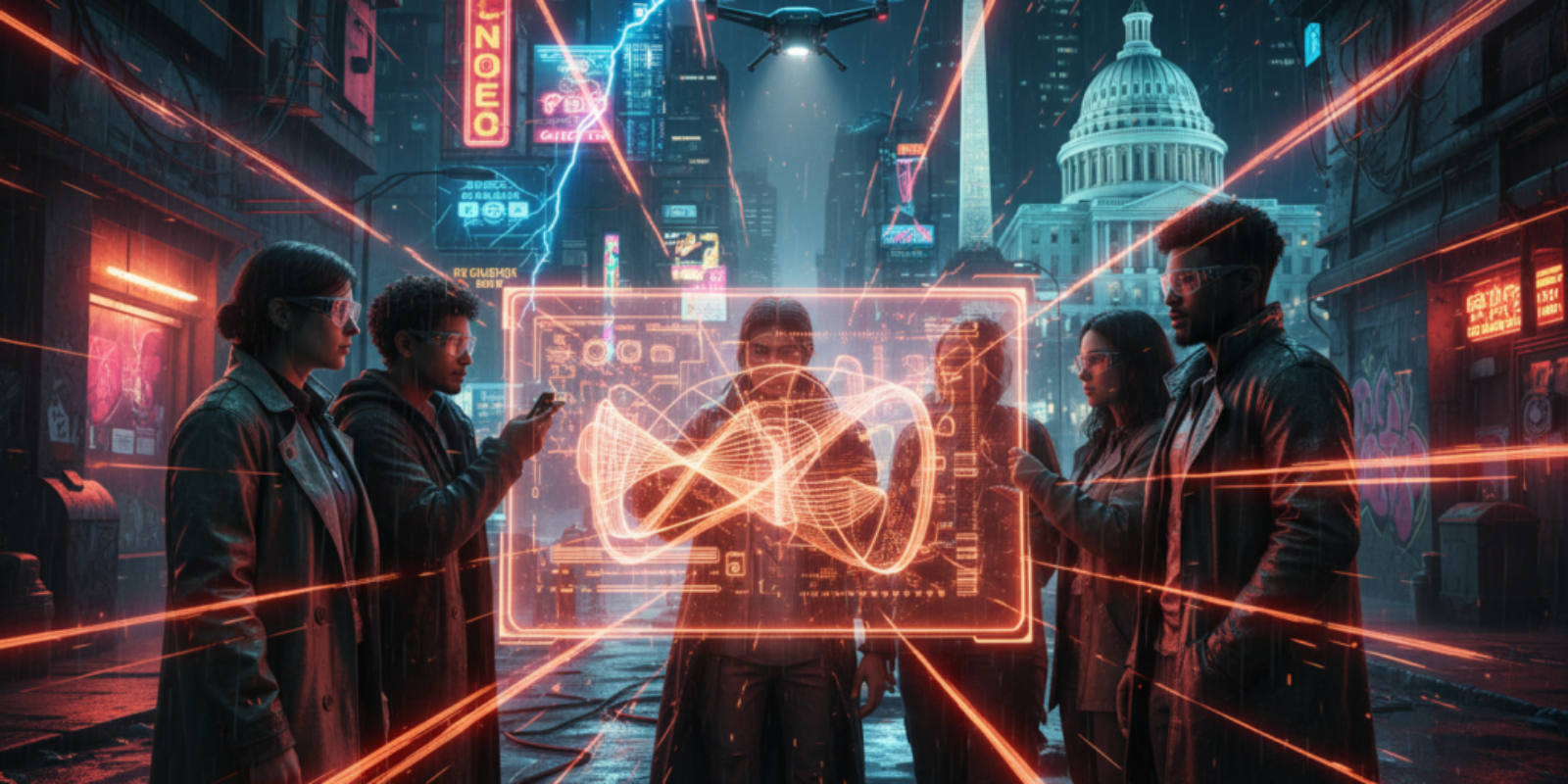
A large projection ripples across the Kennedy Center plaza while a line of tourists argue about whether an algorithm is being poetic or simply very good at color theory. Nearby, a programmer in a hoodie swaps prompt tips with a curator who accidentally wrote three different artist statements and somehow kept them all. The scene looks like a museum night out but feels like a product incubation sprint.
Most coverage frames these moments as culture or spectacle, and that is true on the surface. The less obvious story is how this collision of artists, engineers, institutions, and paying audiences in Washington DC turns experimental visual work into testbeds for models, datasets, and revenue models that matter to the wider AI industry. This article draws on exhibition pages and studio materials as well as local reporting to separate the show from the strategy. (artechouse.com)
A Friday night at the Kennedy Center made headlines and for good reason
Refik Anadol’s 2024 installation at the Kennedy Center, titled Dvořák Dreams, used machine learning to translate musical archives into a 32 by 32 foot immersive projection that ran on the outdoor REACH Plaza. The piece became a public demonstration of what large-scale, real-time AI visuals can look like when a studio with deep compute partnerships stages a civic-facing event. (axios.com)
Why the obvious interpretation is tempting and incomplete
The obvious read is that AI art is a novelty that attracts foot traffic and press. That is correct for ticketed installations and splashy projections. What most narratives miss is that these shows are also practical deployments of pipelines, training datasets, and UX conventions that downstream product teams care about, from creative tools to marketing platforms.
Why Washington is becoming an experimental lab for AI artists
DC’s cultural institutions and proximity to policy conversations create rare mixing of funding, regulation, and tech talent. Small studios can pilot large-format shows here and test audience reactions to generative content at scale before shipping features to commercial tools. Local museums and experimental spaces now operate like soft-launch venues for visual models and interaction patterns that will later appear in plug-ins and SaaS products. (artechouse.com)
Big names plug into local infrastructure
Global studios such as Refik Anadol’s repeatedly choose civic sites to showcase data-driven works, translating archive access and institutional credibility into model training and audience trust. That strategy converts exhibitions into reference cases that collectors, enterprise customers, and platform partners point to when negotiating licensing and compute partnerships. (refikanadol.com)
The core story with numbers, names, and dates
In September 2024, the Kennedy Center hosted Dvořák Dreams, visible to thousands of passersby across a three week run and covered by national and local outlets. At the same time, Artechouse — a DC institution founded in 2017 that stages XR and projection projects — announced a renovation and return slated for 2026 that will refocus its programming on tech-driven exhibitions and partnerships. Those two threads signal a mid 2020s cycle where public display, private studios, and museum partnerships converge to operationalize machine learning for creative ends. (axios.com)
How installations reframe product development for AI companies
When a studio turns a music archive into a generative data sculpture, multiple engineering problems are solved publicly: scalable rendering, real-time inference, custom dataset curation, and rights management. These solutions become tacit templates for feature teams building creative tools; a successful installation provides both a technical playbook and a marketing narrative. Expect vendor conversations to shift from abstract APIs to concrete case studies that mention frame rates, audience dwell time, and licensing windows — which is what makes culture into product. A curator once told an engineer that the projection should “feel like a memory wearing a tuxedo” and the engineer took notes; product managers pretend that never happens, but everyone knows. (refikanadol.com)
When an exhibition doubles as a stress test for models, the museum becomes a QA lab with better lighting.
Practical implications for businesses including real math
A mid sized software firm exploring generative imagery for marketing can treat a public installation as a costed pilot. Renting projection time and compute for a two week pop up might cost 50,000 to 150,000 dollars depending on venue and hardware needs. If the campaign drives a 0.5 percent lift in conversion on a 5 million dollar campaign, that is 25,000 dollars in incremental revenue, which means the installation is already halfway to breaking even purely as a marketing channel. If the same pilot de-risks a new feature that increases ARPU by 1 dollar for 100,000 customers, that is 100,000 dollars in annualized revenue. For venture backers, the live audience metrics act like an early A B test with richer qualitative signals than a controlled lab study.
The cost nobody is calculating
Beyond production and compute, the hidden cost is governance. Licensing archival material, documenting training provenance, and negotiating artist moral rights create legal overhead that scales with ambition. Institutions now budget legal effort equal to a portion of technical spend because a misstep can erase goodwill faster than a bad color palette can ruin a show. Dry aside: legal reviews are the art world’s version of a surprise encore by a tax attorney.
Risks and open questions that stress test the claims
Public-facing projects can normalize opaque training practices if institutions do not insist on provenance and dataset transparency. There is also the reputational risk when a generative model hallucinates copyrighted content or culturally sensitive imagery in front of a live audience. Finally, the economics assume that exposure converts to product adoption; that link has promising anecdotes but limited large scale data so far. Local reporting shows technically sophisticated exhibitions that nonetheless divide critics on craft versus spectacle, which matters when product teams cite cultural validation as proof of product-market fit. (washingtonpost.com)
Why investors and platform builders should pay attention now
Auction houses and major marketplaces are formalizing the commercial pathway for AI art, which pushes institutional acceptance into enterprise narratives. High profile auctions and curated sales reframe generative work as a legitimate asset class and make questions of provenance, royalties, and attribution simultaneous engineering and policy problems. Companies that can offer transparent model lineage and flexible licensing will have a sustained advantage. (christies.com.cn)
A short forward-looking close with practical insight
Expect more product teams to use exhibitions and live events as multipurpose pilots that validate both technology and commercial terms; the venues will become part of the stack that ships features. The organizations that win will be those that treat cultural calibration, legal diligence, and scalable engineering as equal partners.
Key Takeaways
- Public AI art shows act as live product pilots that validate technical pipelines and customer sentiment in one eventful package.
- Building exhibitions requires budgeting for compute, venue, legal clearance, and audience measurement as coupled costs.
- Transparent dataset provenance and licensing are becoming competitive advantages in both cultural and enterprise markets.
- Auction and institutional acceptance accelerate commercial pathways but increase the importance of governance.
Frequently Asked Questions
How can a small startup test generative visuals without a gallery budget?
Startups can run scalable pilots in virtual spaces or partner with community arts organizations for co branded events; local institutions sometimes offer reduced rates for experimental work. Focus spend on compute and legal clearance and use social metrics to measure audience engagement.
Will museum exhibitions directly increase sales of AI creative tools?
Exhibitions provide powerful narratives and user stories but are rarely direct conversion funnels. The real value is in using the exhibition as evidence for enterprise deals and investor presentations where qualitative impact matters.
What legal risks should companies plan for when using public archives?
Plan for licensing fees, moral rights, and clear documentation of dataset sources; allocate legal budget proportional to expected reach because public exposure magnifies risk. Contracts should include indemnities and clear attribution language.
Are audiences receptive to generative art or do they prefer human made work?
Audience response depends on curation and context; well framed AI works that explain process and provenance get higher engagement. Critically minded visitors may still prefer artists who foreground human authorship, which is why transparency matters.
Can exhibitions be used to benchmark model safety and bias?
Yes, public shows reveal model failure modes in context and provide qualitative moderation feedback, but they should not be the only safety evaluation. Combine live tests with structured audits for robust results.
Related Coverage
Readers interested in how creative tools become enterprise features should look at coverage of auction houses formalizing digital art sales and deep dives on model governance in cultural institutions. Also explore reporting on how immersive venues are partnering with tech vendors to bundle hardware, software, and licensing for touring exhibits.
SOURCES: https://www.artechouse.com/program/artechouse-dc/ https://www.axios.com/local/washington-dc/2024/09/06/kennedy-center-art-dvorak-dreams https://refikanadol.com/about/ https://www.washingtonpost.com/dc-md-va/2025/03/26/brandon-morse-moca-arlington/ https://www.christies.com.cn/en/stories/what-is-ai-art-augmented-intelligence-36dc0897d3584268b5102468a3bf8a8