H&M drops first AI “digital twins” to showcase denim collection
Why a fashion campaign is quietly a testbed for how AI will be bought, sold and regulated across creative industries
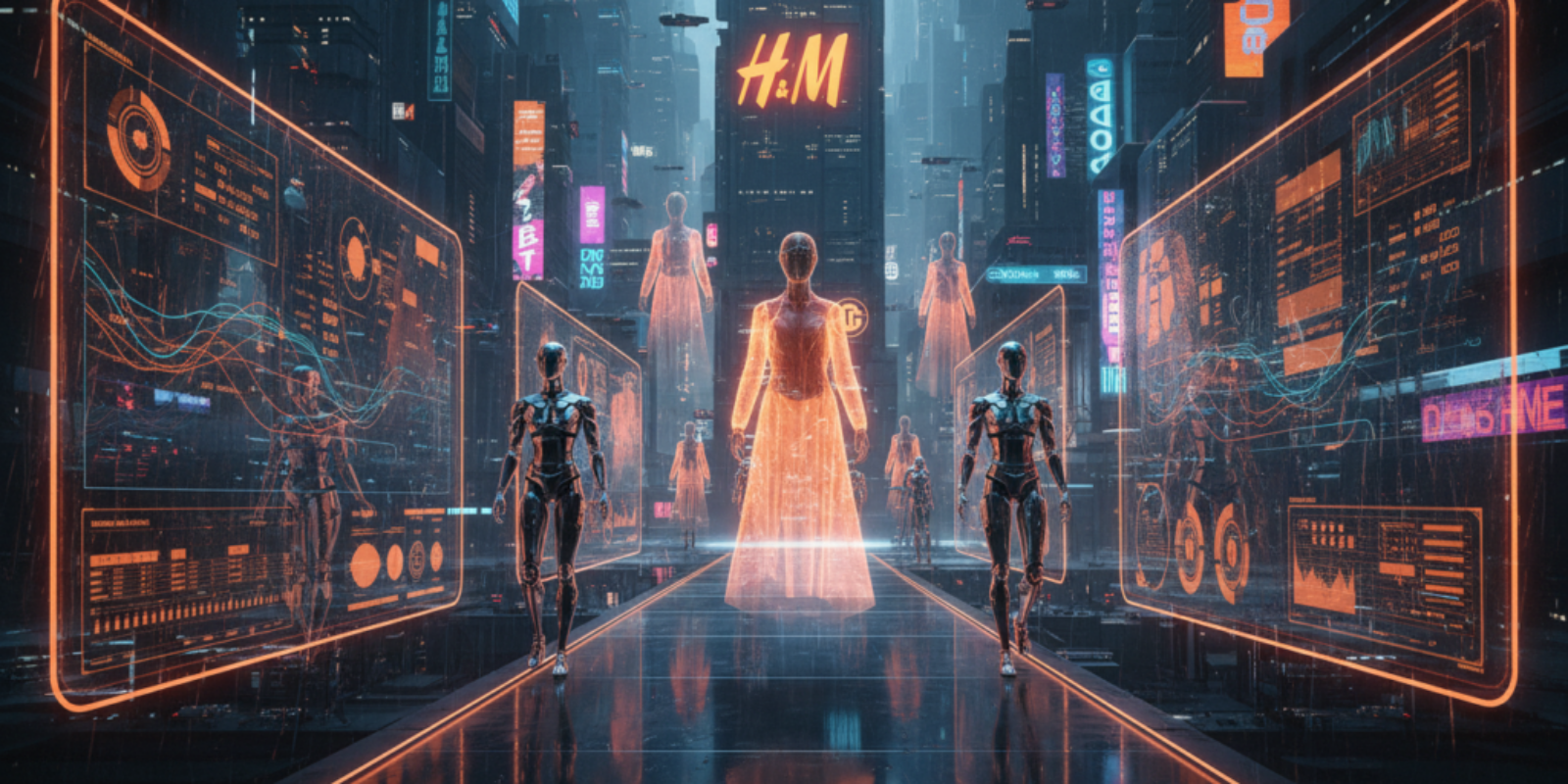
On a July evening in New York a transit ad showed a figure crossing a rain-slicked street, denim catching the light in a way that looked nothing like the usual fast fashion gloss. People paused, scrolled, argued with friends, and then someone asked whether the woman in the picture even existed. The image was a conversation starter that did not require a human model to be on set.
Most observers read this as a marketing experiment: cheaper shoots, more images, a fresh Instagram moment. That is true, but it is not the whole story. The deeper move is structural; H&M is testing who owns the digital likeness, how it is licensed, and what commercial systems must evolve to make AI-generated assets a repeatable business line for retail and for the wider AI ecosystem.
Why the machine-made ad matters beyond pretty pictures
Digital twins are not just pictures. They are re-usable data objects that can be rendered, animated, analyzed, and bundled with metadata for resale or integration. For AI companies building tooling around image generation, asset management and rights enforcement, H&M’s rollout functions as a stress test for pipelines that must manage identity, consent and provenance at scale. The stakes are not hypothetical; the technical and legal apparatus required to support these assets will be a new market. (businessoffashion.com)
A crowded field of retail experiments, quietly ascending
Fashion labels from Levi Strauss to Mango and Hugo Boss have been experimenting with AI imagery and virtual models, each pushing slightly different business assumptions about personalization, diversity and cost. Startups that create avatar engines or tenancy platforms will find a ready set of customers if brands decide to monetize digital talent as easily as they sell seasonal collections. The competitive pressure means infrastructure firms that provide identity verification, immutable rights records and royalty automation could become as strategic as the creative tools. (vogue.com)
How H&M structured the drop and who they partnered with
H&M staged the first images in early July 2025 as part of a denim capsule; the release included a behind-the-scenes film and interviews that framed the work as collaborative rather than exploitative. The images were produced in partnership with a team that included photographer Johnny Kangasniemi and a Swedish tech partner called Uncut, which helped create the AI replicas. This combination of in-house creative direction and external AI expertise is a replicable playbook for brands that want speed without losing brand voice. (apparelresources.com)
Who owns the twin and what that implies
H&M has said the human models will retain rights to their digital counterparts under contract arrangements, with compensation mechanisms tied to the avatars usage. That ownership model matters because rights create monetizable metadata; if a model can license their twin for use in multiple campaigns or third party apps, the economics of modeling change from day rates to recurring revenue. This reframes talent contracts and forces payroll and rights-management vendors to upgrade their systems. (vogue.com)
The cost math that will get CFOs’ attention
A simple comparison clarifies why finance teams are listening. A traditional multi-city photoshoot can cost from 50,000 to 150,000 dollars when travel, crew and logistics are included. Producing a set of high-fidelity digital twins and an initial campaign might cost the same up front, but the marginal cost of producing new imagery thereafter drops sharply because rendering and prompt workflows scale. For a retailer running hundreds of SKUs and continuous marketing, the break-even point can arrive within a single fiscal year if reuse and personalization are pursued aggressively. No one has to clap, profit can just happen quietly.
The ripple effect on AI product roadmaps
Tool vendors are already reorganizing roadmaps around three capabilities: accurate body and face capture, verifiable consent and seamless licensing. Infrastructure players that can deliver auditable provenance for a digital twin, plus APIs that automate royalties, will attract both brands and agencies. Meanwhile GPU and cloud providers will see new demand patterns as brands shift budget from travel to compute. The result will be product bundles where creative suites come with legal primitives built in, not tacked on as an afterthought. (us.fashionnetwork.com)
If images become reusable rights-bearing objects, then every marketing team is suddenly part creative studio and part IP manager.
Legal, ethical and labor stress tests that cannot be outsourced
The move raises obvious regulatory questions about likeness rights, age and diversity representation, and potential job displacement for models and behind-the-camera crews. Legislators and unions are already discussing frameworks that would require transparency, consent and profit-sharing for digital replicas, and brands that get ahead of these rules will avoid reputational and legal costs. There is also the nontrivial risk that digital twins standardize aesthetic norms, reducing demand for on-location creativity unless safeguards and creative briefs force variance. (ft.com)
How an AI-first asset class could reshape contracts and platforms
If models are paid via royalties tied to avatar usage, payroll systems will have to integrate identity tokens, licensing clauses and micro-payment rails. Agencies, too, must become technologists or partner with platforms that can record usage events and distribute revenue automatically. That standardization is an opportunity for middleware companies to capture market share, because talent agencies lack the software pedigree to build it quickly. A short legal boilerplate no longer suffices when a single image can be resold in a dozen contexts. (businessoffashion.com)
Practical next steps for businesses evaluating the model
Brands should run small pilots that mirror H&M’s approach: pick a capsule, partner with a verified capture studio, and write contracts that test royalty splits for avatar licensing. Technical vendors to evaluate include those offering immutable provenance, consent logs and automated royalties. Measure outcomes by tracking reuse rate per asset and the marginal cost per new image; if reuse hits 5 to 10 per asset in the first six months, the model likely pays for itself. Also plan for a vendor to handle takedown requests, because someone will inevitably want the image removed from a campaign they disagree with, and that process must be quick.
Forward-leaning risks that investors should pressure-test
The most immediate risk is regulatory restriction that limits commercial reuse or imposes mandatory escrow payments for likeness rights. Another is creative homogenization that diminishes brand distinctiveness, which marketing leaders should price into long term brand equity models. Finally, a concentration of rights in a few infrastructure vendors could raise switching costs and create single points of failure for brand campaigns.
A practical close with one clear point
The H&M drop is a microcosm of a broader industry shift: AI will commoditize parts of creative production while simultaneously creating a new class of tradable digital assets that require legal and technical plumbing to function at scale.
Key Takeaways
- H&M’s digital twin denim release is a real world test of how brands will license and monetize AI-generated likenesses.
- Rights and royalty models convert a one-time photoshoot into a recurring revenue problem and a software opportunity.
- Vendors that provide provenance, consent logging and automated payouts will become strategic partners to retailers.
- Legal and reputational risk means early pilots should include clear contractual ownership and takedown processes.
Frequently Asked Questions
How does a digital twin save money compared to a photoshoot?
A digital twin requires upfront investment in capture and modeling but reduces marginal costs for producing new images, especially across multiple markets and SKUs. Savings appear when assets are reused frequently for personalized campaigns or regional variations.
Will digital twins replace human models entirely?
Not immediately. Digital twins can extend a model’s commercial life and create recurring income, but human presence remains valuable for live events, runway shows and storytelling that relies on unscripted human interaction.
What should a small brand do before adopting digital twins?
Start with a limited capsule, use clear contracts granting models rights and revenue shares, and choose a vendor that provides consent logging and takedown workflows. Measure asset reuse to determine viability before scaling.
Are there specific regulations to watch?
Yes. Policymakers in several jurisdictions are drafting rules about likeness rights and AI transparency; brands should monitor local developments and consult counsel when drafting avatar contracts.
Who will win in the supply chain for these avatars?
Companies that combine capture technology with rights management and revenue automation stand to capture the most value, because they reduce the number of partners a brand must coordinate.
Related Coverage
Readers interested in this shift should explore how AI is changing creative workflows for agencies and how royalty automation platforms are emerging as a new vertical. Also worth exploring is the role of virtual try on tools and how they intersect with personalized marketing to create new buyer journeys.
SOURCES: https://www.businessoffashion.com/news/technology/hm-releases-first-images-with-ai-digital-twins/ https://www.ft.com/content/a9416d75-9ebd-46a1-ae31-0c60545070d0 https://www.vogue.com/article/are-digital-models-about-to-become-the-industry-standard https://apparelresources.com/technology-news/hm-unveils-first-ai-generated-digital-model-twins-ads-social-media/ https://us.fashionnetwork.com/news/H-m-group-s-linda-leopold-steps-down-as-head-of-ai-strategy-after-seven-years%2C1750522.html