
The Eurofighter Helmet and Why Cyberpunk Culture Will Care More Than It Admits
A pilot’s visor flares with green symbology as a jet bakes the horizon into a streak of heat; outside, the world collapses into data. Inside the helmet, decisions happen faster than breath.
The obvious reading is that the Striker II helmet is a military product that will keep pilots safer and missions sharper. The overlooked story is how its ingredients and procurement path are seeding expectations and supply chains that the cyberpunk creative industries and adjacent tech businesses will soon exploit for immersive experiences, hardware spinouts, and security anxieties that pay bills and spark stories.
How a fighter helmet became a cyberpunk prop in waiting
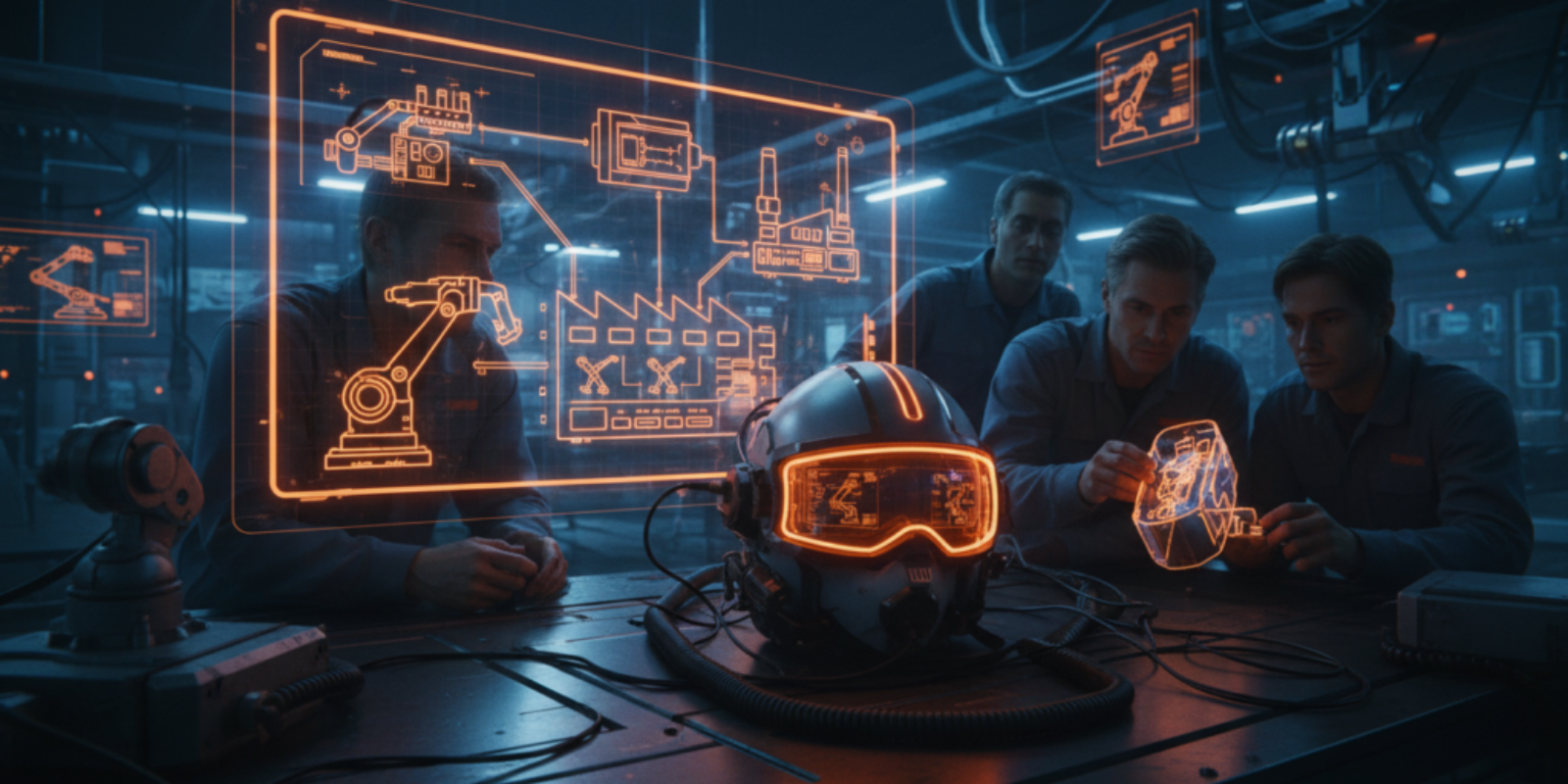
The Striker II is not just ergonomics and optics; it grafts a persistent, helmet-centric augmented reality layer onto a human body moving at extreme speed. BAE Systems describes Striker II as a daylight readable colour display with an integrated night vision camera and tight head tracking, which together let pilots get raster video and symbology projected directly onto the visor. (marketing.us.baesystems.com)
That feature set maps closely to cyberpunk aesthetics: body-mounted displays, always-on overlays, and sensor fusion that makes subjective reality negotiable. Expect film and games to copy the look, then tools and startups to copy the tech workflow because Hollywood rarely invents supply chains; it follows them.
Who else is building helmets like this and why now
Eurofighter’s own brief history notes that the original Striker was the first visor projected helmet in service with Typhoon in 2009, and Striker II is the clear digital successor. (eurofighter.com) Competitors in the helmet HMD market include legacy defence suppliers such as Elbit and newer mixed reality firms that sell advanced cockpit optics and head tracking to both militaries and commercial OEMs. The push now is driven by predictable pressures: platform upgrades, digital avionics architectures, and a preference for sensor fusion over separate gadgets.
Timing matters. In December of 2024 the four-nation Eurofighter consortium awarded a contract to BAE Systems worth 133 million pounds to mature Striker II and fund flight testing, a spend that also protects more than 200 skilled jobs in the UK facilities named in the announcement. (raf.mod.uk) Public money plus a clear timetable make downstream commercialization and contractor ecosystems far likelier than neat technical concepts sitting in a lab.
The core of the story: sensors, latency, and human trust
Striker II’s technical differentiation is its all-digital pipeline and hybrid opto inertial head tracking that keeps symbology locked on target even under high g loads. Janes reported that the UK expects Striker II to enter service in 2027 to 2028, which puts real operational deployment within a commercial design and marketing window. (janes.com)
Latency is the unglamorous hero here. Wired’s coverage from the helmet’s early reveal stressed near zero latency by using cockpit cameras to track head position and even predict motion, solving nausea and disorientation problems that plague consumer VR. (wired.com) That same engineering solves a cyberpunk fantasy problem: believable overlays during violent motion without the user feeling sick.
The Striker II is proof that the future of augmented reality will be won by those who master sensors and trust, not by those who master shaders.
Why small creative and tech firms should watch this closely
Supply chains that serve military HMDs fertilize adjacent markets. Developers building immersive cyberpunk attractions will find assets, SDKs, and sensor integration patterns originally commissioned for helmets more accessible with each prototype and subaward. If the 133 million pound contract is split conceptually across the four partner nations, that is roughly 33.25 million pounds per nation to underwrite development and testing, money that trickles to subcontractors and test houses in chunks. That is the math that creates opportunities for a boutique studio to win a small systems integration contract rather than chasing purely entertainment grants.
A concrete scenario: a 10 person immersive studio wins a 1 percent subcontract of the 133 million pound program, yielding 1.33 million pounds. Divided across 10 people over a two year engagement that is about 66,500 pounds per person per year, enough to hire a senior engineer and fund prototype hardware purchases. The old rule that defence money makes an ecosystem still holds; the math shows why a small company should sharpen proposals now rather than later.
The cost nobody is calculating for cyberpunk authenticity
Authenticity in media will demand not just a helmet silhouette but believable sensor behavior and failure modes. Building a safe, deployable simulation of Striker II style AR for consumer attraction requires investment in predictable tracking rigs, one to three synchronized high speed cameras, and custom latency management middleware. That investment is front loaded and technical, not creative; studios that pretend the look alone will sell experiences will get burned during testing.
Expect vendors to monetize authenticity through licensing of symbology packages, head tracking middleware, and consultancy that replicates operational ergonomics. This will create a two tier market where cheap cosplay coexists with expensive experiential realism, and the latter will be where serious cyberpunk shows and training sims live.
Risks and open questions that stress test the claims
There are export controls and certification hurdles that limit how quickly military-grade helmet tech can migrate to the consumer market. Procurement money often comes with secrecy and usage restrictions that slow civilian reuse, and that barrier is not trivial for small firms banking on rapid tech transfer.
Ethical risk is real: helmets that enable persistent overlay and targeting feed surveillance and plausible misuse narratives. Regulatory responses could clamp down on certain sensor fusions or require opt in schemes that change business models. Finally, supply chain concentration around a few suppliers creates single points of failure for small partners reliant on specialized parts.
Practical steps for a 5 to 50 person business to act on this now
First, map where the helmet tech intersects current offerings. If the firm builds AR content, budget 30,000 to 80,000 pounds for a camera based head tracking lab and hire one embedded systems engineer or contract one at market rates; use the RAF and BAE timelines as procurement signals to time proposals. Second, prepare a brief to bid on small systems integration work: a one page capability statement tied to prototype milestones sends the right message to primes now drawing their subcontractor lists. Third, build a clear ethical terms sheet for clients that explains data retention, overlay consent, and emergency kill switches; these are low cost and high signal.
Looking ahead with less hype and more contracts
The Striker II helmet will not flip popular culture overnight, but it sets a template for believable AR that industry and entertainment will imitate. Businesses that translate that template into reliable integration services and ethically framed experiences will find the market opens before the tech trickles down.
Key Takeaways
- The Striker II pulls digital night vision, colour symbology, and precise head tracking into one helmet, creating a strong model for immersive cyberpunk design.
- A 133 million pound contract and a 2027 to 2028 fielding target mean tangible procurement and subcontracting windows for suppliers.
- Small firms can convert defense procurement math into runway by targeting modest subcontract shares and building test rigs now.
- Ethical, legal, and export constraints will shape how quickly military helmet tech appears in consumer experiences.
Frequently Asked Questions
What exactly makes Striker II different from older fighter helmets?
Striker II replaces clip on night vision with an integrated all digital night vision camera and a colour visor projection. The result is a binocular display and hybrid head tracking designed to reduce latency and maintain symbology alignment during high g maneuvers.
Can a small studio realistically build experiences that match Striker II fidelity?
Yes, but only by investing in camera based tracking and low latency middleware rather than cosmetic overlays. Budgeting for hardware and at least one systems engineer is necessary to reach credible realism.
Will this helmet tech be available to civilians soon?
Military programs often come with export and security conditions that slow civilian reuse, but commercial analogues that reuse architectural ideas rather than parts typically appear first in high end simulation and training markets.
How should a boutique hardware supplier position itself to win contracts?
Target niche subsystems like tracking, latency management, or UX for helmet symbology, prepare concise proposals tied to prime contractor timelines, and demonstrate a working prototype or lab capability to be credible.
Are there privacy or safety regulations firms should prepare for?
Yes; overlaying persistent information raises consent and retention questions, and safety rules will increasingly require emergency disable features and rigorous testing to avoid physiological harm during motion.
Related Coverage
Coverage that readers should explore next includes how mixed reality headsets for aviation influence entertainment safety standards, and how sensor fusion techniques from defence are reshaping real time graphics pipelines. Also worth following are procurement pipelines in Europe that act as de facto innovation grants for startup suppliers and creative firms.
SOURCES: https://marketing.us.baesystems.com/interactives/striker-II/, https://www.eurofighter.com/news/striker-ii-the-game-changer, https://www.raf.mod.uk/news/articles/european-nations-invest-in-bae-systems-most-advanced-fighter-pilot-helmet/, https://www.janes.com/osint-insights/defence-news/defence/raf-targets-202728-for-fielding-striker-ii-hmd-on-typhoon, https://www.wired.com/story/visionary-helmet