The secret room behind the toilets and why cyberpunk culture just found its favorite hiding place
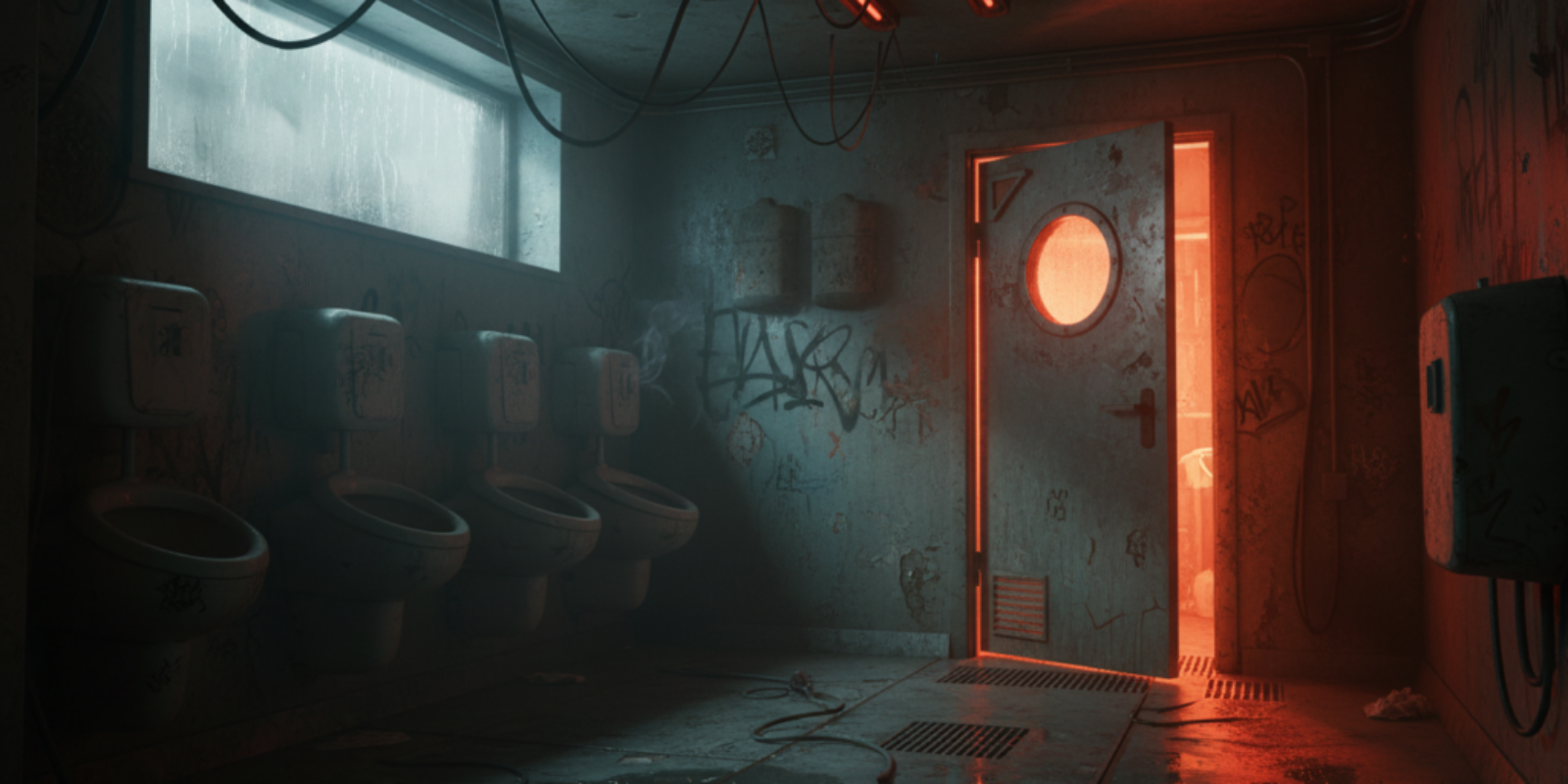
A soaked tile, a practiced flush, a tile panel that slides away to reveal neon and a low hum of servers. The restroom was always the easiest place to hide a revolution.
A patron pushes up from a cracked porcelain bowl and finds a narrow door that smells faintly of ozone and fried circuits. The scene reads like fan fiction until the bouncer explains the membership rule and the network admin slides over a business card with a QR code that does not want to be indexed by Google.
Most observers will file this under novelty nightlife or immersive theater, and many operators will call it a gimmick. That interpretation misses the real point: these hidden restroom portals are a low-cost, high-signaling infrastructure for communities that trade on secrecy and technical literacy, and that combination changes how cyberpunk scenes socialize, sell, and scale. The commercial opportunity is not just another themed bar; it is a distributed platform for events, hardware showcases, and paid community curation that behaves like a physical app store for subculture. Time Out documented the resurgence of hidden speakeasy concepts as part of post-pandemic demand for intimate spaces, which helps explain why operators are willing to build theatrical entry points that double as marketing. (timeout.com)
A midnight doorway that does social discovery better than any app
Hidden entrances do more than create Instagram moments. They create routable scarcity, where entrance rules, passwords, or cryptic QR trails become membership signals. Cyberpunk fans treat those signals as merit badges: knowing the door code implies network access, and knowing the network implies relevance. Bars and pop-ups in Tokyo and elsewhere are already using full-floor neon and narrative menus to turn visits into rites of passage, which helps explain why venues like NEO Shinjuku ATSUSHI pull both tourists and serious genre fans. (umamibites.com)
Why operators are installing concealed panels behind bathrooms now
Rent pressure and the taste for novelty push owners to wring more revenue per square foot from odd layouts. Concealed doors behind bathrooms or bookcases cost less to market and more to monetize than a big billboard. Hospitality designers are explicitly leaning into cyberpunk aesthetics, using neon, salvaged hardware, and tactile interfaces to sell an experience rather than a drink. This is visible across Tokyo’s themed bar scene where operators package food and spectacle as a single revenue stream. (lacarmina.com)
The competitors and the ecosystem this creates
Competitors in this space are not just bars but immersive venues, retro arcade operators, and experiential dining concepts. The advantage goes to teams that can combine soundproofing, card readers, tasteful smoke machines, and a modest server rack for interactive installations. Small operators compete by curating a strict entry ritual or by cohosting maker nights and microconferences that charge cover and merchandise. A bathroom hidden-room concept competes with an established speakeasy when it can become a reliable node for a scene rather than a one-night gimmick. DrinkCollectiv recently covered a deliberately bathroom-themed speakeasy in Manila that demonstrates how theatrical restrooms can be the anchor of a larger hospitality package. (drinkcollectiv.com)
What the build actually looks like in practice
Retrofit work often involves installing a murphy-style panel, simple actuator hardware, and rewiring for lighting and ventilation. Contractors and DIY shows now teach homeowners and operators how to install hidden doors and maintain toilets and flanges during remodeling. Practical guides reduce cost and shrink lead times, which makes the concept accessible to more bars and venues willing to iterate quickly. (thisoldhouse.com)
A secret door behind a toilet is less about being dramatic and more about creating a private stage where community and commerce can meet.
Small-operator math: how a 5 to 50 person venue can justify this
A basic retrofit with a motorized secret panel, ventilation, lighting, and modest AV can cost 7,500 to 20,000 in most urban markets depending on materials and permits. If a venue with seating for 30 runs four ticketed micro-events per month at 15 to 30 per ticket, that is 900 to 3,600 additional gross revenue monthly. Even after allocating 30 percent margin to staffing, covers, and amortized build cost, the retrofit pays back in 6 to 18 months on conservative assumptions. Add merch drops or vendor tables for hardware makers, and the payback accelerates. This is not a guarantee of profitability. It is a concrete route to ROI if the venue converts secrecy into repeatable bookings and collectible experiences.
Programming that turns a secret door into a revenue engine
Host a monthly hardware swap with a modest table fee, a weekly microtalk open mic for designers and devs, and quarterly ticketed immersive shows that sell with limited capacity. When a venue charges a 10 entry fee on a 100-person night, that revenue alone covers recurring license or permit costs in many jurisdictions. The key is to treat the hidden room like a pop-up studio that can be rented to creators and sponsors, turning one square of bathroom-adjacent space into many revenue events across a month.
Risks and regulatory blindspots that operators must face
Hidden rooms create liability and code exposure if they are not properly permitted for occupancy and egress. Bathroom retrofits can disrupt plumbing and require inspections, and overly theatrical ventilation can trigger smoke alarms or public-health complaints. Secretive admission practices can also run afoul of local licensing if venues restrict entry in a way that resembles private club membership without complying with the law. The appetites of patrons for anonymity also attract bad actors, so operators should budget for security protocols and clear incident reporting. This is not glamorous, but it is where enchantment meets insurance.
The cultural upside and the industry cost nobody is calculating
These rooms become curated nodes of taste that accelerate careers for artists, sound designers, and hardware hackers. They also raise expectations for authenticity, which forces operators to invest more in craft and storytelling rather than paint-by-numbers neon. The unpriced cost is reputational: a failed secret-room gimmick can sour an entire neighborhood’s perception of a concept. On the other hand, a well-run secret room becomes a regional magnet for cyberpunk culture and a reliable testing ground for new products and formats. Also, patrons will brag about being “the first” in a bar that literally kept the room closed last week; humans are delightfully performative.
Forward-looking close
Hidden rooms behind toilets are not a fad to wink at. When coupled with intentional programming and legal discipline, they are a low-footprint infrastructure for community building that can scale into predictable revenue and talent pipelines.
Key Takeaways
- Secret rooms behind bathrooms convert novelty into repeatable revenue when operators treat them as rentable programming studios.
- Retrofit costs of 7,500 to 20,000 can pay back in 6 to 18 months with regular ticketed events and vendor nights.
- Proper permitting, ventilation, and security are nonnegotiable and must be budgeted before marketing begins.
- Cyberpunk-themed hidden rooms work best when they anchor a calendar of maker nights, product demos, and microconferences.
Frequently Asked Questions
How much will it cost to build a hidden room behind a toilet for my 20-seat bar?
Expect baseline retrofit costs of roughly 7,500 to 12,000 for a mechanical panel, basic AV, and ventilation, plus permit fees that vary by city. Labor and finish choices can double that number, so get three bids and a code review before committing.
Can a hidden bathroom room be insured under a regular hospitality policy?
Standard policies may cover such a space if it meets building codes and occupancy limits, but some insurers will require a rider for unique attractions and for events that sell tickets. Discuss the concept with your broker and supply floor plans and an operations manual.
Will this idea attract cybercriminals or unsafe behavior?
Any venue that signals secrecy can attract risky patrons, so enforce ID checks, incident reporting, CCTV in nonprivate zones, and an on-call security protocol. Good curation and a membership or ticketing system reduce bad actors substantially.
How do secret rooms affect marketing and discovery?
They create viral scarcity and organic word-of-mouth, allowing small budgets to outperform larger ad spends if the venue delivers consistent, high-quality programming. Relying only on gimmick without a steady calendar will erode the initial buzz.
Is this trend sustainable beyond novelty?
Sustainability depends on programmatic depth: recurring shows, hardware demos, and collaborations with creators provide repeat visitation, turning a gimmick into a platform for community commerce.
Related Coverage
Explore how immersive retail experiments are reshaping small venue economics, and read practical guides on legal compliance for unconventional hospitality formats. The AI Era News recommends deep dives into experiential ticketing strategies and venue-based community monetization to pair with this story.
SOURCES: https://www.timeout.com/newyork/news/speakeasy-themed-bars-are-booming-once-again-in-nyc-031522 https://umamibites.com/food_and_drink/22273 https://lacarmina.com/blog/2024/03/tokyo-gothic-horror-bars-trick-or-treat-halloween-tarot-cafe-muscle-girls-ikebukuro/ https://www.drinkcollectiv.com/2025/06/11/somewhere-quiet-a-hidden-escape-in-bgcs-manila-clubbing-circuit/ https://www.thisoldhouse.com/ask-this-old-house/season-24/episode-11