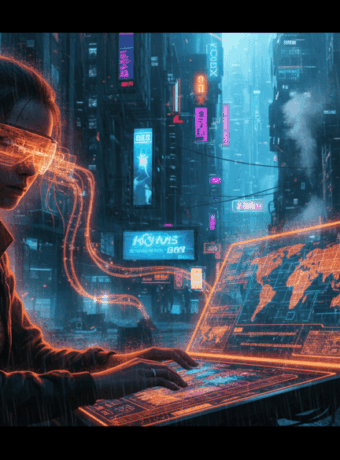
A torn-paper cover under neon light, a QR code glued to a photocopied city map, and an aesthetic that both remembers and rewrites what the future looked like yesterday.
The street fair at midnight smells of printer toner and cheap coffee; somebody hands a 24-page zine made from cutouts, old magazine ads, and a sequence of glitchy screenshots. A junior creative director hesitates before buying it because the art director back at the agency will want the JPEG, not the staples. That hesitation is the cultural friction at the heart of this movement.
On the surface, cyberpunk collage looks like nostalgia dressed in neon. The obvious reading is retro kitsch and Instagram-friendly texture. Underneath, there is a quieter business story: this format is building micro-economies for designers, influencing brand aesthetics in games and film, and forcing new supply chain and legal questions that matter to studios and small shops. The actual stakes are about who owns visual language and how that ownership converts into sales and influence.
From Mondo 2000 to the risograph revival: lineage matters
The collage language of cyberpunk magazines is not new. Early glossy experimenters in the 1980s and 1990s mixed hacked type, photography, and Photoshop into what became a shared visual grammar for cyberculture. A longform account tracing that countercultural publishing lineage explains how those zines incubated cyberpunk sensibilities and later mainstreamed what would become brand shorthand for futurism. (wired.com)
Why a zine made in a kitchen matters to studios
Small-run magazine collages are low-cost proofs of mood and worldbuilding that game teams and indie filmmakers can audition faster than commissioning concept art. They carry the added value of authenticity because cut-and-paste artifacts signal a human process, which collectors and audiences reward in ways AI-only renders do not. This tactile provenance is exactly the gap some studios want to exploit rather than buy through stock imagery.
The visual toolbox: analogue techniques meet generative engines
Contemporary designers mix photocopied ephemera, scanned magazine type, and AI-assisted textures to accelerate collage workflows. Visual experiments posted on portfolio sites show rapid iterations that would have taken weeks in pre-digital eras. These hybrid workflows are being exhibited and sold as singular pieces, proving the market is willing to pay a premium for curated combinations of manual craft and machine speed. (behance.net)
The demand equation and real market numbers
Physical zines sell at fairs and online for prices typically ranging from 8 to 40 dollars, while limited-edition prints and framed collages fetch 200 to 3,000 dollars in gallery contexts. Those figures matter for small studios deciding whether to commission bespoke collage worlds or license a stock pack. Institutional attention to zines and independent publishing has grown in recent years, with museum shows and archives documenting the form and increasing its cultural capital. (gothamist.com)
A legal and ethical corner no one wants to ignore
Generative models trained on scraped magazine scans and personal archives complicate the claim that an AI-assisted collage is entirely original. Researchers and critics document how models reproduce aesthetic biases from training sets and raise questions about authorship and consent. Companies using AI-assisted collage for brand or product launches should budget for rights clearance and possible reputational costs. (link.springer.com)
> Collage is not just a style; it is a ledger of who made the future and who paid for it.
How small teams of 5 to 50 can use this now with hard math
A boutique studio of 8 can run a two-week collage sprint for a game pitch for about 3,200 dollars in direct costs. Budget line items: 1,200 dollars for limited archival printing and materials, 800 dollars for licensing scanned ephemera or commissioning a photographer, 600 dollars for two weeks of designer time at 50 dollars per hour, and 600 dollars for a small marketing run of 100 zines at 6 dollars per copy. If the pitch wins a 50,000 dollar contract, the sprint converts at a 15 to 1 return on the direct spend, not counting follow-on licensing revenue. For a boutique apparel brand, printing 250 zine-style lookbooks at 10 dollars each and converting 2 percent of recipients into 80 dollar product buyers yields 400 conversions and 32,000 dollars in revenue, quickly recouping the small initial print investment.
Use cheaper passes for ideation: scan public domain ephemera and print risograph proofs for 1 to 3 dollars a copy before committing to archival stock and limited editions. The arithmetic favors experimentation, provided rights are cleared and creative roles are explicit.
Competitors and collaborators in the supply chain
Indie zine makers, print shops offering risograph runs, design studios, generative AI tool providers, and archival image sellers form a competitive and cooperative network. Brands that chase glossy, generic futurism will compete on price and scale. Those that invest in bespoke collage voice and provenance win cultural credibility. Portfolio platforms and design marketplaces have become battlegrounds for attention and licensing deals.
The cost nobody is calculating: provenance and discoverability
True cost is not only ink and labor. Provenance documentation, prompt logs, and edition histories add administrative overhead that establishes market value for collage work. Without this, pieces risk being treated like anonymous prints. Investing 200 to 500 dollars in basic documentation for a limited run can double or triple resale and licensing potential by giving collectors confidence.
Risks and open questions that stress-test optimism
Copyright disputes over source images remain the single largest legal exposure for collage-based work. Generative model outputs may embed elements from copyrighted scans, and the market reaction to uncredited datasets is unpredictable. The environmental cost of high-volume model training and inference is another reputational risk for brands claiming sustainability. Finally, the taste cycle could turn: what is edgy now may be framed as commodified retro in 18 to 24 months, reducing premium opportunities.
Practical next moves for a creative director
Commission a 12 to 16 page collage lookbook as a controlled experiment with a single concept and two editions. Track production and licensing costs, record any AI prompts and source credits, and run a small paid social test to measure engagement and direct conversions. If engagement and inbound licensing queries exceed production cost by 4 to 1, scale into limited-run physical editions.
A forward-looking close with usable insight
Collage-based cyberpunk publishing is not a fad; it is a modular visual system that lets small teams prototype futures cheaply and in public. Treat it like a product experiment: measure costs, document provenance, and design editions with resale and licensing in mind.
Key Takeaways
- Collage zines convert aesthetic credibility into business outcomes when provenance and limited editions are documented and sold.
- Hybrid workflows that combine analogue collage with AI-powered textures speed iteration while increasing legal complexity.
- Small studios can run affordable 2-week collage sprints that frequently pay for themselves in new contracts or product sales.
- Investing modestly in documentation and editioning multiples practical value into collage work for collectors and licensors.
Frequently Asked Questions
How much does a professional cyberpunk collage lookbook cost to produce?
A professional 12 to 16 page lookbook costs roughly 1,500 to 4,000 dollars depending on paper stock, photography, and licensing. Additional fees for limited edition printing and documentation add another 200 to 800 dollars.
Can AI tools replace manual collage work for a small design team?
AI can accelerate texture creation and mockups but does not replace the curatorial judgment and tactile cues that make physical collages sell. Combining AI with manual interventions delivers the strongest commercial results.
Do zine-style collages help with branding for games and films?
Yes. Zine collages provide a fast, inexpensive way to communicate tone and worldbuilding that can win pitches and attract early fans. They are especially effective for indie projects and experiential marketing.
What legal steps must be taken before selling collage work?
Clear rights for scanned images, document any trained datasets or prompts used for AI elements, and create edition certificates that state provenance. Budget for a copyright clearance review if source material is not public domain.
Is there a growing market for physical collage art right now?
Museum shows and indie fairs indicate robust interest in zines and collage as collectible formats, and niche galleries are creating markets for curated editions. Demand is uneven, so target collectors and institutions that value provenance.
Related Coverage
Readers may want to explore how AI affects authorship and museum ethics, where generative tools meet archival practice. A practical guide to risograph and limited edition printing also helps teams translate digital collage into durable products. Finally, deep dives into visual trends in game and film packaging show how small aesthetic choices scale into audience perception.