After major backlash for use of generative AI, Shreveport Regional Arts Council releases statement for AI enthusiasts and professionals
A small-city arts council thought a glossy holiday flyer would be harmless. It turned into a national case study in how politely handled AI mistakes can still become a reputational business problem.
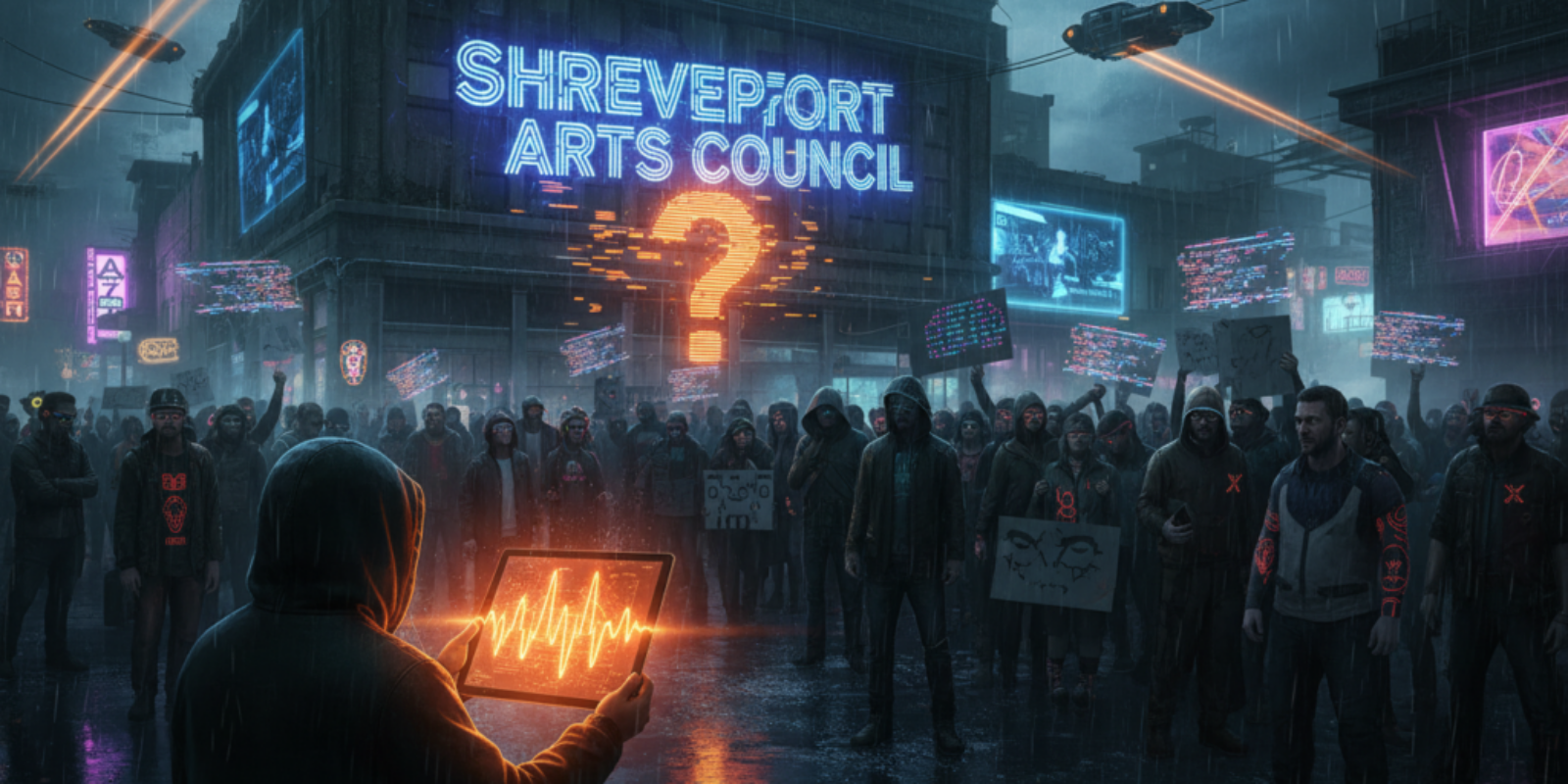
The cookie contest poster went up on social media in late November and within days the comments filled with anger, calls for accountability, and accusations that the council had used generative AI in place of local artists. That public friction escalated into deleted comments, blocked users, and a formal apology posted to the council’s channels. According to reporting by the Shreveport Times, the first contested post appeared on November 19 and was quickly followed by three similar images that many in the community identified as AI-generated. (Shreveport Times coverage later republished by Yahoo documented both the images and the initial reaction.)
Most readers will interpret this as one more local outrage about authenticity and creators rights, a predictable flare-up in the age of image synthesis. The angle that matters for business owners and AI professionals runs deeper: this episode shows how routine internal workflows and vendor choices can create outsized regulatory, marketing, and procurement risk for organizations that are not fluent in the technical and ethical contours of generative models. This article relies mainly on local press reporting and the council’s public statements to reconstruct events and draw implications for the wider AI industry. (KSLA covered the council’s January forum and posted the council’s subsequent statement.)
The tension in a packed municipal auditorium and why it matters beyond Shreveport
By January 8 the council convened a public forum to answer questions and listen, which it framed as the start of a policy conversation. The forum drew large turnout, but not consensus; some attendees called the session tightly managed and accused the organizers of steering the discussion away from direct accountability. KSLA reported the council’s promise to use the forum feedback to craft policies that will “center, prioritize and protect authentic artists.” This clash between outreach and outrage is precisely the kind of governance failure that sends risk into the open market.
Local news outlets catalogued the tactical fallout: posts removed, commenters blocked, and a community feeling that taxpayer funded organizations should model best practice. The forum was scheduled and publicized on community calendars and local outlets such as KTAL, which noted the event’s facilitator and venue details. The optics of a public arts agency using synthetic images touched a flashpoint: nonprofit stewardship, public funding, and artistic livelihood all intersect where AI tools are adopted without clear disclosure.
Who is watching and who needs to act in the AI ecosystem
This is not merely a local arts story. The companies that provide image synthesis services, the design agencies that integrate those outputs, and the platform operators that host the content are all participants in the chain of downstream harm or remediation. Platforms such as Midjourney, Adobe’s generative tools, and OpenAI’s image models are the obvious technological players here; for each, client onboarding, license terms, and provenance metadata are commercial levers that can reduce friction or amplify it. National Today reported that some voices in the forum described the environment as constrained and that trust had to be rebuilt. Those signal lines are the same ones enterprise procurement teams should read when drafting AI use policies.
The core story in numbers, names, and dates that the industry will study
The initial controversial post was published on November 19, followed by three more AI-like images and a string of community complaints that culminated in the council’s Facebook statement on December 2 apologizing and promising a deeper conversation. By January 8 the council hosted a public forum and then issued a short follow-up statement thanking attendees and promising to develop policies shaped by the discussion. Reporting from KSLA and community calendars confirms the January forum details, and the Shreveport Times documented the contested images and community responses in December. These specific dates and the council’s public language matter because they create a timeline that legal teams and communications advisers can use when assessing breach windows, mitigation speed, and regulatory exposure.
Why the sequence of actions changed the conversation
Organizations that removed posts immediately and invited open discussion got one outcome. Organizations that deleted comments and blocked dissent tended to extend the crisis. In Shreveport the pattern of initial deletions followed by an admission that “some posts slipped past our promotional screening” created a credibility deficit that took the forum to begin to repair. That credibility loss is the thing vendors talk about in private meetings; reputational harm is an operating cost that scales faster than the literal dollars saved by reusing an AI-generated graphic. Also, public agencies have recordkeeping obligations that can magnify legal risk if procurement or contracting is ambiguous.
A single misjudged campaign image can convert a routine procurement decision into a governance case study.
Practical math for policy makers and procurement teams
A small nonprofit that pays a freelance designer 300 to 800 to produce three event flyers spends roughly 900 to 2,400 in direct fees. By contrast, a subscription to a midtier image-synthesis service may cost 10 to 50 per month and deliver many images. The arithmetic is obvious until reputational and compliance costs appear: a withdrawn campaign, remboursements, legal counsel, and lost donor confidence can each add multiples of the initial savings. If a community organization suffers a funding cut or loses partner support because of perceived misuse of public trust, those downstream losses exceed any short term production savings in a single budget cycle. Frugal choices that ignore provenance and consent thus create a negative return once externalities are counted. The industry will have to price those externalities into vendor SLAs, or else clients will absorb the risk.
What this episode reveals about risk vectors the AI industry can fix
Three fixable vulnerabilities stand out: provenance metadata that travels with synthetic assets, clearer licensing and disclosure terms from model providers, and vendor certification for organizations that need to prove nonuse of problematic datasets. Model makers can reduce client risk by making provenance machine readable and easy to surface in marketing workflows. Agencies and software platforms can add mandatory disclosure toggles at upload. The technology exists to make the right thing easy; the problem is aligning commercial incentives so clients choose it. A local council learning this the hard way is a reminder that tooling without policy is theatre. Dry humor helps: consider the idea that “transparent AI” is a feature and not a press conference exercise, said in the tone of someone who has brokered too many vendor renewals.
Risks and open questions that stress-test optimistic claims
Legal exposure remains unsettled because copyright law is still resolving how to handle derivative claims and dataset provenance. The council’s incident raises questions about chain of custody for creative work in procurement records, and whether public entities must disclose AI use for materials produced by contractors. There is also an enforcement question: who adjudicates misuses at scale when harms are local but models are global. Finally, a social risk exists where communities become reflexively opposed to any AI presence, making reasonable, augmenting uses politically costly. Those are areas where industry standards, not just marketing copy, will decide who pays for mistakes.
The near future: what companies and organizations should do now
Create clear AI use clauses in vendor contracts, require signed provenance statements for campaign assets, and budget modestly to commission human-created lead assets that carry local cred. For model providers, prioritize provenance tooling and a simple way for downstream clients to opt into transparent licensing. That is operational advice, not a slogan. It changes the math of risk and trust in measurable ways.
Key Takeaways
- Local backlash over AI-generated flyers forced a public forum and a promise of policy reform from SRAC.
- Short term cost savings from synthetic imagery can result in much larger reputational and funding losses.
- Provenance metadata and mandatory disclosure are practical fixes model providers can deploy now.
- Public agencies and nonprofits should add AI-use clauses to vendor contracts to avoid governance gaps.
Frequently Asked Questions
What should a small nonprofit do if it wants to use AI for marketing?
Start by requiring vendors to disclose whether assets were AI produced and obtain a written provenance statement. Budget for at least one human-crafted hero asset per campaign to preserve local credibility and donor trust.
Can a city arts council legally use AI-generated images in promotional material?
Legal permissibility depends on the model license and how the asset was produced, but permissibility does not eliminate reputational risk; disclosure and proper licensing reduce both legal and reputational exposure. Consult counsel for procurement language tailored to public entities.
How quickly should an organization respond if the community objects to AI use?
Fast, transparent action matters more than immediate technical specificity. Acknowledge the concern, explain next steps, and set a firm timeline for a policy conversation; delaying invites escalation.
Do model providers need to add features to prevent these incidents?
Yes. Providers can ship provenance metadata, clearer commercial licensing labels, and admin controls that allow clients to block sensitive uses; these are practical engineering changes that reduce client risk.
Will this controversy slow AI adoption in creative industries?
Some organizations may pause, but others will adopt faster with better governance. The likely outcome is a bifurcated market where vendors offering strong provenance and compliance tooling gain share. That is how markets sort themselves when trust matters.
Related Coverage
Readers interested in the intersection of tools and trust might explore recent coverage of provenance standards for generative models and contracting best practices for public sector AI procurement. Also consider reading investigative pieces about dataset sourcing and follow-ups on model provider policy changes to see how the market responds to local governance failures. Those threads connect directly to the lessons a small city council just taught a much larger industry.
SOURCES: https://www.ksla.com/2026/01/09/shreveport-regional-arts-council-hosts-forum-ai-arts-after-artist-concerns/, https://www.yahoo.com/news/articles/happened-shreveport-regional-arts-council-213732918.html, https://www.yahoo.com/news/articles/shreveport-arts-council-host-forum-231909308.html, https://nationaltoday.com/us/la/shreveport/news/2026/02/12/shreveport-artists-debate-ais-role-question-srac-policy/, https://www.shreveportcommon.com/events/2026/1/8/open-forum-on-ai-and-the-arts