Generative AI Is Remaking Virtual Worlds Faster Than the Metaverse Could Ask for Permission
How text prompts, world models, and new editor AI are shifting who builds immersive spaces and how small studios get left holding the future.
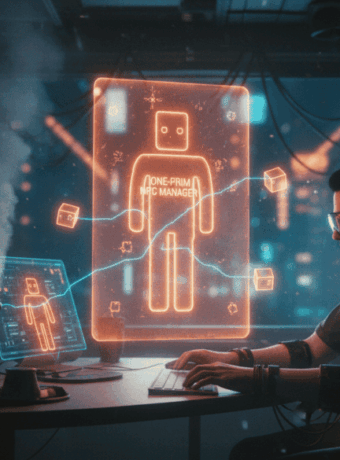
A community manager closes her laptop after a long day, types a single line into an experimental generator, and two minutes later a playable alleyway appears with playable NPCs and weather that feels moodier than the studio’s payroll. The scene is not a science fiction set; it is a prototype demo that sparked a one-day market meltdown and a thousand whispered strategy memos. For creators it felt like someone rearranged the construction site while labor was still on break.
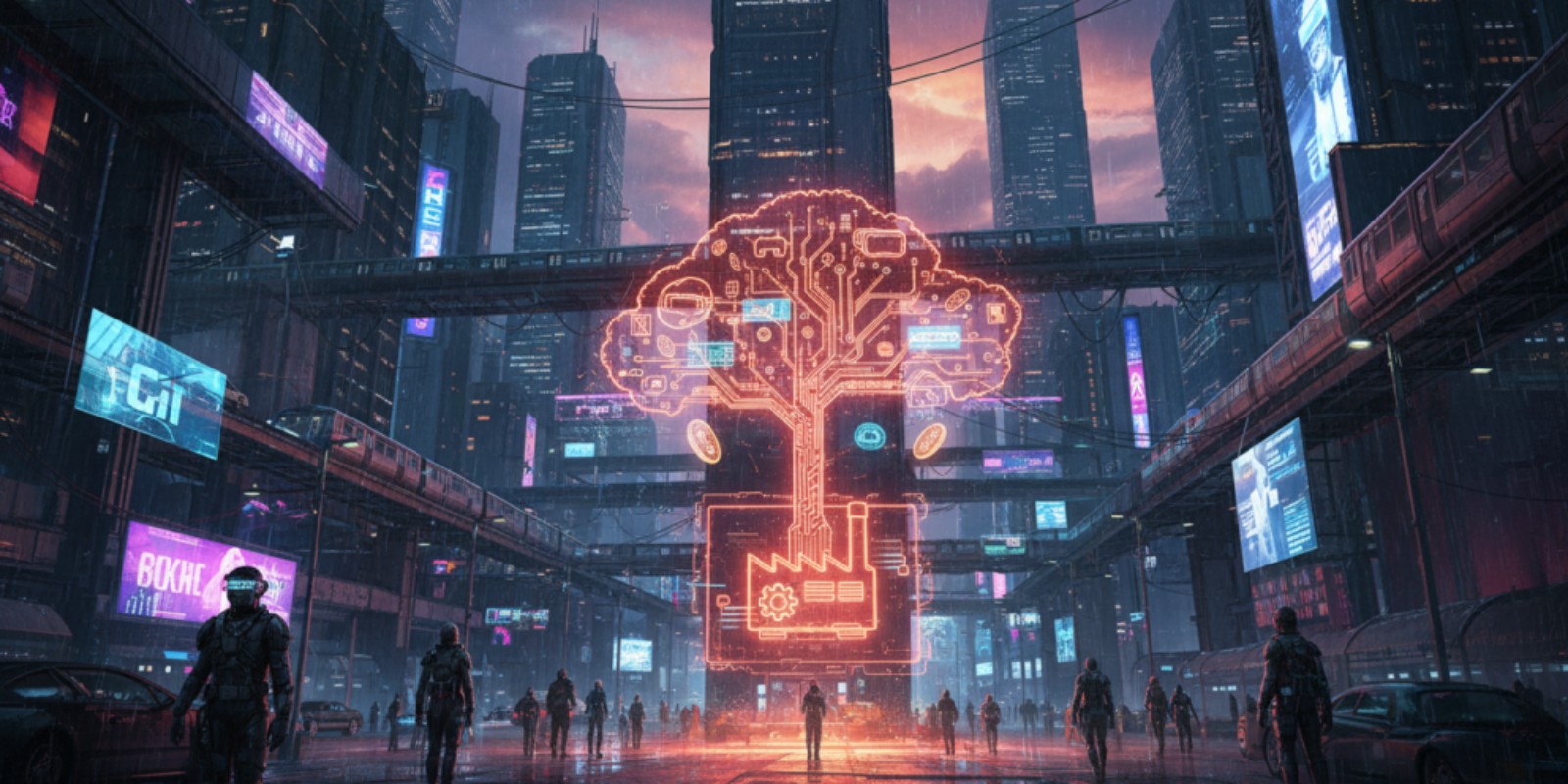
Most observers read that moment as a simple tech shock: bigger companies are bringing new tools that might automate grunt work or make prototyping trivial. The angle that matters more for metaverse businesses is less about automation and more about infrastructure: world models and editor-embedded generative AI are shifting the platform layer itself, reconfiguring who owns the authoring pipeline and where value accrues to creators and publishers.
Why a single demo rattled the industry and investors
Google’s Project Genie demonstrated a world model that can generate explorable 3D spaces from text and images, available initially to a limited U.S. user base inside Google Labs for AI Ultra subscribers. The prototype emphasizes real-time navigation and sketch to environment workflows, but it also set off a broader question: if a research team can stitch playable space from prompts, which parts of the content stack become commoditized. (blog.google)
The market reaction was loud and fast. Shares in engine and virtual world companies slid after the reveal, as analysts and traders priced the possibility that new AI rails could compete with traditional toolchains. That drop was not just financial theater, it crystallized an investor belief that the platform economics of content creation are about to change in a measurable way. (ft.com)
The new contest for the creation rails
At one end of the spectrum sits traditional engines and marketplaces that sell tools, hosting, and developer ecosystems. At the other end are cloud giants and AI labs that can combine model scale, compute, and distribution to deliver generative experiences at consumer scale. Unity is moving to bake AI into its editor so teams can generate assets and agent behaviors inside the development loop. That push signals a defensive pivot: sell the workflow, not just the runtime. (investors.unity.com)
NVIDIA is threading a different needle by marrying generative models to physically realistic simulation in Omniverse, aiming at industries that need digital twins and robotics training as much as game art pipelines. The result is an enterprise-grade route for virtual worlds that prioritizes fidelity and interoperability with physical AI applications. For the metaverse, that means a split market between rapid, creative prototyping and high-fidelity industrialized simulation. (investor.nvidia.com)
GamesBeat and other industry outlets tracked how vendors are positioning generative AI as an acceleration layer rather than a replacement for engine technology. Vendors are touting integrations with existing pipelines, but the strategic reality is that control over authoring APIs and model access will decide who captures long-term value from generated worlds. (gamesbeat.com)
Project Genie versus production game engines
Project Genie produces short, explorable environments with real-time physics constraints and session limits. That is far from a full game engine, yet it demonstrates the core idea: text to navigable space. The implication is not immediate obsolescence; it is a decoupling of environment creation from bespoke asset pipelines, which matters most for prototypes, social spaces, and marketing experiences.
Unity’s editor-first gambit
Unity’s roadmap to add agentic AI into the Editor acknowledges the new reality: developers want AI tools that sit where they work every day. Embedding generative workflows reduces context switching and makes rapid iteration a default, which is an operational advantage for teams that ship weekly updates. The risk is that the economics of long tail content may migrate to whoever powers those editor prompts.
Generative AI is not a magic wand for finished games; it is a power drill for building the scaffolding, and scaffolding can become the new product if the market allows it.
What this means for small studios and teams of 5 to 50 employees
A five person studio that currently pays artists 60 percent of budget to craft environments can reallocate that spend to world design and monetization by using gen AI for rough geometry and iteration. For example, assume a small XR shop spends 10,000 dollars per month on freelance modeling and environment polish. Using an AI-assisted workflow that cuts manual authoring time by 50 percent could save roughly 5,000 dollars monthly, which funds a part time server engineer or two months of paid user testing.
A 20 person indie with a live social space generating 10,000 monthly DAU can experiment with prompt-driven seasonal content to increase retention by 3 to 5 percent. If ARPU is 1 dollar per month, a 4 percent retention lift translates to 400 dollars monthly incremental revenue, which compounds as the user base grows. The math is simple: marginal savings on content production and modest retention gains compound faster for smaller teams because they pivot quicker than larger publishers. This is not a claim that AI pays for everything overnight; it is a model that shows where modest efficiencies turn into runway. Small teams should prioritize integrations that reduce time to prototype, not press coverage. They can also rent cloud generation for spikes instead of buying GPUs outright.
The cost nobody is calculating
Tool costs look cheap until model sampling and content moderation scale. Generative sessions taxed by millions of concurrent users expose server bills, compliance bottlenecks, and content moderation overhead. Early adopters often underbudget the human review loops needed for brand safety and IP checks, which means operational costs can outpace initial savings from automation. A small team saving 5,000 dollars a month on art could easily drain that benefit on moderation if the content surfaces legal or safety problems.
Risks and open questions that stress-test the claims
Model fidelity and control remain constraints; AI hallucinations in physics, behavior, or IP boundaries can create legal exposure. The business question is not if models will improve, but who controls the guardrails and commercial licenses. Another risk is concentration: if generative models are available via a few cloud providers, dependency risk becomes single point failure in a system that used to be distributed across engines, stores, and third party tools.
Ethics and labor displacement are real political issues, not PR talking points. Creators will demand attribution, revenue share, or opt out mechanisms, and regulations could force architectures that prioritize provenance over cheap content. The final open question is time frame: meaningful disruption to production pipelines will arrive over years, not weeks, but the preparatory economics shift is already underway.
What leaders should do this quarter
Audit where environment and asset creation consume time and budget, then pilot an editor-integrated generative tool for one controlled project. Negotiate usage-based pricing and keep on-premise export paths for provenance and IP audits. Build a simple approval workflow that routes AI outputs to an artist before public rollout; it costs less than a legal fight and looks responsible on a pitch deck.
Where this leads next
Generative AI is remapping the metaverse economy from hand-built assets to prompt-driven composition, and companies that sell the rails will capture disproportionate upside. That is not an inevitability, but it is the clearest strategic lever for businesses that want to survive and prosper in the next five years.
Key Takeaways
- Generative world models shift value toward who controls authoring and distribution, not just who makes assets.
- Small teams can convert content savings into product and growth experiments, but must budget moderation and compliance.
- Editor-embedded AI and enterprise simulation are diverging markets that favor different kinds of creators.
- Practical governance and provenance are immediate priorities to protect IP and brand safety.
Frequently Asked Questions
How can a small VR studio test generative AI without breaking the bank?
Start with a single project and use pay as you go cloud generation for prototyping. Keep outputs behind an internal review step to catch hallucinations before public release.
Will using generative AI replace artists in a team of 10?
No, generative AI is more likely to change roles than eliminate them; artists move from raw production to curation, refinement, and pipeline oversight. Teams that reskill artists into prompt design and quality control retain creative ownership.
Do these world models create legal risks for copyright?
Yes, generated content can echo copyrighted material and expose studios to claims; maintain provenance logs and license model usage explicitly. Contract clauses around generated content should be updated immediately.
How should product roadmaps change if AI tools cut content time by half?
Shift roadmap planning toward more rapid experimentation, allocate saved budget to user acquisition or retention tests, and build governance for fast rollouts. Use the burn rate improvement to extend runway or hire for systems roles.
Is the metaverse infrastructure now controlled by cloud giants?
Not yet, but the momentum favors providers with scale and distribution, making openness and interoperability key competitive battlegrounds. Diversify dependencies and negotiate exportable assets.
Related Coverage
Readers interested in this evolution should explore how digital twin economics influence virtual real estate valuation and how avatar identity systems are being rewritten for generative content. Another valuable thread follows regulation and provenance technologies that will determine whether generated worlds become safe commercial products or compliance headaches.