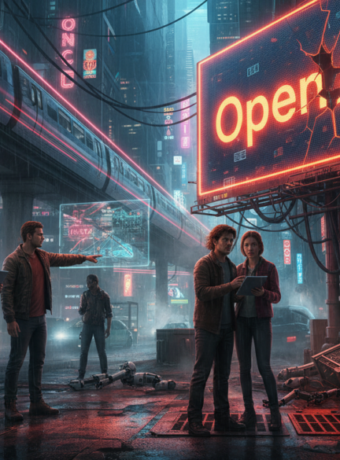
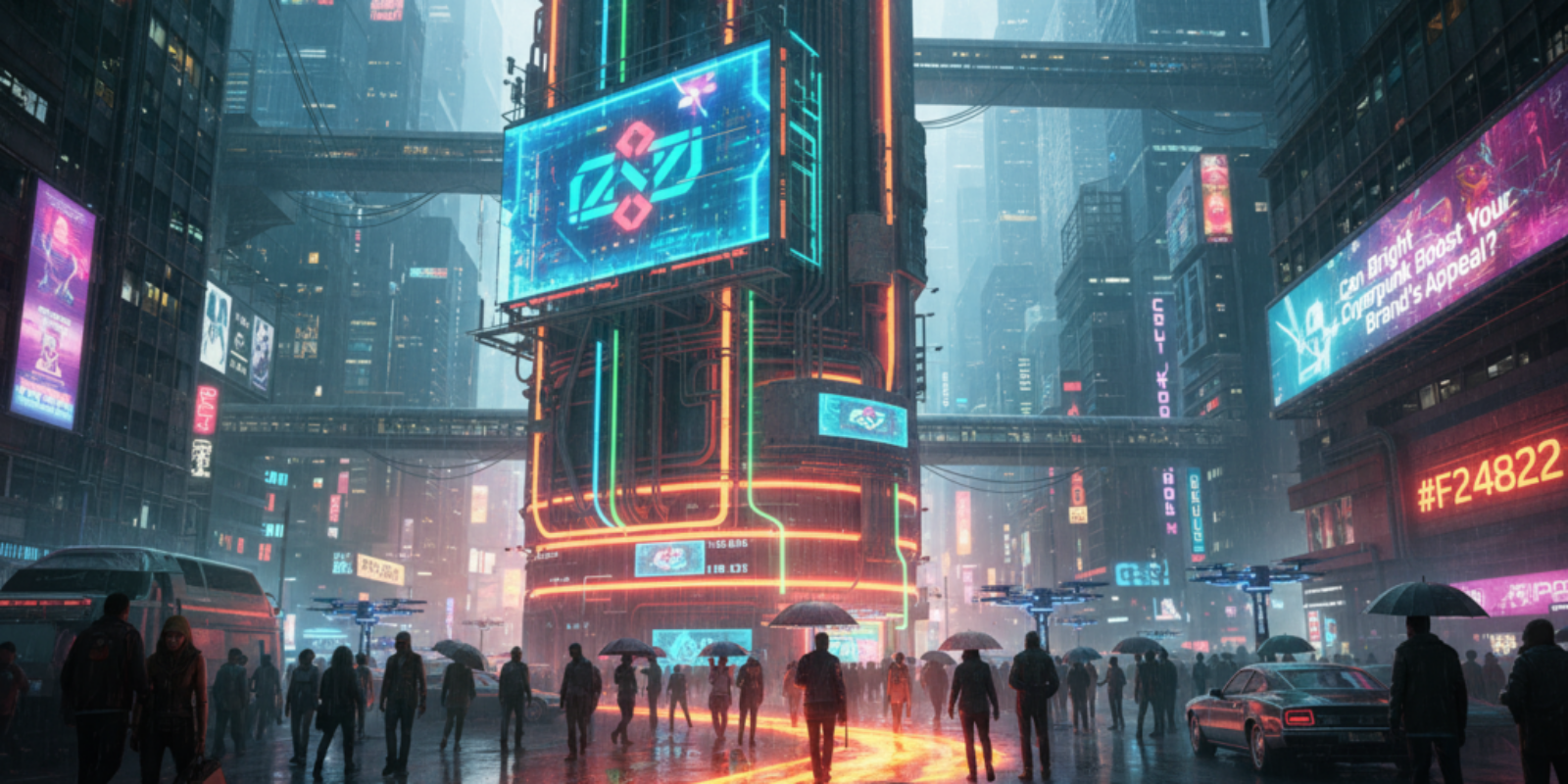
Most cyberpunk might look too dark and rainy for some people, that’s why some creators are making it bright and colorful for cyberpunk enthusiasts and professionals
Why swapping puddles and smog for neon sunsets matters to creators, brands, and small studios building the next wave of cyberpunk culture.
A photographer lowers the umbrella and steps into a plaza where the holograms look more like an arcade than a memory of collapse. Pedestrians wear iridescent jackets and carry translucent tote bags with pixel art smiling faces; the scene hurts in the best way, the kind of bright that makes one squint and want to buy a paperback only slightly ironically. That astonished pause is the opening frame most fans did not expect when they asked for cyberpunk and meant loud, not just bleak.
The obvious reading of the genre is that cyberpunk equals rain, grit, and corporate noir, an aesthetic shorthand that signals dystopia and seriousness. This article draws mainly on recent press coverage and artist interviews to argue a different, underreported point: bright, colorful cyberpunk is not a novelty or a meme it is a durable cultural shift with measurable implications for studios, product teams, and small businesses who sell experiences and goods. (theguardian.com)
Why the rain and noir became shorthand and how that still matters
Blade Runner fixed a palette into the popular imagination by pairing neon with perpetual wetness and shadow, borrowing the language of film noir and making moisture a visual cue for moral ambiguity. The cinematic choice became genre shorthand for technological claustrophobia, which is why so many creators default to the same rainy postcards when they want to signal cyberpunk. (wired.com)
That shorthand still works narratively; darkness and rain compress backstory into a single frame and save script pages. But it also narrows the visual vocabulary of a whole culture, making many commercial and creative projects look interchangeable even when their stories do not deserve that fate.
Where the bright, colorful cyberpunk revival actually came from
A parallel lineage runs through synthwave and vaporwave’s affection for saturated palettes and retro sunsets, which reframed neon as nostalgia rather than pure menace. Bands, labels, and online scenes turned bright magentas, cyans, and sunburnt oranges into a shared shorthand for yearning futures and playful pasts. This is the aesthetic current many designers now tap to make cyberpunk feel alive rather than solemn. (daily.bandcamp.com)
Contemporary illustrators and indie studios then mixed those palettes with classic cyberpunk motifs, yielding work that reads as both futuristic and exuberant. That creative remix is what makes colorful cyberpunk feel inevitable rather than contrived.
How artists explain color choices when the rain is optional
Some of the clearest statements come from practitioners who deliberately use color as narrative punctuation. Artist interviews reveal a consistent logic: color can shift emphasis from system critique to human texture, allowing characters and subcultures to occupy the frame without turning everything into a cautionary tale. The artist Josan González, for example, uses vivid palettes to pull attention to individual lives inside dystopian cities, making the world feel populated rather than merely atmospheric. (futurpunkstudio.wixsite.com)
That choice is practical as well as expressive; saturated palettes read well on small screens and in social feeds, which matters when discovery happens on half-inch thumbnails and endlessly scrolling timelines.
Bright cyberpunk is not a betrayal of the genre it is a broader vocabulary for the same argument about power, just delivered in color rather than charcoal.
The tools and tricks designers use to convert rain-soaked noir into sunny neon
Design teams switch mood with a few reliable levers: swap neutral LUTs for cyan and magenta gradients, replace diffuse skylight with intentional rim lights, and rework UI affordances so neon highlights communicate interactivity rather than despair. These are simple toggles in modern engines and compositors, but they transform perceived brand tone overnight. A cheap color-first style guide will often do more for audience warmth than an expensive sound design overhaul. No one promised that palette changes would solve existential corporate problems but they do change conversion rates, which is the boring part that actually pays salaries.
What the change means for small creators and businesses with 5 to 50 employees
Brands and indie studios can treat this as an inexpensive, high-impact experiment. Shutterstock’s marketing data shows neon imagery clickability up 207 percent year over year, skyscraper imagery up 513 percent since 2020, and even rain imagery up 58 percent, proving that visual cues drive measurable attention in campaigns. Use those figures to model outcomes before committing to art production. (shutterstock.com)
A 12-person indie studio can run a concrete scenario. Budgeting a re-skin project might look like this: hire a freelance color consultant at 75 dollars per hour for 40 hours equals 3,000 dollars; re-color or re-skin 200 UI and prop assets at an average of 30 dollars each equals 6,000 dollars; run a two-week A B test ad campaign with a 5,000 dollar spend. If neon creative lifts CTR by the observed 207 percent and baseline CTR produced 100 leads per month at a 2 percent conversion rate into 50 dollar purchases, the math is simple: baseline monthly revenue equals 100 leads times 0.02 times 50 dollars equals 100 dollars. With a 207 percent CTR lift, leads rise to 307 and expected monthly revenue becomes 307 times 0.02 times 50 dollars equals 307 dollars. The paid test would therefore prove whether the visual investment returns more than the 14,000 dollar upfront cost within the first year. If the product’s average order value is higher or if lifetime value extends beyond one purchase, payback accelerates. No one likes doing marketing math at 9 a.m. on a Tuesday, but it beats guessing while your rent is due.
The risks and open questions that will stress-test color-first cyberpunk
Coloring a franchise bright can dilute existing IP if done without fan consultation; community backlash is a real cost in attention and goodwill. The other risk is commodification: once agencies realize bright cyberpunk sells, the style could become another bland trend, which is the exact opposite of why independent creators pursue it in the first place. There are also accessibility and legibility concerns: neon without contrast hurts readability and can alienate users with visual sensitivities.
Finally, there is a cultural question about appropriation and context; bright palmette signs do not automatically translate across geographies, and designers should test cultural resonance, not assume universal appeal.
Practical next steps for teams that want to experiment without breaking payroll
Start with a 30 day microproject: pick one hero screen or campaign asset, produce three color variants, and run a controlled A B test. Use on-platform metrics to measure real engagement and track conversion to action. If the uplift covers production costs within three months, scale incrementally; if not, iterate on color, not on hope.
Looking ahead with useful confidence
Colorful cyberpunk is a widening path for creators and small companies to claim attention in a crowded culture, but it requires disciplined experiments and community-first execution to avoid becoming mere decoration.
Key Takeaways
- Bright, colorful cyberpunk expands the genre’s vocabulary while preserving its critique of power in more accessible visual language.
- Designers can materially change audience response by shifting palettes; early tests often cost under 15,000 dollars for small teams.
- Artist-led color choices, exemplified by practitioners like Josan González, re-center characters and community inside dystopian worlds.
- Marketing data suggests neon-forward visuals can increase clickability by multiples, but accessibility and cultural fit must be tested.
Frequently Asked Questions
How do I test a colorful cyberpunk look without redoing my whole product?
Start with a single hero asset or landing page and create three variants to A B test. Use measurable KPIs such as CTR, time on page, and conversion rate to determine whether to scale the design changes.
Will making my game or brand brighter alienate hardline cyberpunk fans?
Some core fans may push back, especially if the change erases thematic grit, but many fans embrace visual diversity when the shift supports character and story. Engage community channels early and present changes as optional modes rather than enforced rebrands.
What is a reasonable budget for a small studio to try this?
A focused pilot can run between 5,000 dollars to 15,000 dollars including freelance color direction, asset re-skins, and a short ad test. That range keeps risk low while providing enough sample size to judge audience response.
Do brighter colors actually improve sales or just clicks?
Visual uplift often increases top-of-funnel metrics like clicks and engagement and that can convert into revenue if funnel mechanics are solid. Measure both immediate conversion and downstream lifetime value to confirm impact.
Are there accessibility rules to follow when using neon palettes?
Yes ensure contrast ratios meet WCAG guidelines for critical text and controls; consider offering a reduced-glare or high-contrast mode for users sensitive to bright hues.
Related Coverage
Coverage readers should explore next includes design pipelines for retro-futurist interfaces, the economics of synthwave-influenced marketing, and how indie art books and NFT communities are funding colorful worldbuilding. Those topics reveal how visual shifts intersect with monetization and community building in the AI and creator economy.
SOURCES:
https://www.theguardian.com/games/2018/oct/16/neon-corporate-dystopias-why-does-cyberpunk-refuse-move-on
https://reelmind.ai/blog/film-blade-runner-1982-ai-futuristic-visuals-themes
https://futurpunkstudio.wixsite.com/futurpunk/post/josan-gonzalez
https://daily.bandcamp.com/scene-report/new-zealand-vaporwave-list
https://www.shutterstock.com/blog/cyberpunk-ad-marketing-data-ai