AI Is Destroying Grocery Supply Chains and Rewiring the Cyberpunk Imagination
How algorithmic logistics are collapsing shelves, hollowing out storefronts, and reshaping the aesthetics and economy of cyberpunk culture and industry
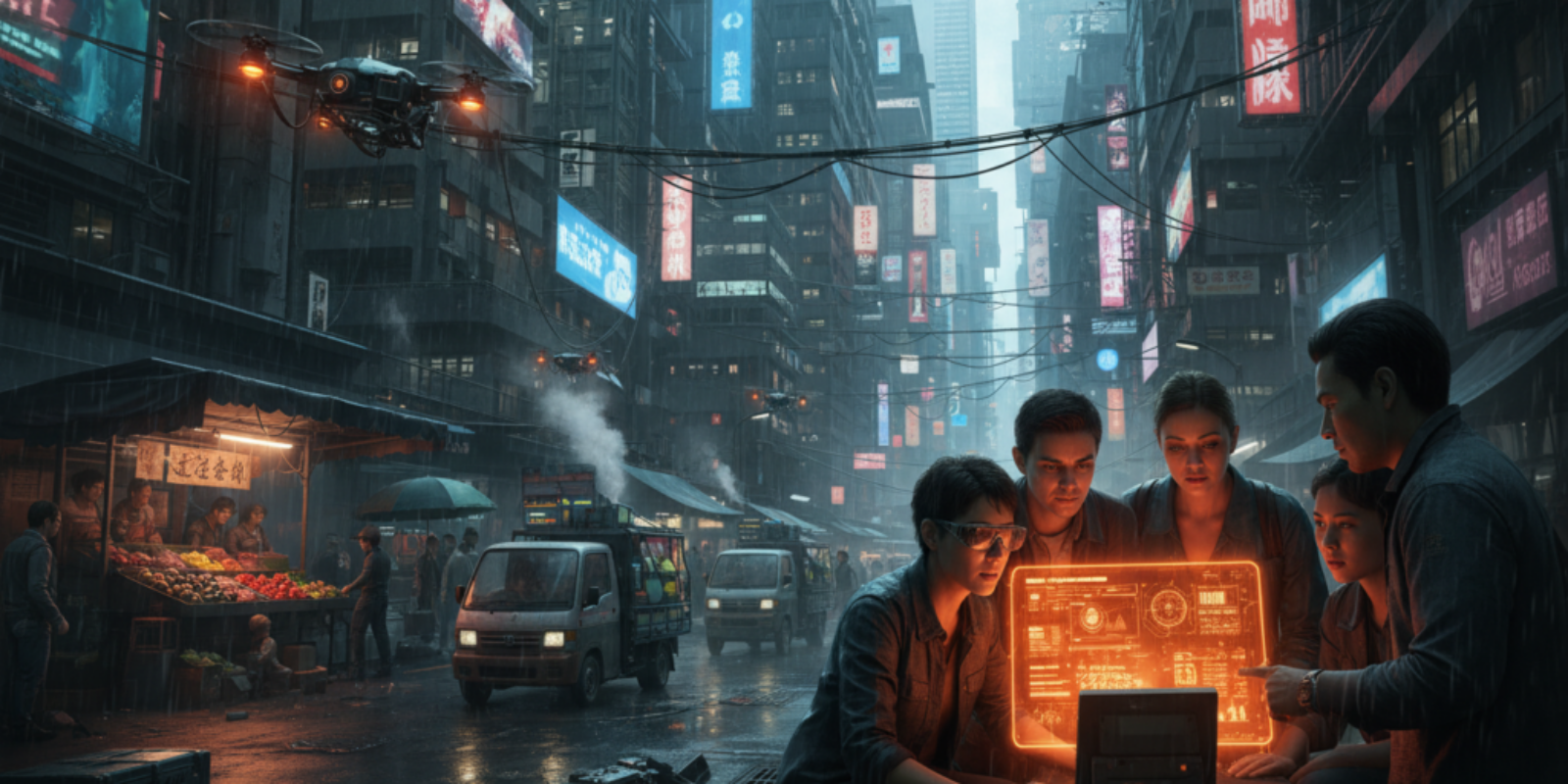
A fluorescent hum inside a 24 hour corner store, a scanner beeping as a robot cart bumps the cereal aisle, and an app notification that the delivery was canceled again. The city’s neon leaks into back rooms where algorithms decide whether milk survives the night and which neighborhoods get left with empty shelves. This is not a movie set; it is the urban logistics reality folding neatly into cyberpunk fiction and industry practice.
Most headlines frame this as a triumph of efficiency: AI forecasts, faster routing, and fewer human errors. The angle that matters more is quieter and uglier: algorithmic centralization and brittle automation are creating new failure modes that produce sudden shortages, local unemployment, and a cultural shift toward a world that looks and feels like a dystopian delivery chain. This is the lens the rest of the article uses to explain why retail tech became a proving ground for cyberpunk futures in plain daylight.
Why the old story fails: when optimization becomes a single point of failure
Retail leaders praised AI for reducing waste and improving fill rates, but broad adoption also concentrates decision making into thin software layers. When those layers misread demand or a robotic fulfillment center falters, the effects cascade quickly across stores and neighborhoods. Not every problem is a clever bug; some are design assumptions that fail in chaotic real world conditions, like betting on constant order density in a country that prefers one hour delivery windows.
The headline collapses that industry will not forget
One of the clearest wake up calls came when a major retailer dismantled its high profile automated network and booked large penalties, exposing how centralized robotic fulfillment can fail on economics and operations. Coverage in Warehouse Automation explains Kroger’s costly unwind and the painful reality that a billion dollar automation vision can become a strategic millstone. These failures are not sci fi metaphors; they are corporate balance sheet events that remake regional labor markets and the look of cities overnight.
Robots at scale and the promise that slipped away
Big chains doubled down on robotics and predictive stacks as the cure for thin margins. Walmart, for example, is rolling out sensor and AI layers to monitor pallets and improve freshness, a bet described in detail by the Financial Times. Those systems do deliver gains, but they also create new dependencies on software suppliers, real time telemetry, and model health. Think of it as moving from a distributed human judgment system to a few centralized machine brains; when one of those brains sneezes, a lot of stores catch a cold.
When automation cancels dinner plans
Customers watching their orders disappear from confirmation screens is not dramatic license; it happened in public ways when a major automated grocer canceled thousands of deliveries after operational issues disrupted fulfillment. The Retail Technology Innovation Hub documented one such event where cancellations rippled across customers and social feeds, producing reputational damage and a local sense that technology is fallible in very human ways. That social anger reads like a cyberpunk subplot, where convenience technology is also a source of vulnerability.
The numbers everyone cites and why they do not settle the argument
Industry forecasts put AI adoption in grocery into the stratosphere, with usage expected to surge and generate enormous operational value. Supermarket News reported projections that AI could create significant efficiency gains and reduce certain store tasks by a large share by 2025. Those headline figures are real, and they matter, but they mask distributional effects: efficiency gains for network operators can translate into concentrated job losses and brittle local supply when automation choices do not fit geography. The paradox is that winners at scale create new losers at street level. Someone has to explain that to the guy who stocked shelves for 20 years and now teaches drone safety for pocket change. He accepts tips in cryptocurrency, naturally.
Algorithms are excellent at shaving cents from complex flows; they are not as good at preserving neighborhoods.
Why cyberpunk communities care more than the usual tech readership
Cyberpunk culture has always been fascinated by the aesthetics of infrastructure failure and the social fallout of corporatized technology. The grocery chain collapse and delivery blackouts create the exact visual and ethical motifs cyberpunk artists and startups iterate on: empty vending machines under neon, corporate logos on abandoned CFCs, and gig workers retooling as hardware hackers. The industry side sees market lessons; the culture sees a lived setting where corporate systems and human improvisation collide, which in turn fuels creative work that influences product design and even recruitment into logistics startups.
Practical implications for small businesses with 5 to 50 employees
A small grocer with annual cost of goods sold of 1,000,000 and $200,000 in on hand inventory carrying costs at 20 percent spends 40,000 a year to hold stock. If an off the shelf AI reorder tool improves forecast accuracy by 10 percent, the store could free up 20,000 in working capital. Choosing between a SaaS forecasting service and a subscription to a centralized automated fulfillment partner matters: a typical micro fulfillment as a service contract can demand monthly fees that, for a 30 employee shop, may equal payroll for 1 to 2 staff. Independent businesses should run a simple three year cash flow comparison that includes vendor fees, the probability of service outages, and the cost to rebuild manual processes should automation fail. That math separates marketing promises from survival strategies in a way that feels refreshingly prosaic.
Risks and open questions that industry cannot outsource
The bullwhip effect remains a specter when multiple AI layers optimize in isolation, amplifying volatility up the chain. Vendor lock in and model drift produce hidden technical debt that shows up as sudden stockouts during holidays or policy changes. Cybersecurity introduces new attack surfaces where manipulated inputs could create shortages or price spikes. Ethically, there is the question of who bears the social cost when automation replaces neighborhood jobs: corporations, regulators, or the market itself. Finally, the cultural risk is real; urban aesthetics and public sentiment shift when groceries become unreliable, and that feeds into recruitment, consumer trust, and political backlash.
Where this leaves cyberpunk creators and industry practitioners
Designers and storytellers gain new source material from real logistics failures; industry practitioners gain urgent incentives to build resilient, decentralized systems that tolerate human judgment. Practical work looks less like polishing a model and more like mapping failure modes and building human fallbacks into every automated flow. That is dull to some venture decks but deliciously vivid to anyone who loves narratives of street-level resilience.
A clear, short way forward for small operators
Local businesses should treat automation as modular, not mandatory. Prioritize systems that preserve human override, require short contract terms, and include guaranteed local failover. That is not glamorous but it keeps lights on and refrigerators cold.
Key Takeaways
- AI improves forecasting but concentrates risk into thin software layers that can cause sudden, widespread shortages.
- Centralized robotic fulfillment can fail economically and operationally in markets that demand speed and flexibility.
- Small grocers can quantify benefits with simple cash flow math and should prefer modular AI services with human override.
- Cyberpunk culture will keep reflecting and shaping the urban logistics failures that modern automation creates.
Frequently Asked Questions
How does AI actually cause grocery shortages?
AI changes who makes replenishment decisions and how quickly they propagate. When models misforecast or a centralized automation node fails, those decisions cascade, producing empty shelves that used to be filled by local human judgment.
Can a small grocery compete with big chains using AI?
Yes, by adopting targeted SaaS tools for forecasting and inventory and keeping fulfillment local. The key is to avoid long term vendor lock in and preserve human overrides so operations can continue during outages.
Should a 10 employee shop invest in automation now?
Invest incrementally in telemetry and forecasting that reduce inventory cost and free up cash, but delay capital intensive micro fulfillment contracts until ROI is clear. Short contracts and service level agreements protect against systemic vendor risk.
Are these failures fixable by better models?
Better models help but do not eliminate structural issues like distance, demand volatility, and vendor incentives. Resilience requires architecture changes that combine decentralized fulfillment with machine assistance.
Does this trend change the cyberpunk job market?
Yes, automation reshapes roles toward maintenance, software monitoring, and ad hoc logistics engineering, creating hybrid jobs that are part mechanic, part coder, and part community organizer.
Related Coverage
Readers interested in how urban design and technology interact should explore reporting on micro fulfillment economics, the ethics of labor automation, and how generative AI is being woven into last mile routing. Those pieces make practical companions to this story because they trace the same infrastructural seams where culture and commerce are both fraying and innovating.
SOURCES: https://www.warehouseautomation.ca/news/kroger-ocado-update-cn6xe-4lcej-4r23r-d6yfb-d66w3 https://retailtechinnovationhub.com/home/2025/3/7/customers-fume-as-ocado-once-again-cancels-grocery-delivery-orders-due-to-operation-issues https://www.supermarketnews.com/grocery-technology/use-of-ai-in-grocery-stores-to-grow-400-by-2025 https://www.businessinsider.com/ai-robotics-walmart-distribution-supply-chain-efficiency-2025-9 https://www.ft.com/content/3bc2afe8-aaed-4224-a0b9-7a0e2e5dd603