Why the Baldur’s Gate 3 Studio Saying No to AI for Concept Art and Writing Matters for the AI Industry
Larian’s mea culpa became a mirror for an industry still deciding whether generative AI is a tool, a threat, or just an awkward intern with excellent handwriting.
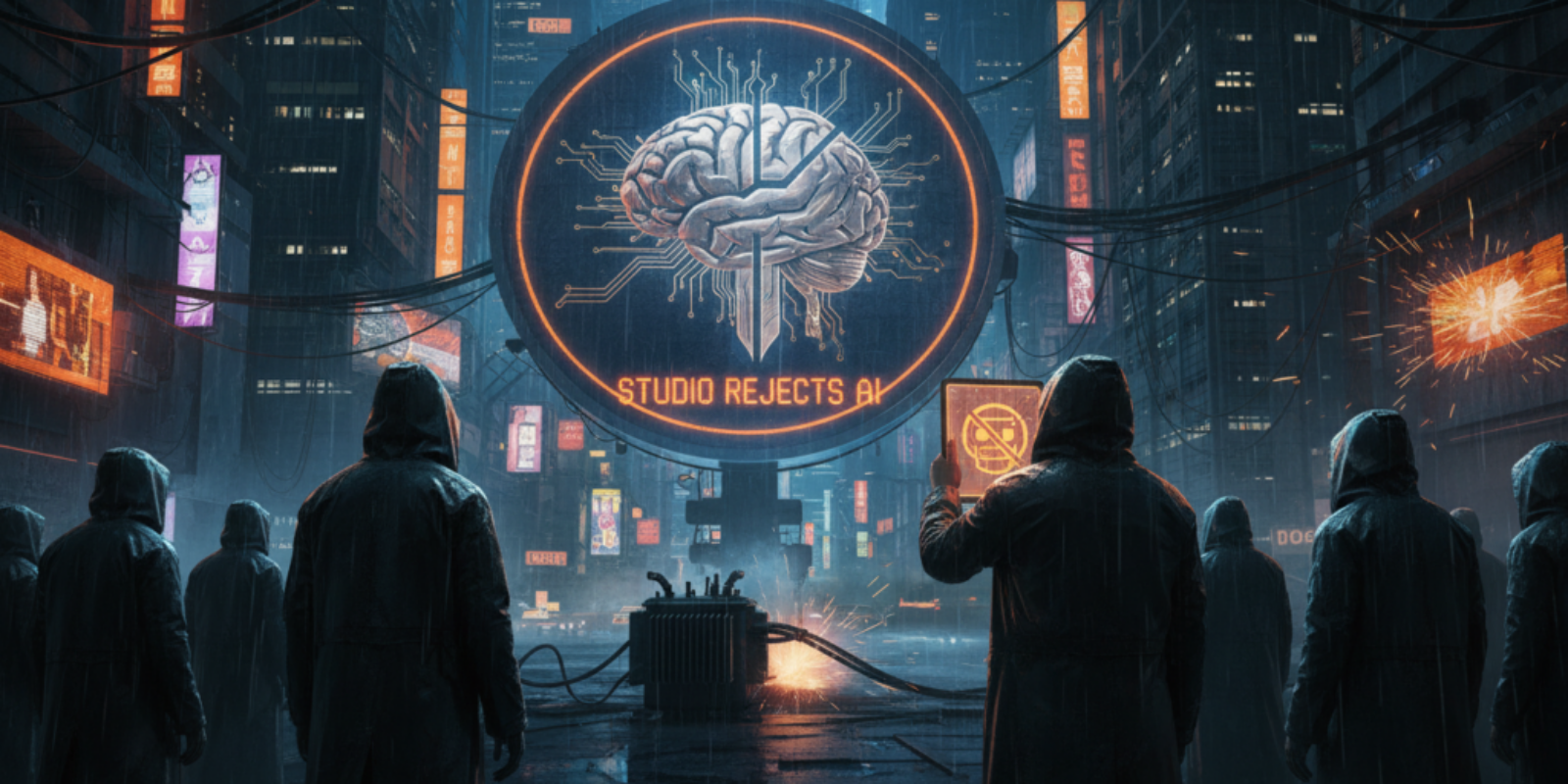
A developer checks their monitor as a dozen thumbnail sketches march by, then closes a window and calls over a human artist. There is a beat of relief in the room when someone says the line needs to be rewritten by a writer, not generated by a prompt. That tiny, everyday decision is what exploded into headlines in December 2025 and January 2026 and is now being read as a test case for how studios use generative AI. The obvious reading is that Larian Studios is defending creative labor and assuring fans the things they love will remain human made; the more consequential angle for business leaders is what this public stance forces on AI toolmakers, licensing markets, and platform transparency.
The short version of events is straightforward. In mid December 2025, a Bloomberg interview with Larian CEO Swen Vincke described the studio experimenting with generative AI for early ideation, placeholder text, and internal mock ups, and the reporting triggered a backlash from artists and players. Vincke and Larian then clarified that no AI generated art or writing will appear in the finished game Divinity and pledged not to use AI to cut staff. The original Bloomberg reporting set the frame for the debate. (archive.vn)
What Larian actually said and when you should file the quote away
The timing matters. On December 16, 2025, Bloomberg published reporting that Larian was “pushing hard” on generative AI for internal tasks but that final in game assets would be human created. That language fed a viral reaction. Larian’s follow up statements and social media posts sought to narrow the scope to ideation and prototypes. (archive.vn)
On January 10, 2026, Larian’s own writing director clarified during a Reddit AMA that no AI writes the dialogue, journals, or other scripted text in Divinity, and that AI generated placeholder text had proven worse than human drafts. That blunt assessment puts the studio in a distinct position on the question of whether AI can meaningfully replace high end narrative craft. (pcgamer.com)
Why this is not just a games story but an AI market moment
Larian’s public backtracking does more than calm fans; it changes incentives for tool providers. Firms that sell image or text generators depend on early adoption by content creators to iterate models and gather revenue. When a high profile studio says it will not accept AI generated final assets, demand shifts toward enterprise features that assist workflows rather than produce finished art. Toolmakers that expected easy adoption for concept art will now need audit trails, provenance features, and clearer licensing guarantees. That is a different product roadmap and a different pricing model. The market will not collapse, but vendors will have to become less coy about training data and provenance, which investors and general counsel will enjoy immensely. Dry aside: welcome to the thrilling world of licensing contracts, the spreadsheet action figure no one puts on their Christmas list.
How competitors and platforms are reacting
Other major publishers have openly embraced AI driven pipelines or declared AI first initiatives, which makes Larian’s stance a counterpoint rather than a full industry pivot. The Verge summarized a landscape where some companies press forward on AI driven production while others emphasize transparency and limits, creating a split market of permissive and conservative studios. For AI firms, that split is an opportunity to sell different tiers of functionality to different customers. (theverge.com)
Games platforms are part of the equation. Steam and other stores are experimenting with disclosure policies that require developers to flag AI use. If disclosure becomes standard, studios that avoid AI for final art gain a trust advantage in marketing. That could generate measurable changes in consumer choice, especially among core users who prize craftsmanship. If consumers begin preferring human labeled content, that will be a durable commercial signal for both publishers and tool vendors. GamesRadar tracked the internal debate and noted Larian’s emphasis on hiring more artists even as it experiments with machine learning in early development. (gamesradar.com)
Larian’s decision is not a vote against AI as capability; it is a demand for responsible adoption and a product market that respects provenance.
The cost calculus studios should run right now
Imagine a mid sized studio that needs 100 concept illustrations during pre production. If the studio pays freelance concept artists at an average of 300 to 500 per final illustration, the upfront cost is 30,000 to 50,000. If a studio uses an AI assisted ideation tool to cut concept time by 20 percent but still has artists rework every piece, the saving is largely in staff hours, not in head count. That is because the final creative decision making still sits with the human artist who cleans, composes, and owns the IP. For tool vendors that charge per image or per seat, the studio ends up paying both the human and the tool, not one or the other. The tidy savings narrative evaporates once quality control and iterative rewrite cycles are counted. This is a conversation about process improvement rather than labor elimination, which is a much less sexy press release but a far more realistic budget line.
What toolmakers must do to keep enterprise customers
Vendors should build provenance metadata baked into every generated asset, offer licensing assurances that cover commercial game use, and enable audit logs for teams that need to prove non infringing provenance. Without these features, studios that want to use AI only for exploration will still avoid vendor lock in, because the legal and PR risk of accidental leakage into final assets is simply too high. Think of it as selling hygiene rather than miracles. Few things motivate engineers more than a prospect of being subpoenaed, which is the kind of incentive that makes product managers weep with joy.
Risks and three open questions that still matter
One risk is regulatory fragmentation. If different markets require different disclosure or data provenance rules, tool vendors face compliance costs that erode margins. Another risk is talent flight; if artists feel pressured to adopt tools they dislike, morale and retention fall, harming productivity. Third, there is the reputational risk for studios who promise human made content and are later found to have used unlicensed training data. That one is expensive in both dollars and trust.
Open questions include whether independent audits of training datasets will become routine, whether platform disclosure policies will standardize across major storefronts, and whether artists unions will negotiate specific clauses around AI assisted workflows. Each of those outcomes would reshape where and how money flows in the sector.
A short, practical close for leaders
For companies selling AI tools, the lesson is product signal not protest: add provenance, make pricing match real workflow gains, and stop pretending the only value is output. For studios, document the role of AI in the pipeline and be precise in public language about what is proof of concept and what is ship ready. Neither side is immune to market discipline.
Key Takeaways
- Larian’s public commitment to keep final art and writing human made forces AI vendors to pivot toward provenance and workflow features.
- Using AI for ideation without using it in final assets increases vendor lock in unless provenance is guaranteed.
- Studios should run a simple cost test counting artist hours reworking AI drafts to see if tools actually save money.
- Disclosure policies on platforms will create a new commercial premium for explicitly human made content.
Frequently Asked Questions
Will this change how AI companies build image generators?
Yes. Vendors will be pushed to add provenance metadata and clearer licensing terms, because studios that reject final AI art still want exploration tools that do not create downstream legal or PR risk.
Can studios save real money by using AI for early ideation?
They can save some staff time but not necessarily payroll. Most savings are in iteration speed and lower opportunity cost, not in replacing artists, so run pilot projects with tight tracking of rework hours.
Does this mean AI firms will stop training on artists’ work?
Not immediately. The commercial pressure will increase to use licensed or studio owned datasets, but broader policy and potential litigation will ultimately shape training set norms longer term.
Should investors change how they value AI toolmakers?
Investors should reward vendors that offer enterprise features like audit logs, team controls, and licensing guarantees, because those features align with the demand signals from conservative studios.
How should a small indie studio decide whether to use these tools?
Test tools in a narrow sandbox and measure the time to usable art after revision. If an AI tool reduces concept time while preserving creative control, it can be useful. If it simply adds steps and humans do all the work anyway, skip it.
Related Coverage
Readers who followed this story might want to explore how platform disclosure policies are evolving, how unions and guilds are negotiating AI clauses, and how studio hiring patterns are changing in response to tooling. Those topics explain how policy, product, and people are converging to reshape where creative value is captured in the AI era.
SOURCES: https://archive.vn/2025.12.17-023635/https%3A/www.bloomberg.com/news/newsletters/2025-12-16/-baldur-s-gate-3-maker-promises-divinity-will-be-next-level, https://www.pcgamer.com/games/rpg/larians-head-writer-has-a-simple-answer-for-how-ai-generated-text-helps-development-it-doesnt-thanks-to-its-best-output-being-a-3-10-at-best-worse-than-his-worst-drafts/, https://www.gamesradar.com/games/rpg/baldurs-gate-3-and-divinity-director-says-hes-not-pushing-hard-for-ai-the-studio-is-actively-hiring-artists-and-i-dont-actually-think-it-accelerates-things/, https://www.forbes.com/sites/paultassi/2026/01/09/larian-says-it-wont-use-genai-art-or-writing-in-divinity-development/, https://www.theverge.com/news/845713/larian-ceo-divinity-ai-swen-vincke