
Open Standards: Why SMEs Can’t Afford to Wait
Open standards are turning the metaverse from platform lock in to a scaleable ecosystem, cutting porting costs and enabling small teams to compete across devices and worlds.
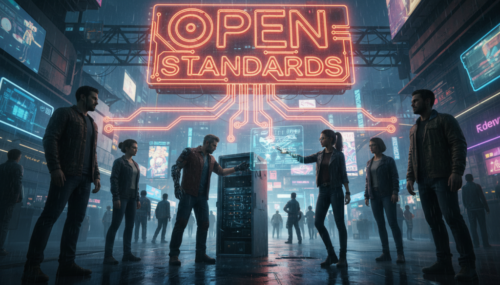
Open standards are turning the metaverse from platform lock in to a scaleable ecosystem, cutting porting costs and enabling small teams to compete across devices and worlds.

David Greene sued Google claiming NotebookLM’s AI voice copied his radio delivery, forcing the industry to confront voice licensing, costs, and the future of synthetic audio.

OpenClaw founder Peter Steinberger joins OpenAI, accelerating the shift to specialized, cooperating AI agents, and what that means for small businesses and product teams.

Google AI Overviews can surface scam numbers and bad summaries; this article explains impacts on the AI industry and safety steps for small teams today.

Hollywood pushes back on ByteDance Seedance 2.0 as studios, unions, and AI firms confront legal risk, economics, and the future of generated video.

Chappell Roan’s shout out to RuneScape’s medieval synth soundtrack reveals a low cost, high authenticity route for cyberpunk audio design and licensing changes for small studios.

ATEK Grid’s relaunch shifts the metaverse conversation from spectacle to infrastructure, offering modular tools, hosting partnerships, and practical paths for small creators to build sustainable virtual businesses.

Airbnb is embedding large language models into search, discovery and support, reshaping platform economics, host workflows, and the future of vertical AI systems.

How the trash-to-cash pipeline turns e-waste and reclaimed parts into real revenue for makers and small businesses, with ethical sourcing, numbers, and practical steps.

Conversations with AI pioneers show that conversational generative models are turning the metaverse into a commerce platform, forcing firms to budget for compute, moderation, and legal risk.
