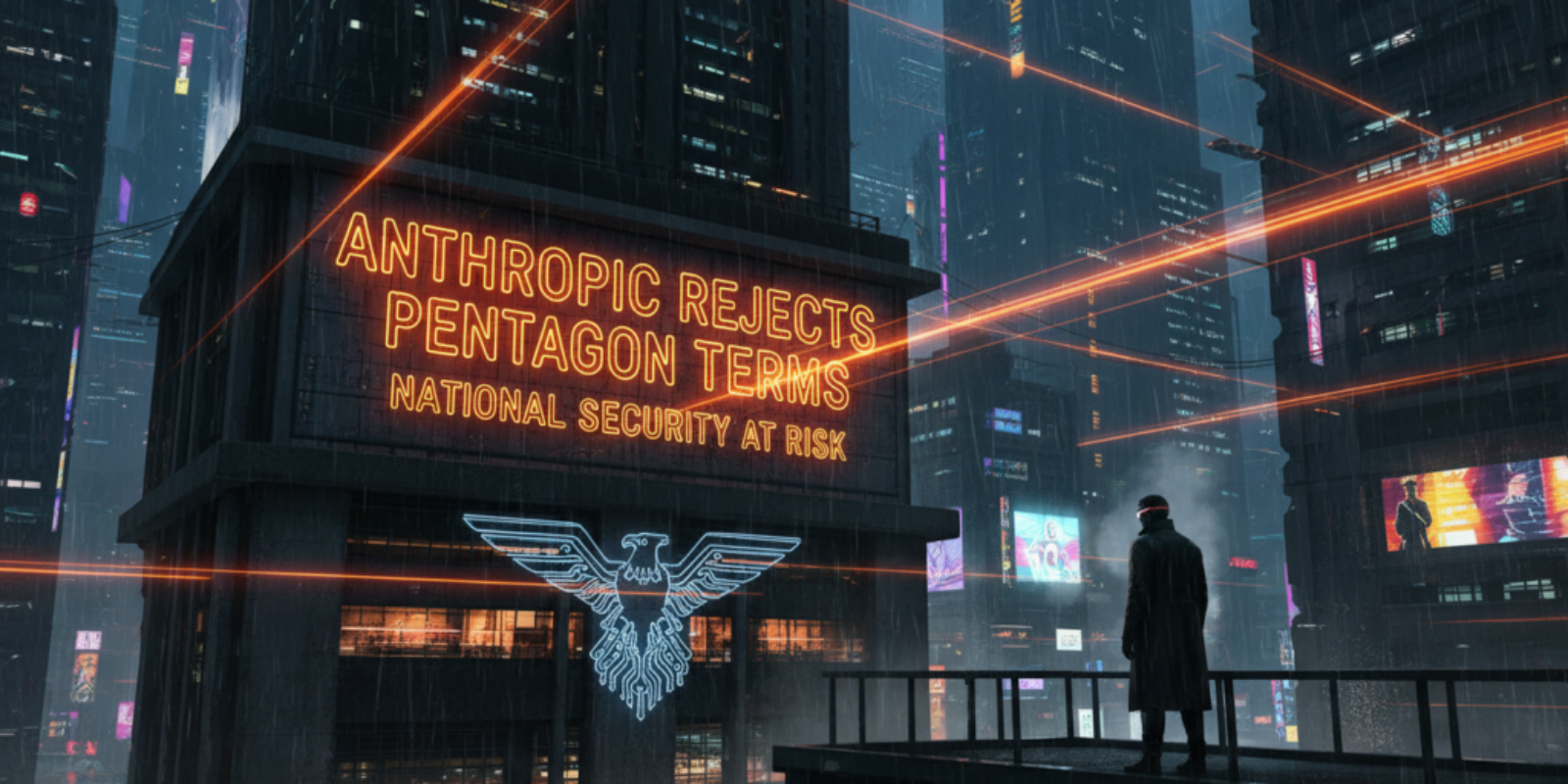
Anthropic Refuses the Pentagon’s New Terms, Standing Firm on Weapons and Surveillance Concerns
A standoff over Claude is quietly reshaping how AI companies balance national security contracts with civic safeguards.
A winter afternoon in the Pentagon felt like a negotiation theater piece where the props were code and conscience. Security officials wanted unrestricted access to a powerful language model; the CEO of a major AI lab offered a compromise and a line he said could not be crossed. The drama looked obvious: government pressure versus corporate caution.
Most observers see this as another instance of Big Tech and the military squaring off over contracts and control. The less reported consequence for the AI industry is how this fight forces product teams, investors, and procurement officers to choose whether safety-first principles are durable commercial advantages or liabilities under strategic pressure.
Why this matters to product leaders now
Anthropic’s refusal to accept the Pentagon’s revised terms marks a moment when ethical design constraints collided directly with national security imperatives. The company’s public statement framed the demand to lift guardrails as a request that would allow mass domestic surveillance and fully autonomous weapons, uses Anthropic says it cannot enable. (apnews.com)
For startups courting government customers, the stakes are immediate. Losing a single large contract can mean tens of millions of dollars in revenue and a slowing of enterprise sales momentum. For larger firms, the reputational and legal ripple effects are different; they can absorb losses but risk being seen as contributors to unwelcome uses of AI. Some companies will treat this as a signal to harden export and usage controls in their commercial offerings.
The players and the recent escalation
The Pentagon told Anthropic to allow its model to be used for all lawful purposes inside the Defense Department, framing the request as a standard operational requirement. The department warned it might cancel Anthropic’s contract or label the company a supply chain risk if the company did not comply, and officials even raised the prospect of invoking the Defense Production Act. (ft.com)
Anthropic countered that its red lines include refusing to enable mass surveillance of U.S. citizens and training models to power lethal autonomous weapons. The company emphasized that current AI systems are not safely reliable for autonomy in life and death decisions. (theguardian.com)
How this changes procurement and vendor strategy
Anthropic is the first commercial model to operate inside classified Defense networks, under an agreement the company signed last year, which made the relationship unusually sensitive. Losing that status would not just cost direct revenues but would force integrators and analytics partners to rework classified pipelines. (washingtonpost.com)
Other labs have moved differently. Reports indicate that competitors including two high-profile firms have been more willing to accept broad usage clauses, which positions them as more predictable defense partners but also exposes them to political and ethical backlash. The industry will now be judged not only on accuracy and latency but on contractual appetite for contested use cases. (theverge.com)
The cost nobody is calculating
If Anthropic is removed from classified systems, supply chain ripple effects could force contractors to spend 10 to 30 percent more to rebuild integrations with alternative models, depending on how much custom tooling was built around Claude. For a mid size defense contractor with a $50 million integration program, that is $5 million to $15 million in unplanned work and delays to mission-critical timelines. This is real cash that shapes procurement decisions and vendor lock in.
Smaller AI vendors will watch those math lessons and decide whether they can afford rigid guardrails. Some investors will conclude that a safety-first posture is legally risky in markets with national security exceptions, while others will treat principled limits as a differentiator for enterprise clients who care about governance.
The ethics and the law in collision
The Pentagon maintains it seeks only lawful uses and will not pursue mass domestic surveillance as an objective. Defense spokespeople framed the demand as necessary for operational flexibility. The legal framing matters, but law does not settle the policy question of whether lifting guardrails is morally acceptable or technically safe. Public trust in model providers is now a factor in procurement calculus, not just a marketing line. (washingtonpost.com)
There is also a governance problem where executive branch priorities can change quickly. Regulators, lawmakers, and courts may end up deciding whether a private company can be compelled to enable certain capabilities. For companies, that means building legal scenarios into product roadmaps and investor decks, not just feature roadmaps.
Practical scenarios for businesses and developers
A civilian SaaS company using a general purpose model must now quantify two risks. First, the risk of removal from government contracts if the vendor resists a government demand. Second, the risk of reputational harm if the vendor complies with contentious government use cases. For a fintech startup using a third party model to automate customer support across 100,000 monthly interactions, switching providers to avoid a supplier labeled “at risk” could add months of work, raise latency by 20 percent, and increase cloud costs by 15 percent.
Legal teams should draft contract clauses that permit emergency migration and require vendor attestations about usage constraints. Engineers must build modular model adapters so a backend can swap from one provider to another with minimal retraining and without breaking compliance workflows. Yes, this means extra engineering work, which management will call “futureproofing” and developers will call “fun work after lunch.”
The decision of one lab to choose ethics over expedience will be the moment many product roadmaps either pivot or get rewritten.
Risks and open questions that still matter
Key uncertainties persist on whether the Defense Production Act will actually be invoked, and what judicial review would look like if the government tried to compel access. There is also the technical question of whether current models can be made safe enough for autonomy in combat without unacceptable error rates. Finally, the market risk that compliance with government demands will drive a talent exodus from firms seen as enabling surveillance or autonomous killing remains unquantified.
If Anthropic is ultimately offboarded, legal challenges could take years and set precedents about when and how the government can mandate access to private AI systems. That legal timeline matters for investment horizons and for standards bodies attempting to codify safe usage.
What to watch next
Watch congressional hearings, procurement documents, and the Department of Defense’s public guidance on AI use, because those texts will define enforceable parameters. Also track vendor contract language updates in the next three to six months; changes there will reveal whether other labs adjust posture or double down on safety commitments.
The industry needs clearer norms between national security requirements and civil liberties protections. The next six months are when private governance practices will either harden into new standards or devolve into ad hoc bargaining.
A forward-looking close
This episode forces a strategic choice for AI companies: build resilience and ethical boundaries into product and contract design, or prioritize government market access at the cost of public trust. Either path will reshape product roadmaps and industry reputation for years to come.
Key Takeaways
- Anthropic publicly refused the Pentagon’s demand to lift model guardrails that would enable mass surveillance or fully autonomous weapons, escalating a high stakes dispute. (apnews.com)
- The Pentagon threatened contract cancellation, supply chain risk designation, and possible use of the Defense Production Act as leverage. (ft.com)
- Companies must factor in potential migration costs of 10 to 30 percent of integration budgets when choosing vendor lock in versus modular architectures.
- Product, legal, and procurement teams need to collaborate now on enforceable clauses that permit emergency vendor swaps and attest to permissible use cases.
Frequently Asked Questions
What happens if the Pentagon invokes the Defense Production Act against an AI company?
If invoked, the Defense Production Act could compel a company to prioritize government contracts or provide technology access, subject to legal challenges. The process would likely prompt immediate litigation and create uncertainty for commercial customers for months to years.
Can a company legally refuse a government demand to use its AI for certain purposes?
Yes, companies can refuse, but the government has statutory levers including contract termination and DPA invocation; outcomes depend on litigation and political pressure. Building contractual safeguards and public transparency are the main defensive strategies.
Should startups build modular model adapters to avoid vendor lock in?
Yes, modular adapters reduce migration time and cost and protect against sudden vendor removal from government supply chains. This approach increases upfront engineering cost but lowers catastrophic vendor-change risk.
Will this standoff slow military adoption of AI?
Possibly, because procurement cycles may slow while legal and ethical frameworks are worked out. Some programs may accelerate with vendors willing to accept broader terms, creating a split in adoption strategies.
How should investors evaluate AI firms after this dispute?
Investors should weigh revenue stability from government contracts against reputational and regulatory risk from compliance with contested uses. Due diligence should include legal scenario planning and customer dependency mapping.
Related Coverage
Readers may want to explore how model governance frameworks are evolving in standards bodies, the economics of vendor lock in for mission critical systems, and how other tech sectors handled government pressure in past decades. Coverage on The AI Era News will follow contract language shifts, congressional responses, and vendor playbooks for safeguarding civic rights.
SOURCES: https://apnews.com/article/9b28dda41bdb52b6a378fa9fc80b8fda, https://www.washingtonpost.com/technology/2026/02/24/pentagon-demands-ai-access/, https://www.ft.com/content/11d27612-d6c5-4cf7-94dd-f65603549b7f, https://www.theguardian.com/us-news/2026/feb/26/anthropic-pentagon-claude, https://www.theverge.com/news/885773/anthropic-department-of-defense-dod-pentagon-refusal-terms-hegseth-dario-amodei