Engineers showcased Robotera’s humanoid L7—nicknamed “Linghu Chong”—wielding a sword in a Chinese New Year demo. Dubbed to reference the fictional “Dugu Nine Swords,” the robot performs thrusts, slashes, kick flips and twirls in a China News video without tangling its weapon. The L7 reportedly has 55 degrees of freedom (arm: seven; hand: twelve), enabling rapid, dynamic full-body movements, though a human hand is said to have about 27 degrees of freedom. Debuted in July 2025 with Tsinghua University’s help, the L7 previously demonstrated agility through breakdancing and commercial tasks, signaling growing sophistication in Chinese robotics and sparking public fascination worldwide.
They Gave a Robot a Sword: When Engineering Flirts with Myth and Mayhem
Opening Scene: A Streetlight, Rain, and a Robot Learning to Cut
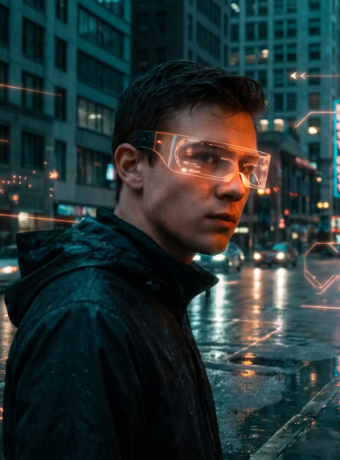
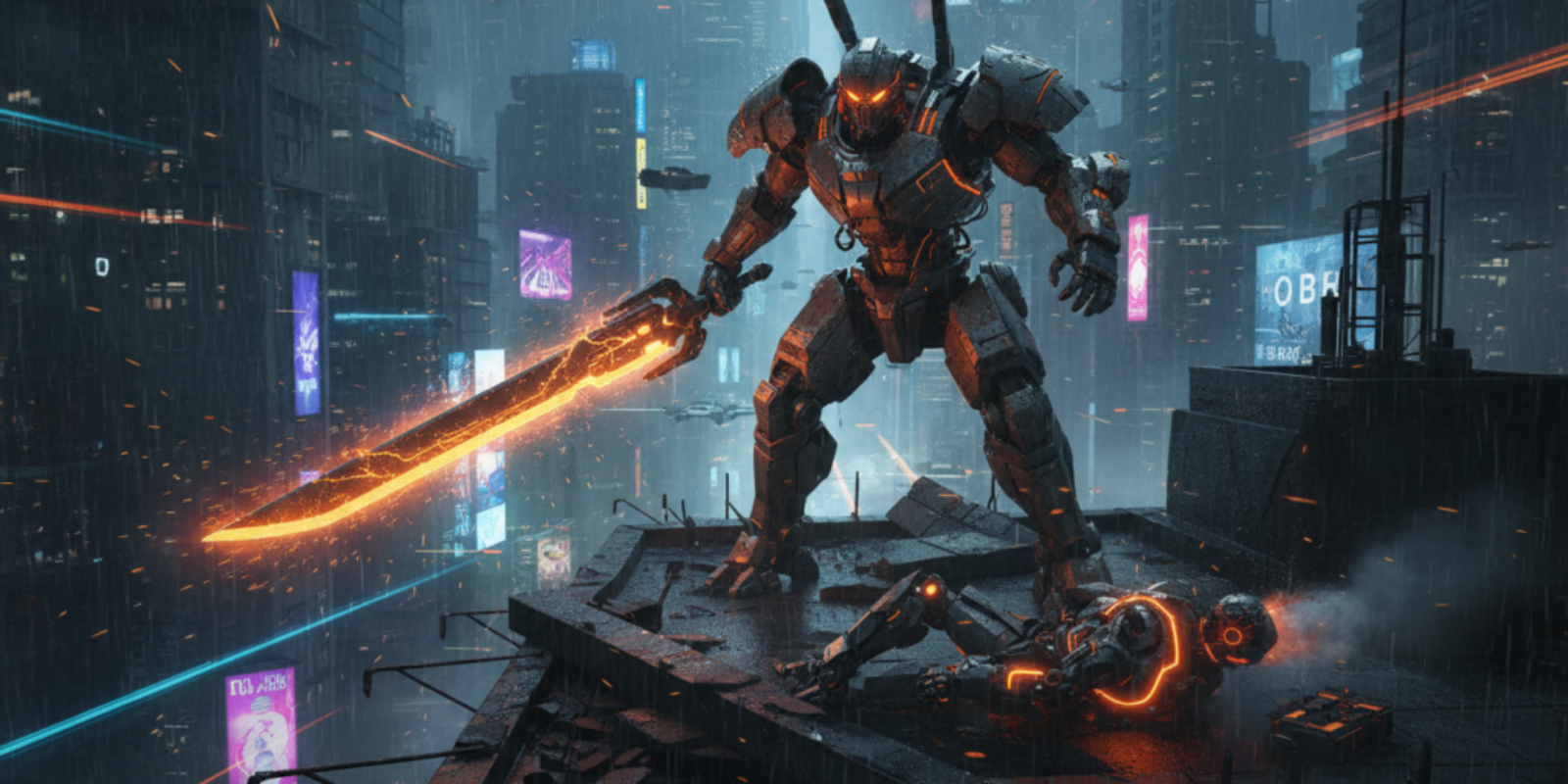
A robot holding a blade is not merely a staged promo or a viral stunt. It is the collision of ancient craft, industrial precision, and algorithms that learn to mimic human motion. The image reads like a frame stolen from a neon city in the rain, where chrome meets culture and a katana gleams under sodium light. The spectacle matters because it crystallizes a question at the intersection of technology, ethics, and myth: what happens when machines learn the intimate, violent choreography of human weapon arts.
Real Projects That Put Steel in Robot Hands
- Yaskawa Bushido Project: In 2015 engineers at Yaskawa motion captured the movements of Iaijutsu master Isao Machii and programmed an industrial arm, the MOTOMAN-MH24, to reproduce strikes, slices, and even a thousand-cut challenge with a real katana. The result was both a marketing masterstroke and a technical demonstration of precision, repeatability, and the limits of programmed agility. (popularmechanics.com)
- Stanford JediBot: In 2011 a Stanford team combined a KUKA arm, Microsoft Kinect sensing, and Reflexxes real time motion libraries to create a lightsaber duelist that could react to a human opponent in under a millisecond. The project illustrated how off the shelf sensors plus clever control software let robots engage in dynamic, physical interaction rather than only preprogrammed ballet. (wired.com)
- Community and academic writeups chronicling these demos place them as technical proofs of concept and cultural signals rather than battlefield blueprints. Robotics journalists noted the careful engineering that went into reproducing human technique on an industrial actuator and pointed out the theatrical framing of these experiments. (robohub.org)
How the Mechanics Work: A Brief Technical Cut
- Motion capture and 3D analysis record human kinematics and blade trajectories. Programs translate those tracks into joint-space commands for a robot arm. (yaskawa-global.com)
- High‑frequency control libraries like Reflexxes enable trajectory replanning on the fly so a robot can update movement targets in less than a millisecond, which matters when the opponent is a human waving foam at supersonic dignity. (wired.com)
- The tradeoffs are clear: industrial robots excel at repeatability and force control, but generalizing from recorded motions to unpredictable environments remains a hard robotics problem. Sensors and safety systems are non negotiable when metal meets human. (wired.com)
Why Swords? The Cultural and Symbolic Weight
Swords are not mere weapons. They are choreography, ritual, and identity wrapped in metal. Giving a robot a sword is a way to test precision, deliver spectacle, and provoke a story. The choice of a blade, whether foam or forged steel, turns control algorithms into dance steps and engineering demonstrations into modern myths. The sword is cinematic, so expect the footage to be edited with slow motion, swelling music, and the silent suggestion that the future might prefer a katana to a handshake.
Ethics, Regulation, and the Uneasy Edge
- Autonomous weapons debate: Civil society and legal experts warn that delegating lethal force to machines raises grave humanitarian and human rights concerns. Campaigns and reports advocate for meaningful human control and legal safeguards to prevent the delegation of life and death to algorithms. (hrw.org)
- Global policy pressure: International bodies and human rights organizations have called for regulation of lethal autonomous weapons systems, arguing that machines lack the moral reasoning and accountability required for use of force decisions. The discussion has accelerated into formal diplomatic fora, with calls for binding instruments to curb fully autonomous lethality. (ungeneva.org)
- Practical safety: Demonstrations that pair robots with real swords are typically tightly constrained with human oversight, mechanical limits, and extensive testing. The spectacle should not be mistaken for an unchecked step toward autonomous armed systems. Still, the optics feed a broader public conversation about where lines will be drawn. (yaskawa-global.com)
What Engineers and Storytellers seem to Agree On
- Robotics demos with blades showcase precision, not intent. The technology is impressive; the context is decisive. (popularmechanics.com)
- Sensors, software, and legal frameworks must evolve together. Engineering marvels without governance create ethical debt. (hrw.org)
- Public-facing projects shape cultural imagination. A robot slicing a tomato becomes a viral allegory that feeds films, fiction, and policy debates. (robohub.org)
A Cyberpunk Frame: Blade Runner, Bots, and Neon Warnings
Blade Runner set a high watermark for what neon noir can teach about technology. The cityscapes and replicant dilemmas remain a useful lens: machines that mimic human skill force a reckoning with identity, responsibility, and empathy. When a robot learns to wield a sword it is not simply learning a technique; it is stepping into archetypal roles that society must narrate and regulate. That is the noir plot twist no one saw coming at the lab meeting: engineering can give the world wonder and risk in the same git commit.
Quick Facts for the Reader Who Likes Dates and Clips
- Yaskawa released the Bushido Project video and related materials during its centennial media efforts in 2015, featuring the MOTOMAN-MH24 performing cuts against Isao Machii. (yaskawa-global.com)
- Stanford’s JediBot demonstrations and documentation appeared around 2011 and emphasized Kinect sensing and Reflexxes motion control for reactive arm behavior. (wired.com)
- Robotic demos of swordplay are widely covered by robotics outlets and tech press as engineering showcases that double as cultural provocation. (robohub.org)
Closing Frame: A City That Is Both Mirror and Warning
The image of a robot with a sword will remain a favorite shorthand for sci fi and anxiety. It is cinematic and instructive, an emblem of capability and a prompt for policy. The tools to make machines move like masters exist and are growing more accessible. The conversation around control, purpose, and oversight will shape whether that capability becomes an act of craftsmanship or an instrument of harm. The neon in the puddles will reflect both the blade and the hand that programmed the swing. It may be stylish to picture a robot drawing a sword like cinema, but the hard part will always be remembering who, in the code and in the boardroom, kept a human in the loop. (yaskawa-global.com)
Sources
- Wired: Stanford’s lightsaber dueling robot and technical details on Reflexxes motion libraries. (wired.com)
- Popular Mechanics: Coverage of Yaskawa’s Motoman-MH24 sword demonstrations. (popularmechanics.com)
- Yaskawa Electric Corporation: Official Bushido Project page and commemorative materials about the MOTOMAN-MH24 demonstrations. (yaskawa-global.com)
- Robohub: Robotics community analysis of the Yaskawa demonstrations and their technical context. (robohub.org)
- Human Rights Watch: Reports and positions on lethal autonomous weapons systems and the need for meaningful human control. (hrw.org)