El Mundo Glitch | Trailer Rewrites One Corner of Cyberpunk’s Playbook
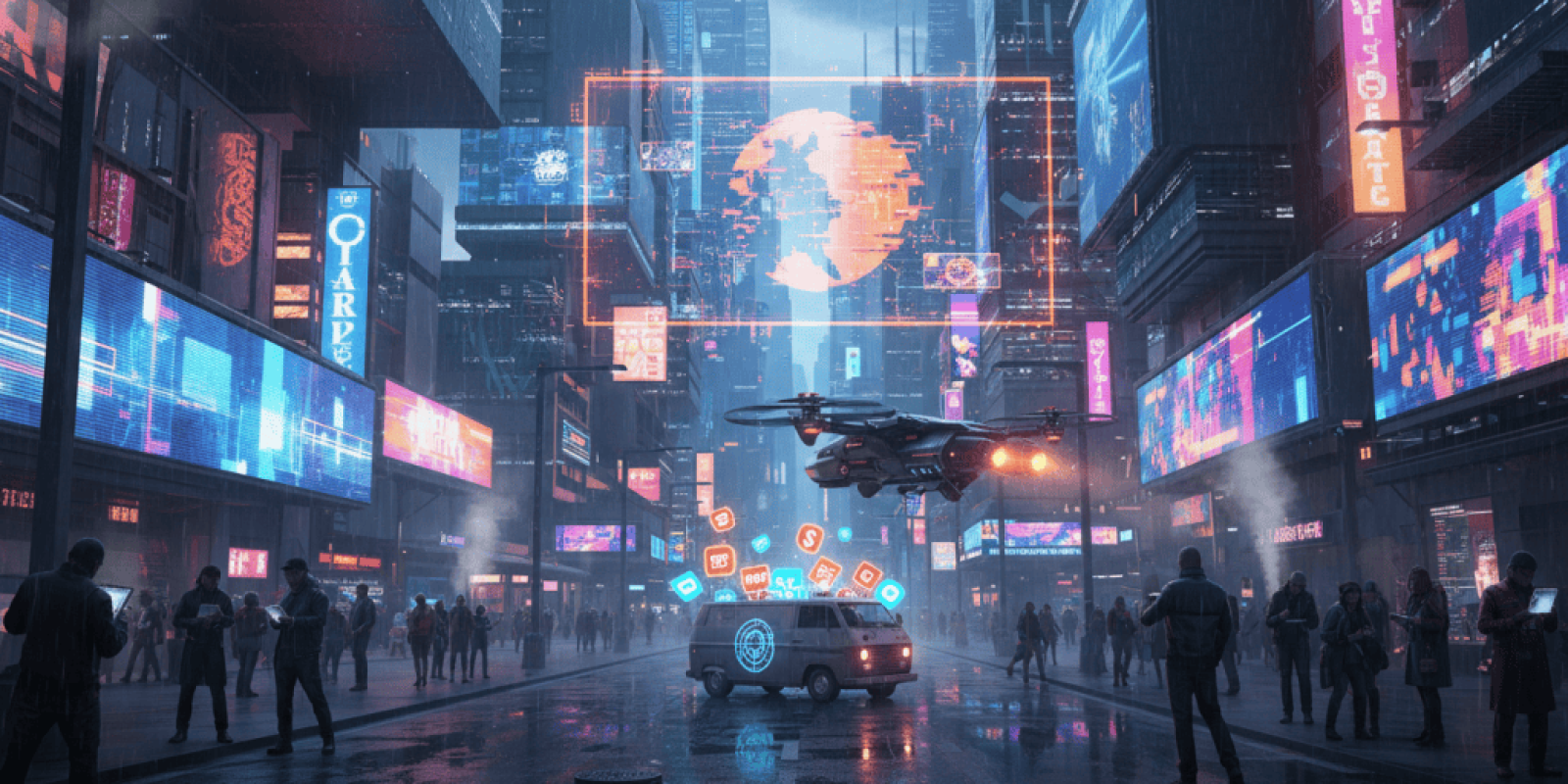
A neon-lit bus stop, rain that refracts like a corrupted HDR filter, and three hundred strangers pausing a swipe-scroll to watch a thirty-second thing that feels both old and brand new.
The obvious read is simple: a fresh indie trailer lands, a creator flirts with glitch aesthetics, and online hobbyists cheer. That is true in the literal sense. What matters more to studios, festivals, and boutique studios is the less obvious consequence an indie trailer like El Mundo Glitch has for how cyberpunk gets produced, packaged, and monetized in 2026.
What appears as a style exercise is actually a market signal. The trailer’s look and distribution choices suggest a tighter coupling between glitch aesthetics and transmedia marketing that can be leveraged by small teams to punch above their weight. The initial source for the clip comes from the creator’s community post, where the project’s author frames El Mundo Glitch as a follow-up to an earlier piece called ZER0 and describes the world as “pixelpunk,” a personal riff on cyberpunk aesthetics. (reddit.com)
Why small cyberpunk experiments suddenly look like a sound business move
Cyberpunk has moved from niche cult property to mainstream media strategy because franchises learned how to stretch a world across formats. The Cyberpunk 2077 revival teaches that cross-platform narrative patches can rescue and amplify a property when paired with anime, short films, or auteur-driven shorts. That media mix model is precisely why a trailer that reads like a compact world pitch is no longer vanity; it is a low-cost transmedia entry point. (ewadirect.com)
How glitch aesthetics give indie work a credibility shortcut
Glitch has an academic backbone and a history as a deliberate aesthetic, not just an accident on a rendering timeline. Rosa Menkman’s Glitch Studies Manifesto framed glitch as a productive rupture in media that exposes process and politics, and filmmakers are borrowing that genealogy to make trailers feel like critical artifacts rather than ads. When a thirty-second clip announces a world by breaking it, audiences infer depth and intent quickly, which is the currency of discovery in crowded feeds. (old.rhizome.org)
The trailer itself: form that signals function
El Mundo Glitch’s trailer leans on saturated chromatic aberration, staccato cuts keyed to glitch sound design, and short text cards that act like lore breadcrumbs. Those elements do three jobs at once: establish tone, show technical competence, and create assets that easily fragment into reels, shorts, and story posts. In short, the trailer is a content engine disguised as a mood piece. Production-wise that is efficient and slightly smug, the way only a project that knows it is cheaper than a feature can afford to be.
The trailer does not ask permission from the mainstream; it folds the mainstream into its error message.
What this means for the cyberpunk industry now
Studios and IP holders will watch trailers like El Mundo Glitch to spot talent and IP ripe for expansion. Short films and trailers are audition tapes for transmedia investments because they demonstrate visual voice, tone control, and an audience ability to engage in under a minute. Expect festival programmers to treat high-quality trailer drops as submissions’ calling cards, and distributors to use them as screening filters. This is a practical pivot away from the old model where only features and games got meetings.
Practical implications for businesses with 5 to 50 employees
A boutique studio of 5 to 10 people can reproduce an El Mundo Glitch style trailer with modest budget and outsized return. Example math: allocate 2 to 3 weeks of post work, one senior compositor at $7000 to $10,000 total, two junior artists at $3000 each for three weeks, and music licensing or original composition for $2,000, bringing a realistic trailer cost to roughly $15,000 to $20,000. If that trailer drives 10,000 targeted views and a 1.5 percent conversion to a mailing list or festival screener sign-up, that is 150 qualified leads; a single $5,000 micro-distribution deal or a $10,000 private commission covers the spend and leaves margin. A slightly larger studio of 20 to 50 people can scale that pipeline into weekly asset drops that feed platform algorithms and B2B pitches, replacing expensive festival-only strategies with continuous market testing.
Why now is an inflection point for small studios
Generative tools are useful but not decisive. AI can accelerate asset creation, but integrating generative output into a coherent world voice remains a human craft. That gap is where small teams win: faster iteration without the bureaucratic drag of large studios. Wired’s recent reporting on AI in game development underscores that automation helps with scale but does not replace narrative authoring and tonal mastery that a trailer must deliver. (wired.com)
The cost nobody is calculating for failing to adapt
If a small studio continues to think of trailers as optional promotional afterthoughts, the opportunity cost is twofold: missed transmedia partnerships and reduced discoverability on algorithmic platforms. Festivals are crowded, attention spans are shorter, and distributors increasingly sample content online before accepting screeners. The real penalty is not a lost screening slot; it is a missed chance to be seen by the single curator who will greenlight a series or commission.
Risks and open questions that stress-test the claim
Aesthetic fatigue is real: glitch as a look can become cliché quickly if it becomes a formula. There is also a legal and rights risk when glitch effects remix copyrighted material for texture rather than narrative purpose. Finally, the conversion math above depends on audience targeting; poor distribution strategy turns a viral-looking trailer into a glorified demo reel. These variables mean the trailer must be part of a strategy, not the entire strategy.
A short checklist for teams about to make an El Mundo Glitch-style trailer
Invest in a composer who understands rhythmic glitch; plan assets for social formats before final export; and map a distribution funnel that converts views to press, festivals, and buyer conversations. The trailer should be the tip of a content iceberg, not a floating ice cube.
Forward-looking close with a business-first insight
El Mundo Glitch is a symptom and a lever: it signals a return to texture-rich, low-cost worldbuilding that small teams can monetize if they treat a trailer as a product with measurable inputs and outputs.
Key Takeaways
- A high-quality glitch-forward trailer can function as a transmedia pitch that attracts festivals, buyers, and collaborators at a fraction of feature costs.
- The aesthetic authority of glitch is supported by established theory, which strengthens a trailer’s perceived cultural value.
- Small studios should budget $15,000 to $20,000 for a professional trailer and model conversions from views to industry leads.
- AI speeds asset creation but does not replace voice, which is still the primary commercial differentiator.
Frequently Asked Questions
How much should a 10-person studio budget to produce a cyberpunk trailer?
A realistic budget for a polished, festival-ready trailer is $15,000 to $20,000, covering senior compositing, junior support, and original music. That number assumes efficient shooting or preexisting assets and prioritizes post-production quality.
Can a trailer like El Mundo Glitch get a short film into festivals on its own?
A strong trailer increases attention from programmers but rarely replaces a full screener. Use the trailer as a calling card to secure press, private screener passes, or curator meetings, not as the sole festival submission.
Is glitch art legally risky if it samples other media?
Sampling without clearance creates copyright risk; intentional glitching of original footage is safe, but remixing copyrighted clips for texture can require licensing or fair use analysis. Legal review is advised for any clip under 25 seconds that includes recognizable copyrighted material.
Will AI make trailer production cheaper and obsolete human roles?
AI lowers some production costs but increases the value of human roles that shape voice and narrative. Expect AI to be a force multiplier rather than a full replacement for creative leads.
How should a small studio measure trailer success?
Track view-to-signup conversion, press pick-up, festival invitations, and inbound buyer queries. A healthy conversion rate for targeted campaigns is typically 1.0 to 2.0 percent for engaged actions like sign-ups.
Related Coverage
Readers who liked this piece might explore coverage of transmedia marketing strategies in games, the renewed economics of indie VFX houses, and the ethics of generative AI in worldbuilding. Each topic reveals practical opportunities for studios trying to convert style into sustainable revenue on a shoestring.
SOURCES: https://www.reddit.com/r/Cyberpunk/comments/1t7p0sl/el_mundo_glitch/ https://old.rhizome.org/editorial/2011/jul/28/glitch-studies-manifesto-rosa-menkman/ https://www.wired.com/story/generative-ai-video-game-development/ https://c-istudios.com/narrative/ https://www.ewadirect.com/proceedings/chr/article/view/7808