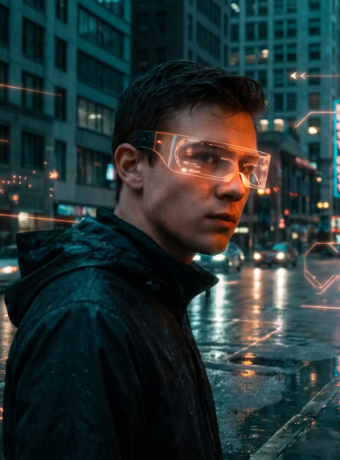
Man Breathing From a Plant on the Train and What It Means for Cyberpunk Culture and Industry
A commuter with a potted rubber plant pressed to his face, an image that reads like a still from a low-budget dystopian film, has become a small cultural provocation with outsized implications.
He looks like someone who misread a design brief and delivered the moodboard instead. Most observers shrugged and called it a stunt about wellness or a pandemic-era carryover; that is the obvious read and the one that lands easily on social feeds. The underreported angle is how that simple scene crystallizes a converging market: live biomatter as wearable spectacle and the commercial pressures that will turn novelty into design briefs for fashion houses, experience firms, and small tech studios.
Why the clip caught fire and what people said first
A clip and thread of the moment circulated rapidly on social platforms and community forums, sparking everything from jokes to real debate about feasibility and intent. The post landed on Reddit where readers split between calling it performance art and pointing out the biological limits of plants as oxygen sources. (reddit.com)
This is not new for artists, but it is for brands
Plant-centered performances have been part of experimental art circuits for several years, where artists use plant metabolism as a conceptual tool to reframe breath and agency. Projects staged at events and festivals have explicitly made plants a partner in live work, translating stomatal cycles into visuals and sound. Those practices provide a ready language that brands can appropriate and monetise. (isea2023.ensad.fr)
Where designers and institutions have already explored breath as public art
Public commissions have treated breath as civic infrastructure, turning the act of breathing into an architectural gesture to soothe or provoke urban audiences. Large installations that invite collective inhalation or that stage regulated, mediated air have shown that breath can be curated. For experience firms, that means a playbook exists for turning biological spectacle into ticketed attendance. (vanalen.org)
When sound artists used plants to make people listen differently
Composers and sound artists have been patching plant signals into live performance to ask whether nonhuman actors can carry narrative weight. Those works have long challenged audiences to accept plants as active participants rather than props. The aesthetic vocabulary is now clickable and cheap to replicate on social platforms. (newmusicusa.org)
The plant wore the mask and the city forgot which of them was alive first.
Why the science kills the survivalist fantasy but fuels the aesthetic
Plants create oxygen, yes, and mature trees are sometimes described as producing enough oxygen to support two people for a year. That fact makes for neat headlines but also highlights the mismatch between symbolic gestures and physiological reality. A single desktop plant cannot meaningfully replace ventilation or medical-grade filtration in crowded transit environments. The science undercuts do-it-yourself biohacking claims while leaving the visual language intact for designers. (pdfcoffee.com)
Where cyberpunk culture meets commerce
Cyberpunk aesthetics have always loved bricolage made from living and manufactured parts. The plant-on-face moment is a tidy image for a subgenre that fetishises hybrid bodies and urban scarcity. That visual can be licensed: fashion houses want it on lookbooks, experiential ad shops want it on rooftops, and small studios will prototype “bio-accessories” for pop culture launches. Expect collaborations between avant garde designers and boutique biotech studios that sell ambiance, not atmospheric science.
Practical implications for SMEs with 5 to 50 employees
A boutique retail store with 12 employees considering a plant-based wellness program should run the numbers. Buying 12 medium potted plants at 40 dollars each is a 480 dollar upfront cost and roughly 60 dollars per year for replacement and light. An industrial HEPA air purifier that meaningfully improves shared air can cost 400 to 1,200 dollars with filters at 80 to 200 dollars annually. If the goal is branding and social content, plants buy photo ops; if the goal is air quality, the math favors engineered filtration. A small event production firm planning a ticketed live piece that uses plants as performers should budget about 3,000 to 6,000 dollars to design safe live systems, including horticultural care and permit costs, versus a social-media-only stunt that can be executed for under 500 dollars but risks regulatory and reputational cost if framed as health advice.
The cost nobody is calculating
Selling “symbiosis” as a product externalises care and hides recurring costs. Plants need light, irrigation, pest management, and often expert handling once they leave studio conditions. Brands that pitch living accessories as low-maintenance will be surprised when horticultural logistics become an operating expense. Small teams that want the look should budget conservatively for maintenance or face awkward Instagram apologies when a viral prop dies on day four.
Risks and regulatory questions that matter to buyers
Claims that a wearable plant confers meaningful air quality benefits invite liability. Transit authorities and public health regulators could push back if commercial projects imply medical or environmental performance they do not deliver. There is also reputational risk; a brand that appropriates ecological urgency for aesthetic without measurable benefit will be called out by communities. Finally, allergy and hygiene concerns are real in confined spaces and should be considered in procurement and permitting.
How competitors will position this to clients
Expect design consultancies to offer three tiers of service: visual-only plant couture for shoots, experiential installations with professional plant care, and full-scale engineered integrations that combine living matter with vetted filtration and sensors. The middle tier is the sweet spot for many SMEs because it balances spectacle with operational reliability. Think less mad scientist and more boutique greenhouse meets art director.
Forward-looking close
The viral clip is less about breathing and more about language; it signals a market where living matter becomes a texture brands can buy, but the real value will accrue to firms that translate that texture into responsibly engineered experiences.
Key Takeaways
- A viral plant-on-face moment crystallises an opportunity where aesthetics meet small-scale commerce.
- Artistic precedents make the image culturally legible but not scientifically sufficient to claim air quality benefits.
- Small businesses should compare the real costs of horticultural maintenance to engineered air solutions before committing.
- Regulatory, allergy, and reputational risks are real and often mispriced in early-stage experiential projects.
Frequently Asked Questions
Will putting plants in my small office improve air enough to skip an air purifier?
No. Plants provide symbolic and minor air benefits but cannot replace mechanical filtration in enclosed spaces. Investing in certified HEPA or MERV systems is the effective route for air quality.
Can a wearable plant become a viable product for retail or events?
Yes for aesthetic products and short-term experiential use, but true long-term wearables require horticultural systems, light, and maintenance that increase operating costs. Treat them as staged props unless you plan for ongoing care.
How should a 10 person creative studio budget for an exhibition that uses live plants?
Allocate 2,000 to 6,000 dollars for design, plant procurement, lighting rentals, horticultural consultation, and permits. If plants are central to the claim of the piece, add contingency for maintenance and replacement.
Are there legal or health rules to consider before staging plant-based performance in public transit?
Yes. Transit authorities and public health bodies regulate actions in public transport and may prohibit activities that imply medical benefit or create hygiene issues. Always seek permits and legal counsel.
Who is making serious art with plants today that brands might emulate?
Look to interdisciplinary artists and festival commissions that have long used plant metabolism as material rather than mere prop; collaboration models from those projects are the least risky template for brands.
Related Coverage
Readers who liked this should explore stories about bio-integrated fashion, the ethics of living installations, and low-cost urban air quality technology. Coverage of festival art that uses biosensors and of small firms engineering plant-lighting for retail will clarify how aesthetics get operationalised.
SOURCES: https://www.reddit.com/r/Cyberpunk/comments/1t3nd36/man_breathing_from_a_plant_on_the_train/ , https://isea2023.ensad.fr/ , https://www.vanalen.org/project_tax/breathing-pavilion/ , https://newmusicusa.org/nmbx/tag/performance-art/ , https://pdfcoffee.com/encyclopedia-of-forest-sciences-pdf-free.html