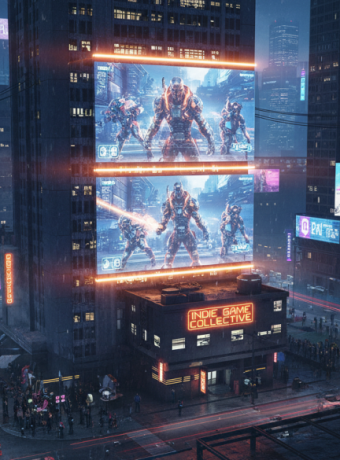
Barghest Stout Arrives in the Neon Bar: What a New English Stout Means for Cyberpunk Spaces
A stout in a city that sells dreams and data; a local cask that rewires the way people gather offline.
A rain-slicked street glows with reflected signage while a handful of regulars lean over polished metal stools, each nursing a dark pint named after a spectral hound from the moors. The beer is ordinary by craft standards and, in that ordinariness, signals something less ordinary for nights that used to be all neon and network latency.
On the surface this is a simple product launch and a new SKU for pub taps. The overlooked point is that a widely distributed, thematically resonant beer arriving in local bars can act as infrastructure for real world cyberpunk culture, giving organizers, tech bars, and small venues a predictable supply chain and a physical motif to build events and experiences around. Much of the baseline product information comes from brewery announcements and retail listings, so the factual foundation below leans on those materials. (ossett-brewery.co.uk)
Why a beer label should matter to a community built around aesthetic and systems
The mainstream reading sees brand names and artwork as marketing flourishes. For cyberpunk organizers, themed venues, and immersive designers the same assets are practical building blocks: imagery, a story hook, a consistent pour. A stout called Barghest maps neatly onto noir tech imagery without asking bars to retrofit their interiors, which means faster, cheaper activations and pop up nights that feel coherent rather than tacky.
The competitive field: craft breweries and the themed bar economy
Craft breweries have spent the last decade partnering with venues and licensees to push taste-led experimentation into on-premise spaces. That has created competitors ranging from national indie brands to local taprooms fighting for themed nights and late hours. Cyberpunk venues now compete for the same limited real estate in bar schedules and for the attention of a niche but high-engagement audience.
What exactly launched and when, in plain numbers
Ossett Brewery added Barghest, a 4.3 percent ABV stout, to its core line in May 2025, positioning the beer as a smooth dark pour with coffee, chocolate and vanilla notes. The brewery framed the release as part of a brand refresh that included product tweaks and renaming, so this was not a one-off seasonal novelty. (ossett-brewery.co.uk)
The beer appears in trade and retail catalogs as a 9 gallon cask for on-premise service and also in packaged cases for retail sale. The cask format makes it straightforward for pubs to order kegs for themed nights, while the case economics matter for merch tables and sell-through at events. (catalog.lwc.co.uk)
How fan data and trademarks tell a deeper story
User check in data and ratings show steady interest among beer communities, which means the name and flavor profile are resonating beyond the brewery’s hometown. That grassroots signal matters because cyberpunk nights need repeatable, predictable draws rather than one-off curiosities. (untappd.com)
Ossett filed a trademark for the Barghest name in spring 2025, a step that signals the company expects the brand to travel beyond local taps into broader retail and licensing opportunities. A trademark filing shapes the legal and commercial runway for collaborations with venues, festival organizers, and thematic IP deals. (ipo.gov.uk)
A locally poured stout can be a festival’s subtitle, a venue’s motif, and a community’s shared ritual, all for less effort than a full set design.
How a 5 to 50 person business can use Barghest to build revenue with real math
A small bar can use both packaged cases and a cask to run a themed night and measure impact quickly. A 12 by 500 milliliter case priced at retail to trade equates to roughly three pounds fifty pence per bottle at retail purchase and is easy to stock behind the bar. If a venue runs a Barghest night and prices a 500 milliliter pour at six pounds, the margin per bottle on sold retail is roughly two pounds fifty pence. That margin compounds when bottles are sold with entry or a small cover for themed programming. (ossett-brewery.co.uk)
If a pub secures a 9 gallon cask for an event it can serve about 72 pints from a single cask, which simplifies forecasting for customer throughput and staffing needs. Running a weekly Barghest night and selling 40 pints at eight pounds a pint yields a gross revenue of 320 pounds for that night before labor and other costs. Use those numbers to compare a themed night against a standard music night or quiz for short term ROI. (catalog.lwc.co.uk)
The cost nobody is calculating: labor, ambience, and authenticity
Pour economics are simple enough. The harder math is staff training, playlist licensing, and the small investments that make a night feel authentic rather than staged. A themed night that underdelivers on ambience will lose repeat customers faster than a beer runs out; authenticity requires a script, props, and maybe a projection rig, which creates fixed costs that must be amortized over events.
Practical creative tie ins that do not break a small budget
Bars can pair the stout with low cost touchpoints like poster art, a printed napkin story about the Barghest myth, or a curated playlist that nods to synthwave and cyber noir. These micro investments scale: a 30 pound poster run, a 50 pound playlist licensing night, and targeted social ads add up but still cost less than a single lighting rig hire. Small venues that launch consistent series build a habitual audience, which advertisers and sponsors prefer.
Risks and open questions that stress test the claim
A beer is not a substitute for space. If a venue lacks community programming chops the beer will not conjure culture. Trademark filings protect brand owners but can create friction for local artists who want to riff on the myth without a licensing conversation. Supply chain is another variable; a beer that disappears because of production limits creates frustration, not fandom.
What to watch next if this trend sticks
Track availability across wholesale channels, uptake among independent venues, and any early collaborations between breweries and themed bar operators. If bars begin to order Barghest for regular nights and festivals pick it as a signature pour, the beer will have moved from prop to platform in under a year.
Forward looking close with practical insight
A single stout is not a revolution, but predictable, thematically aligned beverages create reliable anchors for real world gatherings; investing in the small, repeatable details wins more nights than the flashiest launch.
Key Takeaways
- Barghest is a 4.3 percent stout designed for both cask and bottle distribution, which makes it useful for pub nights and retail promotions. (ossett-brewery.co.uk)
- Trademark activity suggests the brewery is preparing the name for wider licensing and merchandising opportunities. (ipo.gov.uk)
- A 12 by 500 milliliter case can be an affordable stock item for a small venue to sell at a meaningful margin. (ossett-brewery.co.uk)
- For cyberpunk-focused venues, the beer is an inexpensive infrastructure piece that supports regular programming and community building. (untappd.com)
Frequently Asked Questions
How much will it cost my small bar to run a Barghest themed night?
Cost depends on format. Buying packaged cases keeps logistics simple and requires only a small marketing spend, while a cask requires cellaring and tapping but serves many more pints per unit.
Can a pop up or market stall sell Barghest without a pub tie in?
Retail sales of packaged Barghest are typical, but on-premise draught service requires the brewery or a licensed wholesaler to supply a cask or keg, and local licensing must be observed.
Will this beer attract more tech or cyberpunk customers to my venue?
A single product helps as a signaling device but will not replace programming. Use the beer as a consistent theme element while delivering music, visuals, or talks that match the audience’s interests.
Are there licensing issues if local artists want to riff on the Barghest name?
Trademark filings mean commercial uses should be cleared with the brand owner. Noncommercial fan art is less likely to be challenged but always check terms if something is monetized.
How do small teams measure success for a themed beer night?
Track straightforward metrics like covers, pints sold, and return rate for attendees over 4 to 6 events. Compare net revenue after direct costs to alternate uses of the same night slot.
Related Coverage
Readers who run small venues might also want to explore how beverage partnerships scale festival programming and how themed nights perform compared to live music or podcast tapings on weeknight calendars. Coverage on supply chain for on-premise drinks and case studies of bar programming that converted niche audiences into steady patrons will be helpful.
SOURCES: https://ossett-brewery.co.uk/blogs/news/ossett-brewery-refreshes-its-core-brand-for-a-new-era https://catalog.lwc.co.uk/ossett-brewery-barghest-stout-9gal-cask/ https://untappd.com/b/ossett-brewery-barghest/6264873 https://www.ipo.gov.uk/t-tmj.htm/t-tmj/tm-journals/2025-020/UK00004194457.html https://ossett-brewery.co.uk/collections