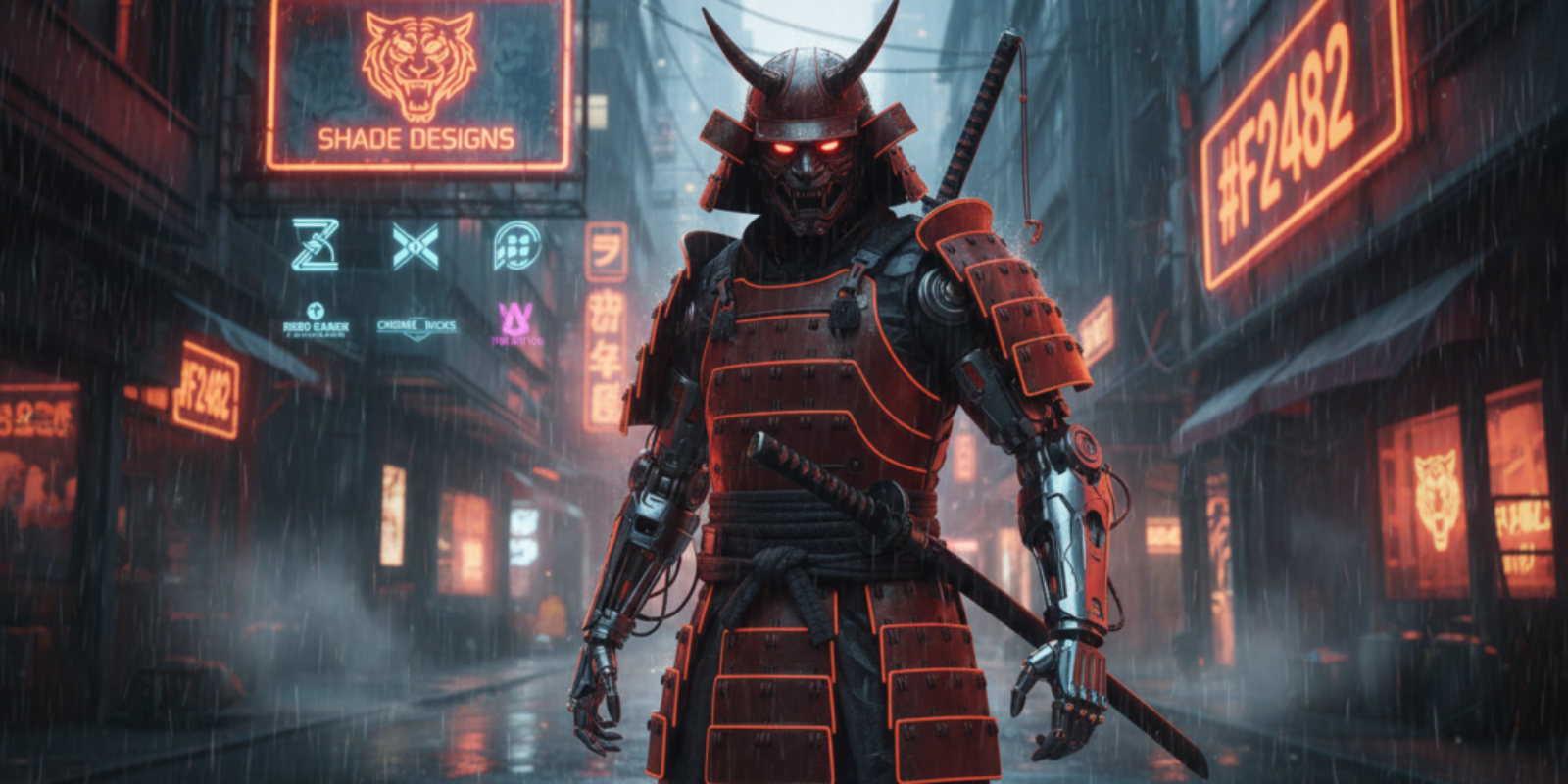
Shade: The augmented samurai whose arm cannons are changing cyberpunk culture and the creative economy
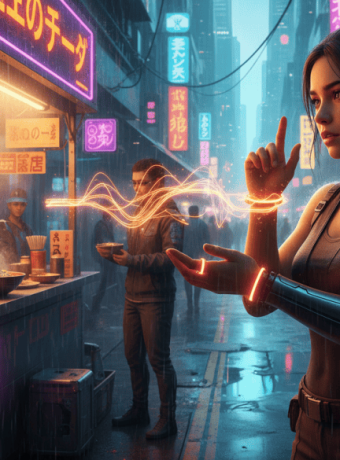
An arm bright enough to be a billboard and quiet enough to be a manifesto. Shade walks a crowded subway, wrist cannon humming like a rent check about to bounce.
A single panel of Shade — black lacquer armor, a surgical scar around the wrist, a laser muzzle nested where veins should be — does more than decorate a web novel. It telegraphs a commercial opportunity and a regulatory headache in the same photograph. The obvious reading is aesthetic: another cool cyber samurai for cosplay and fan art. The overlooked business story is that characters like Shade are now product engines that touch game studios, merch makers, conventions, and public policy in specific and monetizable ways; most creators and small studios still behave as if character design is only about art rather than asset strategy. This article draws on reporting and primary convention and policy documents to map how one design choice ripples across culture and industry. (wired.com)
Why the cyberpunk samurai motif keeps winning and what that means for creators
Cyberpunk has moved from niche literature to mainstream aesthetics in fashion, games, and screens, which makes a character like Shade instantly legible to millions of fans worldwide. The genre’s visual grammar is now a commercial toolkit for clothing brands, game studios, and streaming services that want fast cultural recognition. (wired.com)
The modern competitors Shade will bump into
Shade will compete for attention with existing properties that already monetize a similar iconography, such as Cyberpunk 2077 and its spin media, the fast-action Ghostrunner games, and anime adaptations that turn game worlds into new audiences. Those franchises have proven pathways to fans and licensing deals, which is both a threat and a template for an indie IP looking to scale. (kotaku.com)
The core story: how an arm cannon becomes a business model
A character is not only a narrative device. Shade’s implanted laser cannon creates multiple sellable assets: a visual identity for skins and avatars in games, a prop design for cosplay and promotional photo shoots, and a motif for limited edition merch. The path from serialized web novel to game skin to licensed merchandise is now well trodden, with web novels regularly feeding games and animation pipelines in East Asia and beyond. Those crossovers provide a clearer revenue road map for creators who want to go beyond serial reader micropayments. (koreajoongangdaily.joins.com)
The economics of IP-first character rollout
Design work that anticipates adaptation saves money later. Spending on a character bible with turn-key rigging, keyframe poses, and color separations reduces rework during game or animation production. That upfront invoice feels painful until the property becomes licensable; then the same files are worth multiples of the initial cost in licensing fees. This is the compression of creative spending into long-tail income, whether through skins, toys, or a licensed mobile tie-in.
Shade is not just a character; Shade is a packaged product waiting for a licensee who knows how to say yes.
Cosplay, prop rules, and the unexpected supply chain
Real world conventions and venues treat weapon props as safety problems not publicity stunts. Organizers require inert props, peace bonding, and inspections to prevent panic and injury, which shapes how a laser cannon is built for fans. That means creators who want convention hype must design a cosplay-friendly cannon variant that reads on camera but complies with venue rules, or they risk being removed from events. (baycon.org)
Legal and policy stress tests: cyborg law catching up to fiction
As fictional augmentation becomes visually realistic and as prosthetics and assistive tech converge with entertainment aesthetics, law and policy will be pushed into hard questions about functionality and danger. Policymakers are already thinking in terms of cyborgization and how law treats body worn devices and prosthetics, which could have implications for public performance, insurance, and even venue liability. The conversation about human machine integration is shifting from metaphor to regulatory reality. (brookings.edu)
Practical implications for businesses with 5 to 50 employees
A small studio of 10 wanting to turn Shade into a first product can budget realistically. Commissioning a pro character sheet and rigging set costs about $2,000 to $5,000. A single high quality 3D model for an engine-ready asset runs $1,500 to $3,500. Legal review for licensing and merch contracts runs $1,000 to $3,000 depending on complexity. Producing 250 shirts at scale might cost $2,000 in manufacturing and $500 in artwork and setup; selling at $30 per shirt yields gross revenue of $7,500 and gross margin after manufacturing and platform fees of roughly $4,000 to $5,000. That first run can validate demand before negotiating game or animation options that could bring option fees or development deals. These are small, concrete bets rather than fantasy spending plans. If a shop misprices the option negotiation and signs away broad game rights for a trivial fee, the long-term upside evaporates faster than a laser sight in fog.
Risks and open questions that stress-test the case
The biggest risk is brand dilution. Licensing a Shade skin too widely or to unsuitable partners will erode the character’s premium, making premium deals harder later. There are also public safety and perception risks if props or imagery are misread in public settings, which can trigger venue bans or bad press. Finally, the legal landscape around body augmentations and representations could produce new liabilities for creators and event hosts that were not relevant when characters were purely 2D.
A short practical close for creators and small businesses
Treat Shade as an IP product from day one. Design for adaptation, budget for legal and safety compliance, and stage commercialization in steps that validate demand before trading long term rights.
Key Takeaways
- A visually distinctive character like Shade unlocks transmedia paths including games, merch, and cosplay if designed for adaptation from the start.
- Conventions and venues enforce strict prop rules that affect how a laser cannon can be built and presented to fans.
- Small teams should prioritize a game-ready asset pack and basic legal review to preserve long-term licensing value.
- Public policy and insurance questions about prosthetic aesthetics are real and should factor into event planning and merchandising decisions.
Frequently Asked Questions
How much should an indie author spend to make a character licensable to games?
A cost-effective starting point is $3,000 to $8,000 for professional art, a rigged 3D model, and a concise character bible. That package makes the IP immediately useful to small studios and lowers negotiation friction.
Can a web novel character be protected before merchandising?
Yes. Copyright in the text exists on publication and a clear record of creation helps, but durable protection for visual elements requires registered copyrights or clear contracts when commissioning art. A simple licensing contract early on prevents accidental giveaways of core rights.
Will cosplay rules prevent fans from showing Shade at events?
Most large conventions allow nonfunctional and clearly marked props after inspection, so a cosmetic, foam, or light-only cannon is usually acceptable. Checking venue policies and planning peace bonding reduces risk of removal.
Is it better to self-publish merch or license to a third party?
Self-publishing captures higher margin but requires up front capital and logistics. Licensing accelerates reach and reduces operational load but trades away margin; a hybrid approach lets creators test demand via small runs and then license for scale.
What legal exposure should a small studio anticipate when featuring an arm weapon?
Expect scrutiny around depiction of weapons in public contexts, and consider clauses in contracts that indemnify against misuse. Budget for basic legal review and event insurance if physical promotion or cosplay shows are planned.
Related Coverage
Readers interested in Shade’s commercial arc might want to explore how web novels have become pipelines for games and anime, what it costs to run a small merch-first launch, and how venue safety rules are shaping fan experiences. Those threads explain the practical steps creators use to convert story momentum into durable revenue.
SOURCES: https://www.wired.com/story/reimagine-future-cyberpunk/ https://koreajoongangdaily.joins.com/news/2025-06-24/business/industry/Creating-universes-How-webtoons-games-and-AI-are-transforming-fan-experience/2336673 https://kotaku.com/cyberpunk-edgerunners-netflix-review-anime-trigger-2077-1849530790 https://baycon.org/about/policies/cosplay-weapons/ https://www.brookings.edu/articles/our-cyborg-future-law-and-policy-implications/