The Comeback Drops Season 3 Trailer Starring Lisa Kudrow. Why AI Just Got a Cameo in Prime Time TV
Valerie Cherish returns to a world that already thinks it owns the punchline. The trailer makes the joke explicit and the implication monumental for the AI industry.
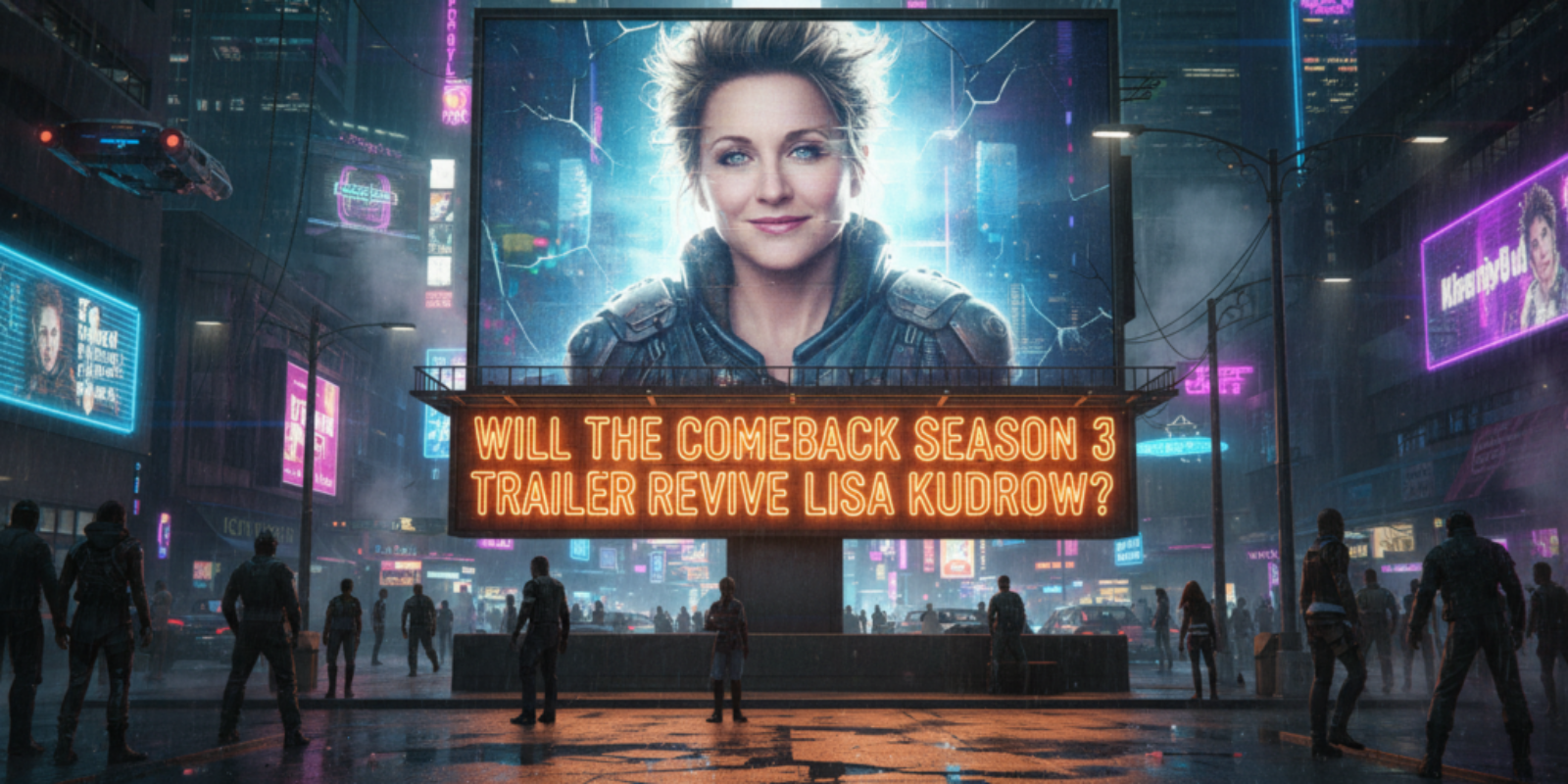
The trailer for The Comeback opens with Valerie Cherish in full PR mode, smiling at press and striding through studio lots as if every lens were an old friend that still owes her money. The obvious read is nostalgia served with cringe comedy, familiar to anyone who has loved and watched Valerie lose her footing in public life. That read is correct, but it misses the business around the joke: the show stages an entertainment industry that now treats AI as a production partner rather than a gimmick, and that shift matters more to AI engineering teams than to sitcom fans. (thewrap.com)
This coverage leans heavily on studio press and trade reporting because the trailer is a marketing artifact first and a cultural judgment second, and the creative team has framed Season 3 around the technology narrative in their own words. The press material makes plain what the satire will test: what happens to storytelling economics when a studio treats a model as a writer. (people.com)
Valerie Cherish Meets Machine Writers
The trailer reveals the conceit in plain language: Valerie stars in a sitcom called How’s That which the fictional crew claims was drafted by an AI named Al. That single beat reframes the season from a personal comeback story to a laboratory for audience attitudes about machine authorship. When a mainstream premium-cable comedy stages an AI-written show as the plot device, the real experiment is in cultural normalization. (thewrap.com)
The writers room in the trailer looks like any other writers room but for one line of dialogue that punctures the room: “That’s not us. That’s Al.” The scene is designed to provoke both laughter and a tiny social panic, which is the part of the show the industry will watch with its ledger out. A satire about the industry now doubles as a focus group. (tvinsider.com)
Why Studios Pick This Moment
HBO announced the revival last summer and positioned Season 3 as the series finale, setting a March 2026 return date to reach viewers at a moment when AI in media is no longer hypothetical. That timing is strategic: the industry is mid transition to adopting generative tools for scripting, preproduction, and localization, and studios want to shape the public story before regulators or unions entirely set the rules. (people.com)
This is not only marketing theater. Studios have a business incentive to experiment with machine assistance to compress development time and to test low-cost pilots in ways that scale. The Comeback puts that tension on screen: a show that mocks and commodifies its own labor supply is also a test case for how audiences will accept, reject, or punish machine-generated creative work. Dry aside nobody asked for: executives prefer controlled controversy to messy lawsuits, mainly because controversy tracks better in spreadsheets.
The Numbers That Actually Matter
HBO set the season to premiere on March 22, 2026 with weekly episodes running to May 10, 2026, which means the series will serve as a sustained public conversation about AI and authorship across seven weeks of appointment viewing. That schedule lets the network iterate on marketing and measure sentiment in near real time. (thewrap.com)
On the production side, the question to watch is how many script drafts the human team will attribute to the model and how the crediting is disclosed. Intellectual property and residuals are calculable costs, and studios will quickly run scenarios comparing the cost of a traditional writers room to a hybrid model that uses a licensed LLM plus editorial oversight. The math is simple and brutal: pay less in draft labor, save on overhead, but risk union friction and reputational discount.
When a machine can produce a working pilot page in minutes, the industry stops arguing about whether AI will write shows and starts arguing about who will get paid when it does.
The Talent and the Guilds in the Room
Michael Patrick King and Lisa Kudrow, along with returning cast and new additions including Andrew Scott, signed on publicly to the season that places AI in its center. That casting and creative involvement signals that the industry intends to interrogate AI rather than simply celebrate it, which matters when guilds and policymakers ask whether machines are collaborators or replacements. (tvline.com)
The show’s narrative will likely intersect with memories of recent labor actions in entertainment, giving The Comeback leverage to dramatize the lived consequences of automation. That will make the series a live case study for AI procurement teams and legal departments drafting contracts today. Also, audiences love an insider takedown, which means the satire will probably be blunt and commercially effective, like a roast with footnotes.
Practical Implications for Businesses
Studios and tech vendors should model three concrete scenarios for AI-assisted writing workflows: full in-house human teams with AI for ideation only, hybrid rooms where AI drafts first-pass pages and humans edit, and automated batching where AI produces multiple pilot variants for testing. Each scenario has a clear price and time delta and associated legal exposure. For example, a hybrid room that reduces initial drafting time by 50 percent might cut preproduction costs by 20 percent while increasing legal review overhead by 5 percent. That is the kind of trade-off CFOs love to calculate and the kind WGA lawyers love to complicate.
Advertisers and brand teams should treat shows like The Comeback as high-salience tests of consumer tolerance for machine authorship. If viewers accept the premise with humor rather than anger, brands may more readily attach to shows that experiment with synthetic assets and dynamic creative. If audiences reject it, advertisers will prefer distance and will demand human-authorship assurances, which costs money and time.
Risks and Open Questions That Will Be Lit on Fire
The show’s premise invites misinterpretation. Social media will conflate on-screen fiction with real world practice, and some will assume the sitcom itself is machine written. That confusion can amplify moral panics and lead to policy responses divorced from technical reality. Trade reporting and fact-checking will matter more than ever. (tvinsider.com)
There are unresolved legal questions about copyright, attribution, and liability when a model produces a script that mirrors an existing work. Regulators could demand provenance logs and dataset disclosures, which would force vendors to change product roadmaps. The economic risk is that premature disclosure requirements make training models commercially unviable at current price points, which would slow adoption rather than speed it.
The Cost Nobody Is Calculating
Beyond headline licensing and salaries, an overlooked cost is the optical tax on talent relationships. Actors, showrunners, and writers evaluate career risk, and a perceived erosion in creative authorship could raise tenure premiums for established creators. That premium is real currency and it will shape dealmaking in the next cycle. In short, the cost is not only dollars; it is who will want to work with whom. Also, no one likes rewriting a joke a robot wrote, even if it is funnier than the original.
Where This Leaves AI Engineers and Product Teams
Product teams should watch how audiences respond to the show’s portrayal of model failures and hallucinations because those moments will shape user expectations and regulatory narratives. If the satire highlights predictable model failure modes, engineers will face pressure to harden outputs and add provenance layers that are currently optional. This could accelerate investment in retrieval augmented generation, real time attribution, and watermarking for creative assets.
A Close With a Practical Insight
The Comeback’s trailer does more than sell a season; it popularizes a policy and procurement debate that will define how creative industries license and integrate generative AI for the next decade. Treat the season as a public experiment and learn from its audience metrics and controversy more than its jokes.
Key Takeaways
- The trailer makes AI authorship a mainstream story and a test of cultural tolerance for machine-generated creativity.
- Studios will use hybrid workflows to balance speed and legal exposure while measuring audience response in real time.
- Legal and guild responses will shape vendor roadmaps for provenance and dataset disclosure requirements.
- Product and engineering teams must prioritize provenance and editability features to survive the coming procurement scrutiny.
Frequently Asked Questions
Will The Comeback actually be written by an AI in real life?
No. The show uses an AI-written sitcom as a fictional device to explore industry questions. Real production still requires human oversight and authorship for legal safety and union compliance. Viewing the show as a dramatized scenario is the correct approach.
Does this change how studios will license generative models?
Yes. Expect studios to demand clearer attribution, usage logs, and indemnities in contracts, which increases vendor compliance costs and may change pricing models. Vendors will need to show technical controls for traceability.
Should media companies pause AI experiments until regulations are clearer?
Not necessarily. Pausing risks competitive disadvantage. Instead, companies should adopt controlled pilots with strong legal review and clear disclosure to participants and audiences.
What should AI product teams prioritize after this season airs?
Prioritize provenance, editable outputs, and robust hallucination mitigation. Those features will be table stakes for enterprise adoption and will be requested by compliance teams within media firms.
Could this affect union negotiations materially?
Yes. The show dramatizes the core friction points unions raise around automation and replacement. Expect the entertainment unions to use public sentiment as leverage in contract talks, which could alter payment and credit rules.
Related Coverage
Readers who follow this should watch reporting on guild negotiations and model provenance standards, because those conversations will move from legal memos to legislative hearings. Also worth tracking are vendor product updates that add mandatory attribution and watermarking features, which will indicate whether the industry chooses containment or rapid deployment.
SOURCES: https://www.thewrap.com/creative-content/tv-shows/the-comeback-season-3-premiere-date-trailer-hbo/ https://ew.com/lisa-kudrow-valerie-cherish-hot-ones-the-comeback-season-3-exclusive-11869925 https://www.tvline.com/2042480/the-comeback-season-3-release-date-cast-trailer-hbo/ https://people.com/lisa-kudrow-the-comeback-gets-surprise-season-3-11762679 https://www.tvinsider.com/1199584/the-comeback-season-3-release-date-cast-trailer-lisa-kudrow-valerie-cherish/ (thewrap.com)