Higgsfield Wants AI to Direct Your Next Video With Its Latest Tool
A platform built to put cinematic camera language in the hands of marketers and creators, and to make production feel like using a very opinionated app.
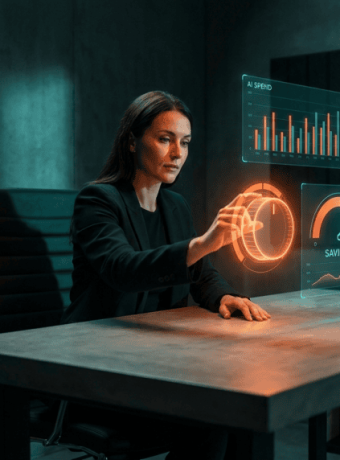
A marketer in a cramped hotel room pulls up a single brand photograph, types a three word camera direction, and watches a 15 second clip emerge with a dolly-in, a lights bloom, and a match cut that would have taken a week and three people to storyboard. The room is quiet except for a laptop fan and someone whispering “this will do for now” while their client leaves a thumbs up in chat. The moment is thrilling and a little alarming at once.
On the surface this is another product launch in the generative video rush: new UI, better fidelity, and a few demo-ready presets that make short form videos look more cinematic. The less obvious story is about what gets commodified when a platform can continually convert one still asset into hundreds of on-brand videos with predictable motion language; that productivity changes what agencies buy, what in-house teams staff for, and where model and moderation risk concentrate.
A camera crew in a laptop
Higgsfield’s interface presents itself as familiar: image upload, a short prompt, and a suite of camera presets that read like a cinematography cheat sheet. The company layers these controls over a multi-model backend so users can pick the visual model they prefer while keeping the same motion logic. The product page lists features such as Cinema Studio and motion controls that let users simulate overhead sweeps and dolly moves within single sequences. (higgsfield.ai)
The demo is persuasive because motion has been the hard part for generative video. Most models can make frames that look good; stitching them into coherent camera moves that preserve character position, lighting, and emotion is harder. Higgsfield’s pitch is to treat camera intention as a first class control, not an afterthought, which is a pragmatic response to creator feedback. (forbes.com)
The obvious reading and the thing few mention
Many observers see Higgsfield as another player chasing OpenAI, Google, and a handful of labs racing to build bigger video models. That reading is real and useful: platform competition matters for quality and speed. TechCrunch framed Higgsfield’s origin as an attempt to compete with Sora and to make personalized AI clips broadly accessible, noting founder Alex Mashrabov’s background at Snap and the lineage of Diffuse. (techcrunch.com)
The overlooked consequence is that Higgsfield isn’t just competing on fidelity; it is redesigning the production stack for marketing teams. By bundling multi-model selection, camera grammar, editing, and VFX-like bricks into one workflow, the product turns episodic or campaign production into a volume-driven, iterative process rather than a bespoke project. That changes unit economics for advertisers, and it changes what “post production” means.
Why now: model convergence and the marketing moment
Generative video entered a phase where raw image fidelity improved fast, but production-grade consistency lagged. A cluster of companies such as Runway, Synthesia, and Luma focused on different parts of the workflow, while OpenAI’s Sora demonstrated what big lab capability looks like. Higgsfield’s timing matters because brands have moved from experimenting to operationalizing AI video for campaigns that must hit a trend window. The market shift gives a product that prioritizes speed and repeatability an outsized advantage. (techcrunch.com)
Investors noticed. The company closed a Series A extension that pushed total commitments to more than $130 million and reported a valuation north of $1.3 billion. The round arrived after the platform scaled rapidly from launch to substantial commercial usage, signaling that investors see generative video moving into marketing infrastructure. (investing.com)
How the control engine changes production
Higgsfield’s core technical argument is that a “reasoning engine” can chain multiple generative models and keep camera intent persistent across shots. The result is a workflow where a single image plus a motion template yields a storyboarded sequence with consistent lighting and character placement. The company combines proprietary models with third party engines so users can choose the visual vocabulary that fits their brand. (higgsfield.ai)
Behind the headlines the scale is jaw tightening. Since launching its browser product in March of 2025, Higgsfield reported millions of daily renders and told reporters that social media marketers make up about 85 percent of usage. That tilt toward commercial workflows explains product choices like platform-sized aspect ratios, built-in ad cuts, and watermark-free commercial licensing options. (investing.com)
Designers will complain and directors will laugh, and someone will still ship the campaign before either one files a note.
Behind the numbers: funding, users, and what they imply
Public reporting places Higgsfield’s Series A extension in mid January of 2026 and names Accel, Menlo Ventures, and other investors among the backers. The company disclosed an annualized revenue run rate of about $200 million and scale metrics that imply high-volume usage and low effective revenue per clip. The fundraising is less about vanity and more about shoring up inference capacity and enterprise integrations. (forbes.com)
Do the math on the platform’s own claims: at roughly 4.5 million videos per day, annualized output is about 1.6 billion videos per year. Dividing a $200 million run rate by that output implies revenue of roughly 12 cents per generated video under current mix assumptions, which aligns with a model focused on high volume and low marginal revenue. That metric reframes the product as a utility more than a boutique production service. The calculation is not an accounting audit, it is a reality check.
Practical implications for businesses: real scenarios
A small agency that pays a predictable subscription or credits package can now iterate 20 variations of a 10 to 15 second social spot in the time it once took to approve one edit. If a traditional 15 second spot costs $20,000 to $50,000 to produce, Higgsfield-style workflows can move early proof of concept to within a few hundred dollars to a few thousand dollars in creative spend, depending on licensing and scale. That frees media teams to test more creatives in market and to move budgets from single executions to continuous creative experimentation.
For enterprise buyers the calculus becomes headcount plus tooling versus buying creative at volume. The platform lowers marginal cost per clip and raises the value of fast brand governance and moderation. Agencies that still bill by project will find compensation models under pressure, and in-house teams that accept iterative creative will win share.
Risks and open questions that stress-test the claim
Generative video carries unresolved policy and legal risks: copyright leakage, unauthorized likenesses, and deepfake misuse. TechCrunch highlighted these concerns at launch and noted that moderation and gradual rollouts are part of the company’s mitigation playbook, but those systems are still contested terrain. (techcrunch.com)
Another operational risk is brand degradation: low cost per clip incentivizes volume, which can dilute creative quality and consumer trust if not governed tightly. Finally, centralizing so much production on one platform concentrates both supply chain risk and regulatory scrutiny in ways that are easy to miss until a high profile misuse case occurs.
Why rivals should watch this closely
Higgsfield’s competition is not only model labs; it includes tooling layers such as editing suites and asset managers that want to be the place marketing teams live. By knitting camera grammar, multi-model choice, and enterprise flows into one product, Higgsfield is positioning itself as a platform rather than an engine. That incremental lock-in is what competitors will spend their next rounds trying to disrupt.
A short forward-looking close
The practical effect on the AI industry is structural: when motion and production logic are productized, generative video moves from occasional experiment to daily infrastructure for brands, which will change where engineering effort, dollars, and governance land.
Key Takeaways
- Higgsfield packages cinematic camera controls and multi-model selection into an end-to-end workflow that targets marketers and creators.
- The company’s recent funding and reported run rate suggest generative video is shifting toward marketing infrastructure rather than isolated demos.
- High volume at low marginal revenue points to a utility business model that pressures traditional production economics.
- Legal, moderation, and brand safety risks remain concentrated where production scales fastest.
Frequently Asked Questions
What does Higgsfield actually do for a marketing team?
Higgsfield converts images and prompts into short video sequences while providing camera presets and editing tools tuned for social formats. That shortens ideation to execution cycles and lets teams iterate more versions in market.
How much can a small agency save using AI-directed video?
Savings depend on scope, but lower marginal cost per clip and faster iteration reduce the need for multiple shoots and heavy post production, shifting spend toward creative experimentation and less on single big productions. Exact savings vary by campaign complexity and licensing.
Is the content safe to use commercially?
Higgsfield and similar platforms offer commercial licensing options, but buyers must confirm IP provenance, rights to likenesses, and platform terms before large scale use. Legal review remains prudent for brand campaigns.
Will this replace human filmmakers?
Not in feature film or high concept projects where nuanced direction and complex actors are essential. It can, however, replace many early stage production tasks and routine social creative that historically consumed agency budgets. Think augmentation rather than wholesale replacement.
How should an enterprise start testing this technology?
Begin with small, controlled pilots that convert existing brand imagery into social-first assets, build governance rules for likeness and IP, and measure performance against historical creative variants over several weeks to validate effectiveness.
Related Coverage
Editors should consider coverage of generative model governance for brand safety, the economics of creative ops in marketing organizations, and platform-level moderation practices. These topics help explain how the creative supply chain rewires when production is software native and where regulation and industry standards will have the most impact.
SOURCES: https://techcrunch.com/2024/04/03/former-snap-ai-chief-launches-higgsfield-to-take-on-openais-sora-video-generator/, https://higgsfield.ai/, https://www.forbes.com/sites/charliefink/2026/01/15/higgsfield-raises-130-million-as-generative-ai-video-becomes-marketing-infrastructure/, https://www.investing.com/news/stock-market-news/ai-video-startup-higgsfield-hits-13-billion-valuation-with-latest-funding-4449312, https://www.adweek.com/media/higgsfield-ai-marketing-startup/ (techcrunch.com)