UAE Expert Warns of Rising Deepfake Scams and How to Spot Them: What AI Professionals Need to Know
AI-crafted voices, fake boardroom calls, hijacked live streams. The problem is not only technical anymore; it is economic, reputational, and organizational.
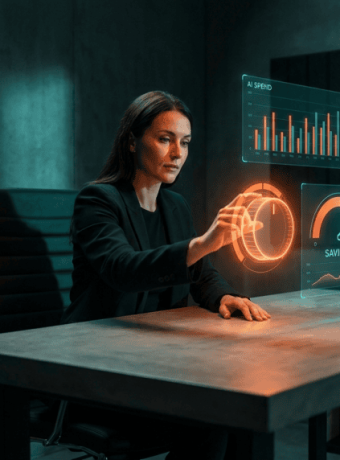
A compliance officer in Dubai answers a video call that looks exactly like the company CEO and signs off on a payment within minutes. The visual and vocal cues all line up, and the person on screen uses the CEO’s mannerisms, down to a habitual laugh. By the time the fraud is detected the funds have moved through multiple accounts and the compliance team is left explaining why their verification playbook failed.
Most readers will file this under the obvious interpretation: synthetic media is getting better and criminals will abuse it. The underreported business risk is different and more actionable. The attack surface now includes every live interaction and public-facing trust anchor a company depends on, so AI teams must treat authenticity as a product requirement rather than an optional security add on.
This article relies mainly on press reporting from Emirati and international outlets, and it translates those reports into operational steps for AI builders and security leaders.
Why every engineering roadmap needs an authenticity line item
UAE cybersecurity leaders have publicly emphasized that citizens and organizations must be trained to detect AI-driven scams because technology now enables convincing impersonation with minimal data. This elevates public awareness from a social campaign to a vendor requirement for enterprise tools. (thenationalnews.com)
Adversaries layer synthetic audio and video onto traditional social engineering to compress trust-building timelines from weeks to minutes. That matters to product managers because what used to be a customer support or onboarding flow is now a potential attack vector requiring real-time assurance.
The competitive landscape around detection and verification
Startups and incumbents are racing to ship detection features that plug into video-conferencing, banking portals, and customer service platforms. Reality Defender and academic groups are among the most visible players building real-time verification tools aimed at stopping live deepfake calls. The market is crowded with differing approaches from cryptographic attestations to physiological signal analysis. (wired.com)
This is also an arms race where compute costs, latency, and false positive tolerances matter. A solution that flags one legitimate investor call as fake will be quietly removed from deployment, so detection teams must design for human workflows, not technologist aesthetics.
How the scams are actually being executed today
Operators combine paid social advertising, boiler room call centres, and synthetic media to create plausible financial narratives and pressure victims into wiring money. One international investigation found more than 6,000 victims and about 35 million US dollars siphoned through a complex money laundering network tied to deepfake promotions. That case illustrates how synthetic content is only one component in a multi touch deception playbook. (theguardian.com)
In parallel, national agencies in the UAE have warned that AI tools are being used to impersonate officials, manipulate media narratives, and target specific demographics with timing and cultural nuance that traditional filters miss. This is why governments are treating public awareness as the first line of defence. (gulfnews.com)
Real world signal: public figures have been copied in minutes
Security briefings from regional press show ministers and business leaders unexpectedly finding doctored videos or messages attributed to them. These incidents are not theatrical; they are functional attacks that aim to change behaviour, such as inducing investments or changing public perception. (khaleejtimes.com)
Synthetic media now weaponizes familiarity, so verification must travel with every message.
Practical implications for businesses with real math
A mid sized financial firm processing 10,000 client interactions per month could see a single successful deepfake-led fraud cause losses equal to the firm’s annual fraud reserve. Imagine a single social engineering incident that converts just 0.1 percent of those interactions into wire transfers of 50,000 US dollars each; the loss adds up to 5 million US dollars and legal exposure. This is not an outsized hypothetical, it is the scale of loss regulators and press are documenting.
For product teams, the math speaks to prioritization: spending 100,000 to 300,000 US dollars to integrate and tune a real-time verification service becomes defensible when it prevents one multi million dollar incident and preserves customer trust. Engineers should model expected prevented loss over 12 to 24 months to justify authentication investments.
What detection actually needs to do, not just claim
Detection must be measurable, explainable, and low friction. Models should output confidence scores, provenance metadata, and a verifiable audit trail so downstream teams can automate escalation thresholds. That means pairing ML signals with cryptographic provenance and human review workflows so legal and compliance teams can act on evidence without chasing unverifiable screenshots.
Investing in developer APIs that return short, actionable reasons for a suspect call will reduce the false positive friction that kills security features in production. As a bonus aside, asking a customer to solve a visual CAPTCHA in the middle of a 30 second sales pitch is a great way to lose both the deal and one’s dignity.
Risks and the open questions regulators and engineers must stress test
Detection models depend on training data that may become stale as generative models iterate, so calibration needs to be continuous. There is also the risk of over reliance; organizations that outsource trust decisions entirely to a third party without legal or cryptographic anchors may find their liability exposed when detections fail. Questions remain about cross border takedown, evidence handling for prosecutions, and the ethics of embedding watermarking at scale.
At a systems level, the trade off between user privacy and provenance is unresolved. Strong provenance requires metadata and attestations that could leak sensitive operational details unless carefully designed.
What companies in the AI stack should build next
Product teams should ship three capabilities in the next 6 to 12 months: real-time authenticity checks for video and audio endpoints, signed provenance for official communications, and integrated human escalation workflows with low latency. Security and product must budget for red team exercises that simulate multi channel deepfake campaigns, because attackers will blend voice, video, and social pressure.
Expect companies that elegantly stitch detection into workflows to gain commercial advantage. The vendors who make verification invisible and auditable will win enterprise contracts, not the ones who only shout about model accuracy.
Forward looking close
Deepfakes have moved from academic curiosity to commercially exploitable weaponry, and the AI industry now owns the cleanup as much as the innovation. Building authenticity into product design protects companies, customers, and the market for real AI value.
Key Takeaways
- Deepfakes are being used as part of multi channel fraud schemes that can convert social trust into multi million dollar losses.
- Real time verification, provenance metadata, and low friction human escalation are the three product features that stop most live deepfake attacks.
- Spend on detection can be justified by modeling prevented loss over a 12 to 24 month horizon for customer facing flows.
- Public awareness programs matter, but technical attestations are the only scalable defence for high value business interactions.
Frequently Asked Questions
How fast can attackers make a convincing deepfake of my CEO?
Attackers can produce a realistic audio or video impersonation in minutes to hours when source material is available online. The speed increases the importance of verifying provenance before executing sensitive transactions.
Can authentication be added without hurting customer experience?
Yes, if verification is integrated as a background check that returns a confidence score and only prompts users for action when risk is high. Design the flow so only a small fraction of transactions require extra friction to preserve conversion rates.
Will watermarking solve this problem?
Watermarking helps but is not a complete solution because it relies on broad adoption and can be stripped or spoofed by advanced tools. Cryptographic attestations tied to trusted identities are a stronger, though more complex, approach.
What should a security team do first this quarter?
Run a red team exercise that simulates a multi channel deepfake campaign, then instrument the weakest 10 percent of user flows with realtime verification and human escalation. Use those results to make a budget case for full deployment.
Are there regulatory steps businesses should anticipate?
Regulators are already warning about misuse of synthetic media and some jurisdictions plan to require provenance for public statements. Legal teams should track national advisories and prepare evidence handling processes for fraud investigations.
Related Coverage
Explore how cryptographic signatures for audio and video are being standardized and which vendors are piloting attestations with banks. Also read about the operational playbooks companies use to rebuild trust after a synthetic media incident, and how incident response teams evolve when the evidence is AI generated.
SOURCES: https://www.thenationalnews.com/news/uae/2025/10/14/seeing-isnt-believing-anymore-uae-cybersecurity-chief-on-rising-threat-of-ai-deepfakes/ https://gulfnews.com/uae/government/ai-is-making-online-scams-harder-to-spot-uae-cyber-watchdog-says-1.500381176 https://www.khaleejtimes.com/uae/expert-warns-deepfake-real-artificial-intelligence https://www.theguardian.com/money/2025/mar/05/deepfakes-cash-and-crypto-how-call-centre-scammers-duped-6000-people https://www.wired.com/story/real-time-video-deepfake-scams-reality-defender/